• Fri frakt över 249 kr
  • •
  • Snabba leveranser
  • •
  • Billiga böcker
Kundservice

Du är på sajten för privatpersoner.

Företag, bibliotek eller offentlig verksamhet?

Du handlar på classic.bokus.com, där alla dina funktioner finns intakta.
Till classic.bokus.com
Bokus logotyp. Gå till startsidan.
  • Erbjudanden
  • Nyheter
  • Student
  • Topplistor
  • Barn & ungdom
  • Bokus Play
  • E-böcker
  • Pocketböcker
  • Spel & pussel

10% studentrabatt med kod TERM26

Sidfot

Mina sidor

    Hjälp

    • Kundservice
    • Vanliga frågor och svar
    • Frakt och leverans
    • Retur vid ångerrätt
    • Reklamera vara
    • Betalning
    • Köpvillkor
    • Allmänna villkor
    • Information om webbplatsens tillgänglighet

    Om Bokus

    • Om oss
    • Pressrum
    • För studenter
    • För företag
    • För bibliotek och offentlig verksamhet
    • För leverantörer
    • Hållbarhet

    Populärt

    • Aktuella erbjudanden
    • Presentkort
    • Studentlitteratur
    • Nya böcker
    • Topplistor
    • Signerade böcker
    • Engelska böcker

    Inspiration

    • Boktips
    • BookTok
    • Populära bokserier
    • Barnbokskaraktärer
    • Populära författare
    Logotyp för Bokus
    Följ oss på Facebook (extern länk)Följ oss på Instagram (extern länk)Följ oss på YouTube (extern länk)Följ oss på TikTok (extern länk)
    bokus @ CookiesAnpassa cookiesIntegritetspolicyKöpvillkor
    Till Citymail hemsida (extern länk)Till Budbee hemsida (extern länk)Till Postnord hemsida (extern länk)Till Schenker hemsida (extern länk)Till Early Bird hemsida (extern länk)Till Walleys hemsida (extern länk)
    1. Kultur
    2. Scenkonst och film
    3. Film

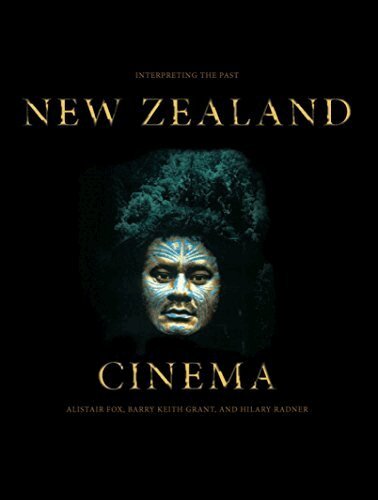
    New Zealand Cinema

    Interpreting the Past

    AvAlistair Fox,Barry Keith Grant

    Häftad, Engelska, 2011

    417 kr

    Beställningsvara. Skickas inom 5-8 vardagar. Fri frakt över 249 kr.

    Beskrivning

    New Zealand has produced one of the world’s most vibrant film cultures, a reflection of the country’s evolving history and the energy and resourcefulness of its people. From early silent features like The Te Kooti Trail to recent films such as River Queen, this book examines the role of the cinema of New Zealand in building a shared sense of national identity. The works of key directors, including Peter Jackson, Jane Campion, and Vincent Ward, are here introduced in a new light, and select films are given in-depth coverage. Among the most informative accounts of New Zealand’s fascinating national cinema, this will be a must for film scholars around the globe.

    Produktinformation

    • Utgivningsdatum:2011-05-15
    • Mått:178 x 229 x 19 mm
    • Vikt:562 g
    • Format:Häftad
    • Språk:Engelska
    • Antal sidor:350
    • Förlag:Intellect
    • ISBN:9781841504254

    Utforska kategorier

    • Film inom Kultur

    Mer om författaren

    Alistair Fox holds a personal chair in the Department of English and is director of the Centre for Research on National Identity at the University of Otago.Barry Keith Grant is professor of film studies and popular culture at Brock University.Hilary Radner is foundation professor of film and media studies at the University of Otago.

    Recensioner i media

    '“[T]he space in which historical and cinematic narratives intersect remains an insufficiently examined but potentially fecund area of study.” (Reid Perkins cited on p. 16) The remarkable success of New Zealand cinema is all the more impressive for its relatively brief course. The “new wave” of this national cinema dates back to just the late 1970s. Some such as Ian Conrich have also identified a Second Wave in the 1990s when new filmmakers emerged to produce highly accomplished celluloid works that circulated widely and captured the imagination of a global audience: Once Were Warriors (Lee Tamahori, 1994), The Piano (Jane Campion, 1993), Heavenly Creatures (Peter Jackson, 1994) and An Angel at My Table (Jane Campion, 1990), amongst others. The Lord of the Rings (Peter Jackson, 2001-2003) series has been pre-eminent among New Zealand feature films that have produced what Alfio Leotta, amongst others, refers to as the phenomenon of “film-induced tourism” (1). Before the late 1970s a feature film industry scarcely existed in New Zealand. Indeed, in the 1950s and ’60s film production, such as it was, existed almost entirely under the auspices of the National Film Unit (NFU), and obeyed the strictures of documentary realism and state ideology by churning out picturesque and idyllic stories featuring the landscape. To emphatically illustrate this point it is worth noting that Roger Mirams (who left the NFU in 1947 to form the independent Pacific Film Unit) and John O’Shea produced the only truly New Zealand feature film (Broken Barrier, 1952) to be made between 1940 and 1964. It is no accident that Broken Barrier – discussed in this volume by historian Barbara Brookes – addresses bicultural relations as this theme has long been a key concern of New Zealand cultural producers and mythmakers. Read the full review at Senses of Cinema, www.sensesofcinema.com/2012/book-reviews/new-zealand-cinema-interpreting-the-past-edited-by-alistair-fox-barry-keith-grant-and-hilary-radner/' – James Bennett

    Innehållsförteckning

    • Introduction: The Historical Film in New Zealand Cinema – Alistair Fox, Barry Keith Grant and Hilary Radner Chapter 1: Rudall Hayward and the Cinema of Maoriland: Genre-mixing and Counter-discourses in Rewi’s Last Stand (1925), The Te Kooti Trail (1927) and Rewi's Last Stand/The Last Stand (1940) – Alistair Fox Chapter 2: Rudall Hayward's Democratic Cinema and the "Civilising Mission" in the "Land of the Wrong White Crowd" – Jeanette Hoorn and Michelle Smith Chapter 3: The Western, New Zealand History and Commercial Exploitation: The Te Kooti Trail, Utu and Crooked Earth – Harriet Margolis Chapter 4: Unsettled Historiography: Postcolonial Anxiety and the Burden of the Past in Pictures – Cherie Lacey Chapter 5: Cross-currents: River Queen’s National and Trans-national Heritages – Olivia Macassey Chapter 6: Tracking Tītokowaru over Text and Screen: Pākehā Narrate the Warrior, 1906–2005 – Annabel Cooper Chapter 7: Rites of Passage in Post–Second World War New Zealand Cinema: Migrating the Masculine in Journey for Three (1950) – Simon Sigley Chapter 8: Cinema and the Interpretation of 1950s New Zealand History: John O’Shea and Roger Mirams, Broken Barrier (1952) – Barbara Brookes Chapter 9: Re-representing Indigeneity: Approaches to History in Some Recent New Zealand and Australian Films – Janet Wilson Chapter 10: “The Donations of History”: Mauri and the Transfigured “Māori Gaze”: Towards a Bi-national Cinema in Aotearoa – Bruce Harding Chapter 11: History, Hybridity and Indeterminate Space: The Parker-Hulme Murder, Heavenly Creatures and New Zealand Cinema – Alison L. McKee Chapter 12: Screening Women’s Histories: Jane Campion and the New Zealand Heritage Film, from the Biopic to the Female Gothic – Hilary Radner Chapter 13: The Time and the Place: Music and Costume and the “Affect” of History in the New Zealand Films of Jane Campion – Estella Tincknell Chapter 14: Mining for Forgotten Gold: Leon Narbey’s Illustrious Energy (1987) – Bruce Babington