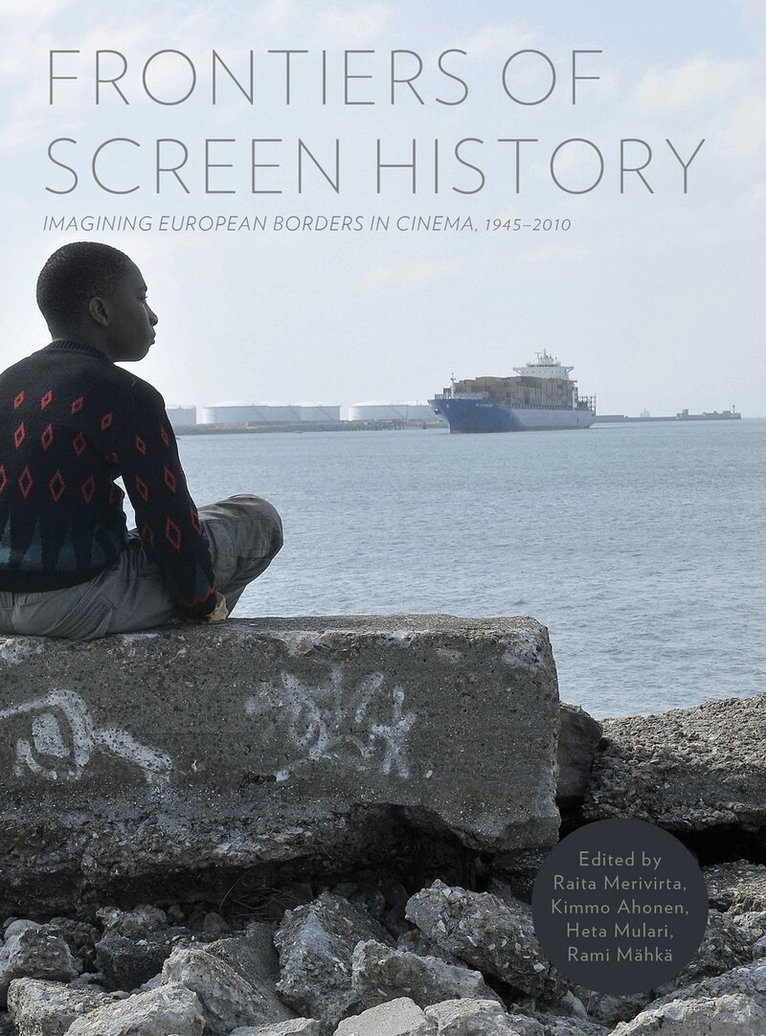
Frontiers of Screen History
Imagining European Borders in Cinema, 1945–2010
624 kr
Beställningsvara. Skickas inom 5-8 vardagar. Fri frakt över 249 kr.
Du är på sajten för privatpersoner.
624 kr
Beställningsvara. Skickas inom 5-8 vardagar. Fri frakt över 249 kr.
Kimmo Ahonen and Heta Mulari are research fellows in the Department of Cultural History at the University of Turku, Finland.
'This could hardly be a more timely or more useful volume. The thirteen essays examine cinema that dates from the era of the immediate post-World War Two until the end of the first decade of the twenty-first century. In a commendable array of films, directors and geographic places, the authors examine the aesthetic borders and boundaries that loosely designate the entity of Europe, and the transcultural and transnational comings and goings in the porous spaces that delineate the internal and external European frontiers. Underlying a number of the analyses is a sensitivity to Thomas Elsaesser’s notion of “double occupancy” that prevails in many cultural and cognitive spaces but that carries particular salience in Europe where the physical occupancy of region and geography has been defined and redefined.'
Marika Räsänen, Rami Mähkä, Marika Ahonen, Niko Heikkilä, Sakari Ollitervo
269 kr
Du är på sajten för privatpersoner.
624 kr
Beställningsvara. Skickas inom 5-8 vardagar. Fri frakt över 249 kr.
Kimmo Ahonen and Heta Mulari are research fellows in the Department of Cultural History at the University of Turku, Finland.
'This could hardly be a more timely or more useful volume. The thirteen essays examine cinema that dates from the era of the immediate post-World War Two until the end of the first decade of the twenty-first century. In a commendable array of films, directors and geographic places, the authors examine the aesthetic borders and boundaries that loosely designate the entity of Europe, and the transcultural and transnational comings and goings in the porous spaces that delineate the internal and external European frontiers. Underlying a number of the analyses is a sensitivity to Thomas Elsaesser’s notion of “double occupancy” that prevails in many cultural and cognitive spaces but that carries particular salience in Europe where the physical occupancy of region and geography has been defined and redefined.'
Marika Räsänen, Rami Mähkä, Marika Ahonen, Niko Heikkilä, Sakari Ollitervo
269 kr