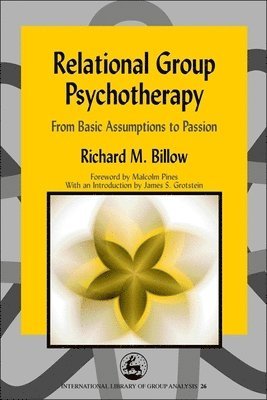
Häftad, Engelska, 2003
Relational Group Psychotherapy
From Basic Assumptions to Passion
Del i serien International Library of Group Analysis
682 kr
Beställningsvara. Skickas inom 3-6 vardagar. Fri frakt över 249 kr.
Beskrivning
Produktinformation
- Utgivningsdatum: 2003-01-31
- Mått: 156 x 232 x 15 mm
- Vikt: 414 g
- Format: Häftad
- Språk: Engelska
- Serie: International Library of Group Analysis
- Antal sidor: 256
- Förlag: Jessica Kingsley Publishers
- Medarbetare: Malcolm Pines
- ISBN: 9781843107392
Utforska kategorier
Mer om författaren
Richard M. Billow, Ph.D., is a clinical psychologist and psychoanalyst, and an active contributor to the psychoanalytic and group literature. He has been associated with the Gordon Derner Institute of Advanced Psychological Studies, Adelphi University, New York, since 1968, where he achieved doctorate and postdoctoral certificates in psychoanalysis and individual and group psychotherapy. He is Clinical Professor and Director of the Institute's Postdoctoral Program in Group Psychotherapy as well as running his own private practice in Great Neck, New York.
Recensioner i media
Relational' group psychotherapy is a development of group therapy where the relational component begins to assume a dominant role, for example, where the group leader cannot be understood as separate from his group. Billow shows how he has been able to use these notions in clinical work, in supervision and in teaching, with many vignettes in each chapter. He also makes use of Foulkesian group analytic ideas and makes links between Foulkes and Bion'.
Betyg & recensioner
0 recensioner
Inga recensioner tillgängliga.