• Fri frakt över 249 kr
  • •
  • Snabba leveranser
  • •
  • Billiga böcker
Kundservice

Du är på sajten för privatpersoner.

Företag, bibliotek eller offentlig verksamhet?

Du handlar på classic.bokus.com, där alla dina funktioner finns intakta.
Till classic.bokus.com
Bokus logotyp. Gå till startsidan.
  • Erbjudanden
  • Nyheter
  • Student
  • Topplistor
  • Barn & ungdom
  • Bokus Play
  • E-böcker
  • Pocketböcker
  • Spel & pussel

10% rabatt på allt med kod: NYSTART10 →

Sidfot

Mina sidor

    Hjälp

    • Kundservice
    • Vanliga frågor och svar
    • Frakt och leverans
    • Retur vid ångerrätt
    • Reklamera vara
    • Betalning
    • Köpvillkor
    • Allmänna villkor
    • Information om webbplatsens tillgänglighet

    Om Bokus

    • Om oss
    • Pressrum
    • För studenter
    • För företag
    • För bibliotek och offentlig verksamhet
    • För leverantörer
    • Hållbarhet

    Populärt

    • Aktuella erbjudanden
    • Presentkort
    • Studentlitteratur
    • Nya böcker
    • Topplistor
    • Signerade böcker
    • Engelska böcker

    Inspiration

    • Boktips
    • BookTok
    • Populära bokserier
    • Barnbokskaraktärer
    • Populära författare
    Logotyp för Bokus
    Följ oss på Facebook (extern länk)Följ oss på Instagram (extern länk)Följ oss på YouTube (extern länk)Följ oss på TikTok (extern länk)
    bokus @ CookiesAnpassa cookiesIntegritetspolicyKöpvillkor
    Till Citymail hemsida (extern länk)Till Budbee hemsida (extern länk)Till Postnord hemsida (extern länk)Till Schenker hemsida (extern länk)Till Early Bird hemsida (extern länk)Till Walleys hemsida (extern länk)
    1. Samhälle och politik
    2. Samhälle och kultur
    3. Kultur och medier
    4. Referensverk och tvärvetenskap

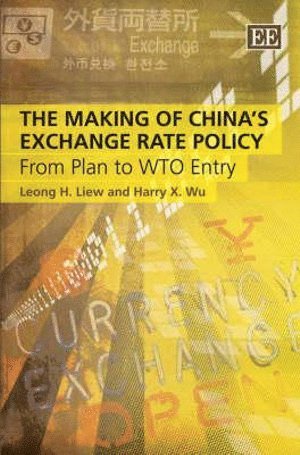
    Making of China’s Exchange Rate Policy

    From Plan to WTO Entry

    AvLeong H. Liew,Harry X. Wu

    Inbunden, Engelska, 2007

    1 897 kr

    Beställningsvara. Skickas inom 5-8 vardagar. Fri frakt över 249 kr.

    Beskrivning

    This book examines the major economic and political factors influencing China's exchange rate policies from the foundation of the People's Republic to the present. It considers how national economic and political priorities, international influences, domestic institutional interests and the new constraints imposed by China's rapidly globalising post-Mao economy determine exchange rate policy. The authors argue that China's exchange rate decisions were not made simply in response to external pressures, rather that they were formed on the basis of domestic assessments of domestic circumstances to serve domestic interests. They go on to illustrate that such decisions are made on the basis of what policymakers perceive are the nation's best interests, and thus constitute dynamic interplay between national priorities and the interests of institutional and non-institutional actors in the policy arena.Fulfilling the demand for further research on how China formulates exchange rate policy, this book will strongly appeal to a wide-ranging audience including: students, academics and researchers with an interest in political economy, Asian studies, international relations, comparative politics, international business and international economics and finance. Policymakers and bankers will also find much to interest them in this book.

    Produktinformation

    • Utgivningsdatum:2007-11-27
    • Mått:156 x 234 x undefined mm
    • Format:Inbunden
    • Språk:Engelska
    • Förlag:Edward Elgar Publishing Ltd
    • ISBN:9781843760085

    Utforska kategorier

    • Referensverk och tvärvetenskap inom Samhälle och politik
    • Makroekonomi inom Ekonomi och Ledarskap

    Mer om författaren

    Leong H. Liew, Professor, Department of International Business and Asian Studies, Griffith University, Australia and Harry X. Wu, Hitotsubashi University, Japan

    Innehållsförteckning

    • Contents: Preface 1. Why Does the Rest of the World, Especially the US, Care About the Renminbi? The Rebirth of China and Rise of the Renminbi 2. Managing Foreign Exchange: From Birth to Decline of Central Planning 3. Post-Mao Reform of the Foreign Exchange Regime 4. Foreign Trade, Prices and the Exchange Rate 5. Institutions and Exchange Rate Policy: China and the Asian Financial Crisis 6. The WTO and China’s Exchange Rate 7. Conclusion References Index