• Fri frakt över 249 kr
  • •
  • Snabba leveranser
  • •
  • Billiga böcker
Kundservice

Du är på sajten för privatpersoner.

Företag, bibliotek eller offentlig verksamhet?

Du handlar på classic.bokus.com, där alla dina funktioner finns intakta.
Till classic.bokus.com
Bokus logotyp. Gå till startsidan.
  • Erbjudanden
  • Nyheter
  • Student
  • Topplistor
  • Barn & ungdom
  • Bokus Play
  • E-böcker
  • Pocketböcker
  • Spel & pussel

10% rabatt på allt med kod: NYSTART10 →

Sidfot

Mina sidor

    Hjälp

    • Kundservice
    • Vanliga frågor och svar
    • Frakt och leverans
    • Retur vid ångerrätt
    • Reklamera vara
    • Betalning
    • Köpvillkor
    • Allmänna villkor
    • Information om webbplatsens tillgänglighet

    Om Bokus

    • Om oss
    • Pressrum
    • För studenter
    • För företag
    • För bibliotek och offentlig verksamhet
    • För leverantörer
    • Hållbarhet

    Populärt

    • Aktuella erbjudanden
    • Presentkort
    • Studentlitteratur
    • Nya böcker
    • Topplistor
    • Signerade böcker
    • Engelska böcker

    Inspiration

    • Boktips
    • BookTok
    • Populära bokserier
    • Barnbokskaraktärer
    • Populära författare
    Logotyp för Bokus
    Följ oss på Facebook (extern länk)Följ oss på Instagram (extern länk)Följ oss på YouTube (extern länk)Följ oss på TikTok (extern länk)
    bokus @ CookiesAnpassa cookiesIntegritetspolicyKöpvillkor
    Till Citymail hemsida (extern länk)Till Budbee hemsida (extern länk)Till Postnord hemsida (extern länk)Till Schenker hemsida (extern länk)Till Early Bird hemsida (extern länk)Till Walleys hemsida (extern länk)
    1. Naturvetenskap och teknik
    2. Geovetenskap
    3. Miljövetenskap och miljöpolitik

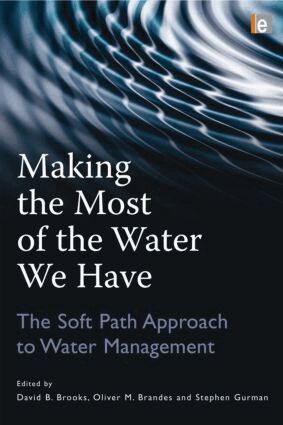
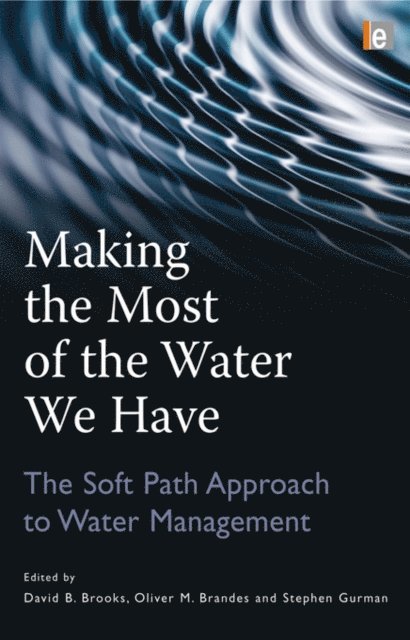
    Making the Most of the Water We Have

    The Soft Path Approach to Water Management

    AvOliver Brandes,David B. Brooks

    Inbunden, Engelska, 2009

    2 421 kr

    Beställningsvara. Skickas inom 10-15 vardagar. Fri frakt över 249 kr.

    Beskrivning

    Based on the 'soft path' approach to the energy sector, a transition is now under way to a soft path for water. This approach starts by ensuring that ecosystem needs for water are satisfied and then undertakes a radical approach to reducing human uses of water by economic and social incentives, including open decision-making, water markets and equitable pricing, and the application of super-efficient technology, all applied in ways that avoid jeopardizing quality of life. The soft path for water is therefore a management strategy that frees up water by curbing water waste. Making the Most of the Water We Have is the first to present and apply the water soft path approach. It has three aims: to bring to a wider audience the concept and the potential of water soft pathsto demonstrate that soft path analysis is analytical and practical, and not just 'eco-dreaming'to indicate that soft paths are not only conceptually attractive but that they can be made economically and politically feasible. Includes a tool kit for planners and other practitioners. Published with POLIS Project and Friends of the Earth

    Produktinformation

    • Utgivningsdatum:2009-06-25
    • Mått:156 x 234 x 27 mm
    • Vikt:588 g
    • Format:Inbunden
    • Språk:Engelska
    • Antal sidor:274
    • Förlag:Taylor & Francis Ltd
    • ISBN:9781844077540

    Utforska kategorier

    • Miljövetenskap och miljöpolitik inom Naturvetenskap och teknik

    Mer om författaren

    David B. Brooks was Canada's first Director of Energy Conservation, and later spent 15 years with IDRC (International Development Research Centre) on overseas projects on energy, water and natural resource management. He was one of the founders of Friends of the Earth Canada and now serves as its Senior Advisor - Fresh Water. Oliver Brandes is Water Sustainability Project Leader and Associate Director at the POLIS Project on Ecological Governance, University of Victoria, Canada. Stephen Gurman is an environmental consultant and writer, based in Ottawa, Canada.

    Recensioner i media

    'This book looks ahead to provide the context within which to consider our use and management of water as we enter an increasingly uncertain future.' Dr. David Suzuki, Professor Emeritus, University of British Columbia, author, broadcaster'The book provides a timely review of how political economies worldwide have been introducing soft path approaches. It is immensely strengthened by authors who introduced the idea to the water sector and diffused it among water scientists, engineers and planners.' From the Foreword by Professor J A [Tony] Allan, King's College London and the School of Oriental and African Studies, University of London, UK'It is the first book to present a comprehensive view of the soft path and focuses on water solutions, not just technologies but also analysis methods and governance. The importance of this book is its vision and attempt to persuade readers - stakeholders, educators, the media, NGOs, and water managers - to adhere to the soft path paradigm.' Water International'Making the Most of the Water We Have lays out the key ingredients of a water soft path (WSP) in plain language. It makes its case with some really fine writing, especially in the first four chapters...The real achievement of this book is that it offers details regarding soft path water planning possibilities for rich nations and poor nations alike.' Robert Paehlke, Critical Policy Studies

    Innehållsförteckning

    • Introduction 1. Why a Water Soft Path, and Why Now Part 1: Water Soft Paths as Human Vision 2. Avoiding the Perfect Storm: Weathering Climate Change by Following its Effects on Water Resources 3. In the Beginning: Soft Energy Paths 4. Getting it Right: Misconceptions About the Soft Path 5. Practising Ecological Governance: The Case for the Soft Path for Water 6. Water Policy in Canada: Changing Course for the Soft Path Part 2: Water Soft Paths as Analytical Method 7. Getting Quantitative: The Canadian Water Soft Path Studies 8. Turning Principles into Practice: The WSP Scenario Builder 9. Thinking Beyond Pipes and Pumps: Water Soft Paths at the Urban Scale 10. WSP Analysis at a Watershed Scale 11. WSP Analysis at a Provincial Scale Part 3: Water Soft Paths as Planning Tool 12. Removing Institutional Barriers to Water Soft Paths: - Challenges and Opportunities 13. Pushing the Boundaries: Shifting Water Soft Paths Philosophy towards Hard Policy in Municipal Water Management 14. Green Buildings and Urban Space 15. Water Soft Path Thinking in the United States 16. Water Soft Path Thinking in Other Developed Economies – A. England B. The European Union C. Australia 17. Water Soft Path Thinking in Developing Countries – A. South Africa B. India C. Middle East and North Africa. Conclusion 18. A Water Future Different from the Past. Annex: How to Create A Soft Path Plan For Water. Index