• Fri frakt över 249 kr
  • •
  • Snabba leveranser
  • •
  • Billiga böcker
Kundservice

Du är på sajten för privatpersoner.

Företag, bibliotek eller offentlig verksamhet?

Du handlar på classic.bokus.com, där alla dina funktioner finns intakta.
Till classic.bokus.com
Bokus logotyp. Gå till startsidan.
  • Erbjudanden
  • Nyheter
  • Student
  • Topplistor
  • Barn & ungdom
  • Bokus Play
  • E-böcker
  • Pocketböcker
  • Spel & pussel

10% rabatt på allt med kod NYSTART10 →

Sidfot

Mina sidor

    Hjälp

    • Kundservice
    • Vanliga frågor och svar
    • Frakt och leverans
    • Retur vid ångerrätt
    • Reklamera vara
    • Betalning
    • Köpvillkor
    • Allmänna villkor
    • Information om webbplatsens tillgänglighet

    Om Bokus

    • Om oss
    • Pressrum
    • För studenter
    • För företag
    • För bibliotek och offentlig verksamhet
    • För leverantörer
    • Hållbarhet

    Populärt

    • Aktuella erbjudanden
    • Presentkort
    • Studentlitteratur
    • Nya böcker
    • Topplistor
    • Signerade böcker
    • Engelska böcker

    Inspiration

    • Boktips
    • BookTok
    • Populära bokserier
    • Barnbokskaraktärer
    • Populära författare
    Logotyp för Bokus
    Följ oss på Facebook (extern länk)Följ oss på Instagram (extern länk)Följ oss på YouTube (extern länk)Följ oss på TikTok (extern länk)
    bokus @ CookiesAnpassa cookiesIntegritetspolicyKöpvillkor
    Till Citymail hemsida (extern länk)Till Budbee hemsida (extern länk)Till Postnord hemsida (extern länk)Till Schenker hemsida (extern länk)Till Early Bird hemsida (extern länk)Till Walleys hemsida (extern länk)
    1. Kultur
    2. Scenkonst och film
    3. Film

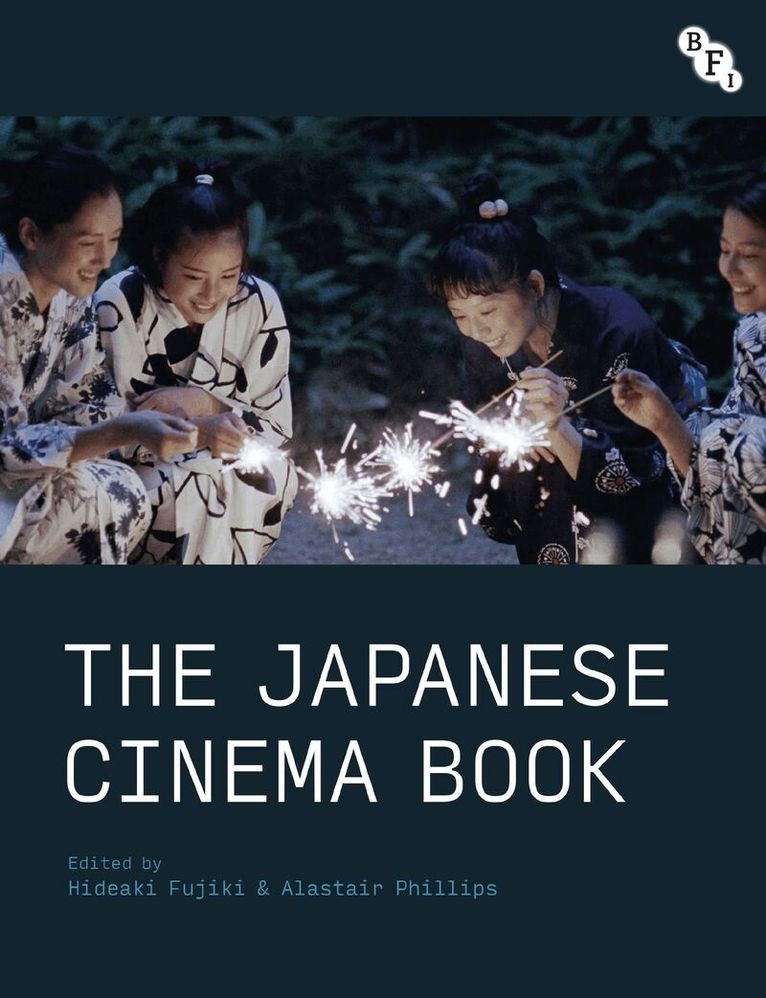
    Japanese Cinema Book

    AvHideaki Fujiki,Alastair Phillips

    Häftad, Engelska, 2020

    560 kr

    Beställningsvara. Skickas inom 5-8 vardagar. Fri frakt över 249 kr.

    Beskrivning

    The Japanese Cinema Book provides a new and comprehensive survey of one of the world’s most fascinating and widely admired filmmaking regions. In terms of its historical coverage, broad thematic approach and the significant international range of its authors, it is the largest and most wide-ranging publication of its kind to date.Ranging from renowned directors such as Akira Kurosawa to neglected popular genres such as the film musical and encompassing topics such as ecology, spectatorship, home-movies, colonial history and relations with Hollywood and Europe, The Japanese Cinema Book presents a set of new, and often surprising, perspectives on Japanese film.With its plural range of interdisciplinary perspectives based on the expertise of established and emerging scholars and critics, The Japanese Cinema Book provides a groundbreaking picture of the different ways in which Japanese cinema may be understood as a local, regional, national, transnational and global phenomenon.The book’s innovative structure combines general surveys of a particular historical topic or critical approach with various micro-level case studies. It argues there is no single fixed Japanese cinema, but instead a fluid and varied field of Japanese filmmaking cultures that continue to exist in a dynamic relationship with other cinemas, media and regions.The Japanese Cinema Book is divided into seven inter-related sections:· Theories and Approaches· * Institutions and Industry· * Film Style· * Genre· * Times and Spaces of Representation· * Social Contexts· * Flows and Interactions

    Produktinformation

    • Utgivningsdatum:2020-04-16
    • Mått:190 x 244 x 23 mm
    • Vikt:1 317 g
    • Format:Häftad
    • Språk:Engelska
    • Antal sidor:624
    • Förlag:Bloomsbury Publishing PLC
    • ISBN:9781844576784

    Utforska kategorier

    • Film inom Kultur

    Mer om författaren

    Hideaki Fujiki is Professor of Cinema Studies and Japanese Studies at Nagoya University, Japan. He is the author of Making Personas: Transnational Film Stardom in Modern Japan and his essays have appeared in Stephanie Dennison and Song Hwee Lim (eds.) Remapping World Cinema: Identity, Culture and Politics in Film, Cinema Journal, Japan Forum, Review of Japanese Culture and Society, and Iconics, and he has contributed to the Oxford Handbook of Japanese Cinema. Alastair Phillips is Professor of Film Studies at the University of Warwick, UK. He is the author of City of Darkness, City of Light: Émigré Filmmakers in Paris 1929-1939 and Rififi: A French Film Guide. He is the co-author of 100 Film Noirs (BFI Screen Guides) and the co-editor of Journeys of Desire: European Actors in Hollywood; Japanese Cinema: Texts and Contexts and A Companion to Jean Renoir. His articles on international film history and aesthetics have appeared in numerous journals and books. He is an editor of the journal Screen and serves on the Editorial Advisory Boards of The Journal of Japanese and Korean Cinema and the BFI Film Classics series.

    Recensioner i media

    I’d recommend most of this book to anyone, but two chapters in particular [about manga adaptations in Japanese cinema] will leap out at readers of this blog.

    Innehållsförteckning

    • TABLE OF CONTENTS AcknowledgmentsIntroductionJapanese Cinema and Its Multiple PerspectivesHideaki Fujiki (Nagoya University, Japan) and Alastair Phillips (University of Warwick, UK)Part One: Theories and Approaches1. Early CinemaDifference, Definition and Japanese Film StudiesAaron Gerow (Yale University, USA)2. AuthorshipAuthor, Sakka, AuteurAlex Jacoby (Oxford Brookes University, UK)3. SpectatorshipThe Spectator as Subject and AgentHideaki Fujiki (Nagoya University, Japan)4. Film CriticismSoviet Montage Theory and Japanese Film CriticismNaoki Yamamoto (University of California, Santa Barbara, USA)5. NarrativeMulti-viewpoint Narrative: From Rashomon (1950) to Confessions (2010)Kosuke Kinoshita (Gunma Prefectural Women’s University, Japan)6. Gender and SexualityFeminist Film Scholarships: Dialogue and DiversificationHikari Hori (Toyo University, Japan)Part Two: Institutions and Industry7. The Studio SystemThe Japanese Studio System RevisitedHiroyuki Kitaura (Kaichi International University, Japan)8. ExhibitionScreening Spaces: A History of Japanese Film ExhibitionManabu Ueda (Kobe Gakuin University, Japan) 9. CensorshipCensorship as Education: Film Violence and IdeologyRachael Hutchinson (University of Delaware, USA)10. TechnologySound and Intermediality in 1930s Japanese CinemaJohan Nordström (Tsuru University, Japan)11. Film FestivalsEngasai Inside Out: Japanese Cinema and Film Festival Programming Ran Ma (Nagoya University, Japan)12. StardomQueer Resonance: The Stardom of Miwa AkihiroYuka Kanno (Doshisha University, Japan)13. Experimental CinemaForms, Spaces and Networks: A History of Japanese Experimental FilmJulian Ross (Leiden University, The Netherlands)14. Transmedial RelationsManga at the Movies: Adaptation and IntertextualityRayna Denison (University of East Anglia, UK)15. The ArchiveScreening Locality: Japanese Home Movies and the Politics of PlaceOliver Dew (UK)Part Three: Film Style16. CinematographyThe Trans-pacific Work of Japanese CinematographersDaisuke Miyao (University of California, San Diego, USA)17. ActingSpectral Bodies: Matsui Sumako and Tanaka Kinuyo in The Love of Sumako the Actress (1947)Chika Kinoshita (Kyoto University, Japan)18. Set DesignColour and Excess in Undercurrent (1956)Fumiaki Itakura (Kobe University, Japan)19. MusicWhen the Music Exits the Screen: Sound and Image in Japanese Sword Fight FilmsYuna Tasaka (Belgium)Part Four: Genre20. Period DramaThe Duplicitous Topos of JidaigekiPhilip Kaffen (The University of North Carolina at Charlotte, USA)21. The Horror FilmThe Ghosts of Kaiki EigaMichael E. Crandol (Leiden University, The Netherlands)22. AnimeCompositing and Switching: An Intermedial History of Japanese AnimeThomas Lamarre (McGill University, Canada) 23. MelodramaMelodrama, Modernity and Displacement: That Night’s Wife (1930)Ryoko Misono (with Hideaki Fujiki and Alastair Phillips)24. The MusicalHeibon and the Popular Song FilmMichael Raine (Western University, Canada)25. The Yakuza FilmThe Yakuza Film: A Genre ‘Endorsed by the People’Jennifer Coates (University of Sheffield, UK)26. Documentary‘Filling Our Empty Hands’: Ogawa Productions and the Politics of SubjectivityAyumi Hata (Japan)Part Five: Time and Spaces of Representation27. EcologyToxic Interdependencies: 3/11 CinemaRachel DiNitto (University of Oregon, USA)28. Rural LandscapeThe Cinematic Countryside in Japanese Wartime FilmmakingSharon Hayashi (York University, Canada)29. The HomeSeparations and Connections: The Cinematic Homes of the Showa 30sWoojeong Joo (Nagoya University, Japan)30. The CityTokyo 1958Alastair Phillips (University of Warwick, UK)Part Six: Social Contexts31. EmpireCinematic Dualities: Shanghai Filmmaking in the Era of the Japanese OccupationNi Yan (Japan Institute of Moving Image, Japan)32. The OccupationPedagogies of Modernity: CIE and USIS Films about the United NationsYuka Tsuchiya (Kyoto University, Japan)33. Social ProtestJapanese Student Movement Cinema: A Dialogic ApproachMasato Dogase (Nagoya University, Japan)34. Minority CulturesWhose Song Is It? Korean and Women’s Voice in Oshima Nagisa's Sing a Song of Sex (1967)Mika Ko (Hosei University, Japan)35. GlobalisationJapanese Cultural Globalisation at the MarginsCobus van Staden (South African Institute of International Affairs, South Africa)Part Seven: Flows and Interactions36. Japanese Cinema and its Post-Colonial HistoriesTechnologies of Co-production: Japan in Asia and the Cold War Production of Regional PlaceStephanie DeBoer (Indiana University, USA) 37. Japanese Cinema and HollywoodFrontiers of Nostalgia: The Japanese Western in the Postwar EraHiroshi Kitamura (College of William and Mary, USA) 38. Japanese Cinema and its PeripheriesJapan and Okinawa and the Politics of ExchangeAndrew Dorman (UK)39. Japanese Cinema and EuropeA Constellation of Gazes: Europe and the Japanese Film IndustryYoshiharu Tezuka (Komazawa University, Japan) 40. Transnational Remakes and AdaptationsCasablanca Karaoke: The Program Picture as Marginal Art in 1960s JapanRyan Cook (Emory University, USA)Select BibliographyIndex