• Fri frakt över 249 kr
  • •
  • Snabba leveranser
  • •
  • Billiga böcker
Kundservice

Du är på sajten för privatpersoner.

Företag, bibliotek eller offentlig verksamhet?

Du handlar på classic.bokus.com, där alla dina funktioner finns intakta.
Till classic.bokus.com
Bokus logotyp. Gå till startsidan.
  • Erbjudanden
  • Nyheter
  • Student
  • Topplistor
  • Barn & ungdom
  • Bokus Play
  • E-böcker
  • Pocketböcker
  • Spel & pussel

10% rabatt på allt med kod: NYSTART10 →

Sidfot

Mina sidor

    Hjälp

    • Kundservice
    • Vanliga frågor och svar
    • Frakt och leverans
    • Retur vid ångerrätt
    • Reklamera vara
    • Betalning
    • Köpvillkor
    • Allmänna villkor
    • Information om webbplatsens tillgänglighet

    Om Bokus

    • Om oss
    • Pressrum
    • För studenter
    • För företag
    • För bibliotek och offentlig verksamhet
    • För leverantörer
    • Hållbarhet

    Populärt

    • Aktuella erbjudanden
    • Presentkort
    • Studentlitteratur
    • Nya böcker
    • Topplistor
    • Signerade böcker
    • Engelska böcker

    Inspiration

    • Boktips
    • BookTok
    • Populära bokserier
    • Barnbokskaraktärer
    • Populära författare
    Logotyp för Bokus
    Följ oss på Facebook (extern länk)Följ oss på Instagram (extern länk)Följ oss på YouTube (extern länk)Följ oss på TikTok (extern länk)
    bokus @ CookiesAnpassa cookiesIntegritetspolicyKöpvillkor
    Till Citymail hemsida (extern länk)Till Budbee hemsida (extern länk)Till Postnord hemsida (extern länk)Till Schenker hemsida (extern länk)Till Early Bird hemsida (extern länk)Till Walleys hemsida (extern länk)
    1. Filosofi och religion
    2. Filosofi
    3. Filosofiska discipliner

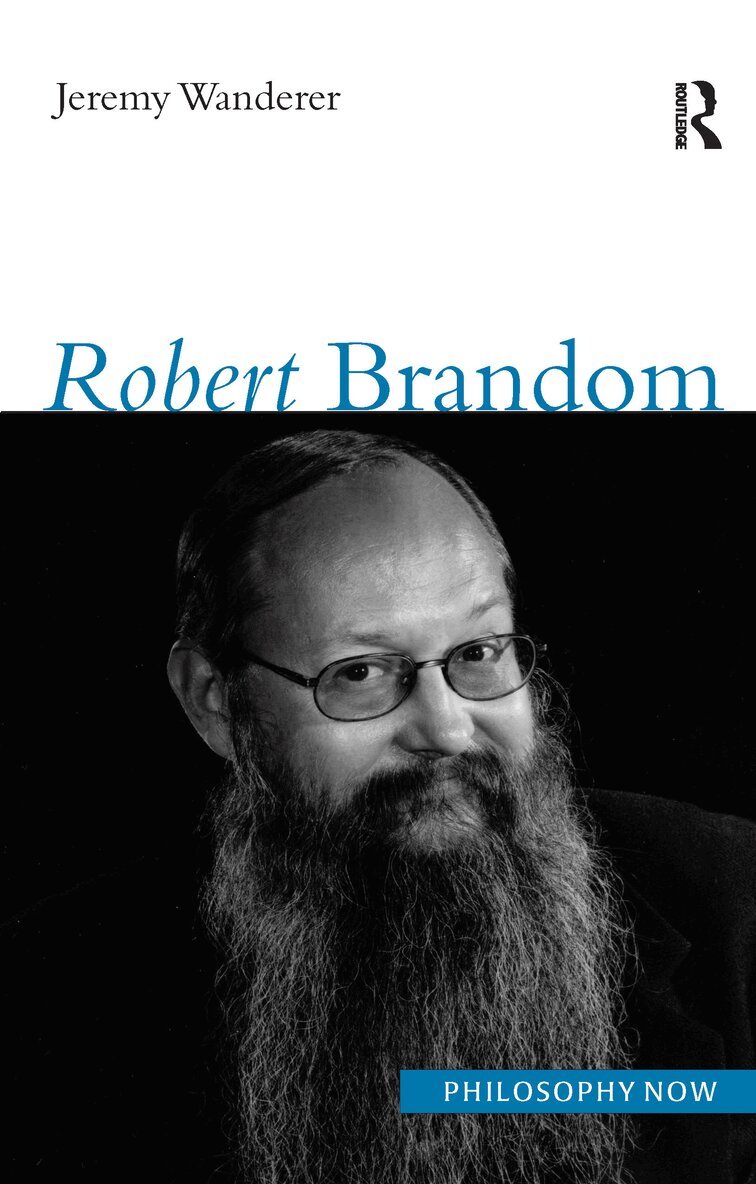
    Robert Brandom

    AvJeremy Wanderer

    Häftad, Engelska, 2006

    707 kr

    Beställningsvara. Skickas inom 5-8 vardagar. Fri frakt över 249 kr.

    Fler format och utgåvor

    E-bok

    656 kr

    E-bok

    654 kr

    Beskrivning

    "Robert Brandom" is one of the most significant philosophers writing today, yet paradoxically philosophers have found it difficult to get to grips with the details and implications of his work. This book aims to facilitate critical engagement with Brandom's ideas by providing an accessible overview of Brandom's project and the context for an initial assessment. Jeremy Wanderer's examination focuses on Brandom's inferentialist conception of rationality, and the core part of this conception that aims to specify the structure that a set of performances within a social practice must have for the participants to count as sapient beings by virtue of their participation in the practice, and for the performances within the practice to have objective semantic content by virtue of their featuring within the practice. Wanderer's exploration of these two goals forms the structure to the book. It Includes: Part I that provides a structural model of linguistic practice and considers various groups of potential participants in terms of their relationships to this practice; and, Part II that examines the meaning of the performances that are caught up in this gameplaying practice. Brandom's approach to semantics is outlined and the challenge such an approach has in allowing for a representational dimension of language and thought is explored. Wanderer offers readers a valuable framework for understanding the Brandomian system and helps situate Brandom's systematic theorizing within contemporary Anglo-American philosophy. This book will be a sought after aid to reading Brandom for advanced students and philosophers engaging with his challenging body of work.

    Produktinformation

    • Utgivningsdatum:2006-11-01
    • Mått:138 x 216 x 15 mm
    • Vikt:470 g
    • Format:Häftad
    • Språk:Engelska
    • Antal sidor:256
    • Förlag:Taylor & Francis Ltd
    • ISBN:9781844650880

    Utforska kategorier

    • Filosofiska discipliner inom Filosofi och religion

    Mer om författaren

    Jeremy Wanderer is Lecturer in Philosophy at the University of Cape Town.

    Recensioner i media

    "The danger with a book as good as Jeremy Wanderer's introduction to the thought of Robert Brandom is that people will read it instead of reading the original. It is fortunate, then, that the book is extremely good; clear and well-referenced with regard to straight points of exposition and explicit when offering reconstruction, amendment or interpretation of Brandom's position. An important resource for students and scholars alike." - Philosophical Papers "A very good book. It is an intelligent, interesting, economical, unpretentious, and accurate exposition of the main features of Robert Brandom's philosophy of language. Wanderer gets Brandom to speak for himself, without using the history of philosophy as a mouthpiece, and the voice we hear is much clearer." - Notre Dame Philosophical Reviews "Wanderer's book provides us with a very insightful overview of Brandom's work, one that helps not only to clarify his ideas, but also to continue a critical discussion of the merits of Brandom's significant contributions to our understanding of what it is to be, as Aristotle described us, animals with language." - International Journal of Philosophical Studies "A genuinely edifying introduction to Brandom's thinking is now available ... displays a detailed knowledge and understanding of Brandom's demanding work and admirably succeeds in its aim of introducing Brandom's project." - Philosophy in Review "A very good guide, at once thoughtfully critical and generally sympathetic. It introduces in a direct and clear way many themes in Brandom, but does so according to its own plan, thereby shedding light on aspects of Brandom's thought that can be hard to discern in the original presentation." - Danielle Macbeth, Haverford College, Pennsylvania An excellent book. The author has an assured grasp of a very difficult, structurally complex area of philosophy and he has plenty to contribute to the debate, both by clarifying the issues and also by adding a critical dimension.A" - Rowland Stout, University College Dublin

    Innehållsförteckning

    • Introduction Part I: Sapience 1. Parrots 2. Rational beings 3. Logical beings 4. Us Part II: Inferentialism 5. Sentential semantics 6. Subsentential semantics 7. Communication 8. Losing the world Conclusion Notes References Index