• Fri frakt över 249 kr
  • •
  • Snabba leveranser
  • •
  • Billiga böcker
Kundservice

Du är på sajten för privatpersoner.

Företag, bibliotek eller offentlig verksamhet?

Du handlar på classic.bokus.com, där alla dina funktioner finns intakta.
Till classic.bokus.com
Bokus logotyp. Gå till startsidan.
  • Erbjudanden
  • Nyheter
  • Student
  • Topplistor
  • Barn & ungdom
  • Bokus Play
  • E-böcker
  • Pocketböcker
  • Spel & pussel

10% rabatt på allt med kod: NYSTART10 →

Sidfot

Mina sidor

    Hjälp

    • Kundservice
    • Vanliga frågor och svar
    • Frakt och leverans
    • Retur vid ångerrätt
    • Reklamera vara
    • Betalning
    • Köpvillkor
    • Allmänna villkor
    • Information om webbplatsens tillgänglighet

    Om Bokus

    • Om oss
    • Pressrum
    • För studenter
    • För företag
    • För bibliotek och offentlig verksamhet
    • För leverantörer
    • Hållbarhet

    Populärt

    • Aktuella erbjudanden
    • Presentkort
    • Studentlitteratur
    • Nya böcker
    • Topplistor
    • Signerade böcker
    • Engelska böcker

    Inspiration

    • Boktips
    • BookTok
    • Populära bokserier
    • Barnbokskaraktärer
    • Populära författare
    Logotyp för Bokus
    Följ oss på Facebook (extern länk)Följ oss på Instagram (extern länk)Följ oss på YouTube (extern länk)Följ oss på TikTok (extern länk)
    bokus @ CookiesAnpassa cookiesIntegritetspolicyKöpvillkor
    Till Citymail hemsida (extern länk)Till Budbee hemsida (extern länk)Till Postnord hemsida (extern länk)Till Schenker hemsida (extern länk)Till Early Bird hemsida (extern länk)Till Walleys hemsida (extern länk)
    1. Juridik
    2. Särskilda rättsområden
    3. Fastighets- och egendomsrätt
    4. Enskild egendom: Juridik

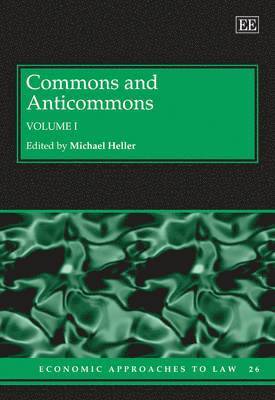
    Commons and Anticommons

    AvMichael Heller

    Inbunden, Engelska, 2009

    Del 26 i serien Economic Approaches to Law series

    8 743 kr

    Beställningsvara. Skickas inom 5-8 vardagar. Fri frakt över 249 kr.

    Beskrivning

    This two-volume collection brings together the most important articles on the tragedies of the commons and anticommons. The first volume presents the bedrock articles that define commons and anticommons theory, from Aristotle to the present. The second volume continues with cutting edge property theory and applications. A judicious selection of articles shows how commons and anticommons metaphors inform current debates at the innovation frontier, ranging from patent thickets to broadcast spectrum licensing. In this extensive introduction, Michael Heller contextualizes the selected papers and provides scholars and policy-makers with an entry point into this rapidly evolving field.

    Produktinformation

    • Utgivningsdatum:2009-12-28
    • Mått:169 x 244 x undefined mm
    • Format:Inbunden
    • Språk:Engelska
    • Serie:Economic Approaches to Law series
    • Förlag:Edward Elgar Publishing Ltd
    • ISBN:9781845426576

    Utforska kategorier

    • Enskild egendom: Juridik inom Juridik

    Mer om författaren

    Edited by Michael Heller, Lawrence A. Wien Professor of Real Estate Law, Columbia Law School, Columbia University, US

    Recensioner i media

    ‘Michael Heller’s Commons and Anticommons could not be more timely. Scholars from a wide variety of disciplines have long been familiar with the problems of the commons, but far less so with respect to the anticommons. No one has done more illuminating work on this surprisingly ubiquitous predicament than Heller. In this book he has very usefully assembled all of the most significant writings on both problems and presented them in a format that covers both the theoretical and applied dimensions of commons and anticommons. This is a singularly valuable book for both scholars and policy analysts.’

    Innehållsförteckning

    • Contents:Volume IAcknowledgementsIntroduction Michael HellerPART IPRECURSORSACommons1. Aristotle, ‘Discussion of Ideal States’2. H. Scott Gordon (1954), ‘The Economic Theory of a Common-Property Resource: The Fishery’BAnticommons3. Augustin Cournot (1838/1960), ‘Of the Mutual Relations of Producers’4. Frank I. Michelman (1982), ‘Ethics, Economics and the Law of Property’PART IICOMMONS ATheory5. Garrett Hardin (1968), ‘The Tragedy of the Commons’6. Elinor Ostrom (1990), ‘Reflections on the Commons’7. Thráinn Eggertsson (2002), ‘Open Access versus Common Property’8. Carol Rose (1986), ‘The Comedy of the Commons: Custom, Commerce, and Inherently Public Property’BSolutions9. Elinor Ostrom (1999), ‘Coping with Tragedies of the Commons’10. Hanoch Dagan and Michael Heller (2001), ‘The Liberal Commons’11. Shirli Kopelman, J. Mark Weber and David M. Messick (2002), ‘Factors Influencing Cooperation in Commons Dilemmas: A Review of Experimental Psychological Research’PART IIIANTICOMMONS ATheory12. Michael Heller (1998), ‘The Tragedy of the Anticommons: Property in the Transition from Marx to Markets’13. Michael Heller (2008), ‘The Tragedy of the Commons’BEconomics14. James M. Buchanan and Yong J. Yoon (2000), ‘Symmetric Tragedies: Commons and Anticommons’15. Francesco Parisi, Norbert Schulz and Ben Depoorter (2005), ‘Duality in Property: Commons and Anticommons’16. Francesco Parisi, Norbert Schulz and Ben Depoorter (2004), ‘Simultaneous and Sequential Anticommons’17. Giuseppe Dari-Matiacci and Francesco Parisi (2006), ‘Substituting Complements’18. Ben Depoorter and Sven Vanneste (2006), ‘Putting Humpty Dumpty Back Together: Experimental Evidence of Anticommons Tragedies’Name Index Volume IIAcknowledgementsAn introduction to both volumes by the editor appears in Volume IPART ITHE NEW SPECTRUM ALinking Commons and Anticommons1. Lee Anne Fennell (2004), ‘Common Interest Tragedies’2. Stephen R. Munzer (2005), ‘The Commons and the Anticommons in the Law and Theory of Property’3. Carol M. Rose (2000), ‘Left Brain, Right Brain, and History in the New Law and Economics of Property’BThe Economy of Property Forms4. Harold Demsetz (1967), ‘Toward a Theory of Property Rights’5. Michael Heller (1999), ‘The Boundaries of Private Property’6. Henry E. Smith (2000), ‘Semicommon Property Rights and Scattering in the Open Fields’7. Henry Hansmann and Reiner Kraakman (2002), ‘Property, Contract, and Verification: The “Numerous Clausus” Problem and the Divisibility of Rights’PART IIAPPLICATION OF ANTICOMMONS THEORY APatents8. Michael Heller and Rebecca S. Eisenberg (1998), ‘Can Patents Deter Innovation? The Anticommons in Biomedical Research’9. Carl Shapiro (2001), ‘Navigating the Patent Thicket: Cross Licences, Patent Pools, and Standard Setting’10. Fiona Murray and Scott Stern (2007), ‘Do Formal Intellectual Property Rights Hinder the Free Flow of Scientific Knowledge? An Empirical Test of the Anti-Commons Hypothesis’11. Rosemarie Ham Ziedonis (2004), ‘Don’t Fence Me In: Fragmented Markets for Technology and the Patent Acquisition Strategies of Firms’BMore Intangible Property 12. Francesco Parisi and Ben Depoorter (2002), ‘Fair Use and Copyright Protection: A Price Theory Explanation’13. Thomas W. Hazlett (2005), ‘Spectrum Tragedies’CReal Property14. Gary D. Libecap and James L. Smith (2002), ‘The Economic Evolution of Petroleum Property Rights in the United States’15. Abraham Bell and Gideon Parchomovsky (2003), ‘Of Property and Antiproperty’16. Mark D. West and Emily M. Morris (2003), ‘The Tragedy of the Condominiums: Legal Responses to Collective Action After the Kobe Earthquake’17. Russell S. Sobel and Peter T. Leeson (2006), ‘Government’s Response to Hurricane Katrina: A Public Choice Analysis’Name Index