• Fri frakt över 249 kr
  • •
  • Snabba leveranser
  • •
  • Billiga böcker
Kundservice

Du är på sajten för privatpersoner.

Företag, bibliotek eller offentlig verksamhet?

Du handlar på classic.bokus.com, där alla dina funktioner finns intakta.
Till classic.bokus.com
Bokus logotyp. Gå till startsidan.
  • Erbjudanden
  • Nyheter
  • Student
  • Topplistor
  • Barn & ungdom
  • Bokus Play
  • E-böcker
  • Pocketböcker
  • Spel & pussel

10% rabatt på allt med kod: NYSTART10 →

Sidfot

Mina sidor

    Hjälp

    • Kundservice
    • Vanliga frågor och svar
    • Frakt och leverans
    • Retur vid ångerrätt
    • Reklamera vara
    • Betalning
    • Köpvillkor
    • Allmänna villkor
    • Information om webbplatsens tillgänglighet

    Om Bokus

    • Om oss
    • Pressrum
    • För studenter
    • För företag
    • För bibliotek och offentlig verksamhet
    • För leverantörer
    • Hållbarhet

    Populärt

    • Aktuella erbjudanden
    • Presentkort
    • Studentlitteratur
    • Nya böcker
    • Topplistor
    • Signerade böcker
    • Engelska böcker

    Inspiration

    • Boktips
    • BookTok
    • Populära bokserier
    • Barnbokskaraktärer
    • Populära författare
    Logotyp för Bokus
    Följ oss på Facebook (extern länk)Följ oss på Instagram (extern länk)Följ oss på YouTube (extern länk)Följ oss på TikTok (extern länk)
    bokus @ CookiesAnpassa cookiesIntegritetspolicyKöpvillkor
    Till Citymail hemsida (extern länk)Till Budbee hemsida (extern länk)Till Postnord hemsida (extern länk)Till Schenker hemsida (extern länk)Till Early Bird hemsida (extern länk)Till Walleys hemsida (extern länk)
    1. Ekonomi och Ledarskap
    2. Nationalekonomi
    3. Miljöekonomi

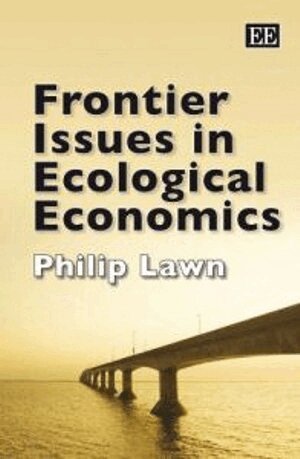
    Frontier Issues in Ecological Economics

    AvPhilip Lawn

    Inbunden, Engelska, 2007

    2 435 kr

    Beställningsvara. Skickas inom 5-8 vardagar. Fri frakt över 249 kr.

    Beskrivning

    Ecological economics formally emerged in the late 1980s in response to the failure of mainstream economic paradigms to deal adequately with the interdependence of social, economic and ecological systems. Frontier Issues in Ecological Economics focuses on a range of cutting-edge issues in the field of ecological economics and outlines plausible measures to achieve a more sustainable, just, and efficient world for all.Covering a broad range of key subjects, this book deals with some of the frontier issues that have recently emerged in ecological economics and those that continue to remain a source of disagreement and debate. In doing so, the book highlights the importance of natural capital, the limits to growth and markets in achieving sustainable development, the policy-guiding value of sustainable development indicators, ecological tax reform considerations, environmental-macroeconomic issues such as the reconciliation of the ecological sustainability and full employment objectives, and measures to deal with growing globalisation concerns. The book concludes with the optimistic assessment that a transition to a steady-state economy - necessary to achieve sustainable development - is entirely compatible with a democratic-capitalist system.Philip Lawn's latest book will appeal to academics and researchers working in the areas of ecological, environmental and natural resource economics, sustainable development, green national accounting, environmental management and development studies. Policymakers, environmental managers and NGOs will also appreciate this book.

    Produktinformation

    • Utgivningsdatum:2007-04-25
    • Mått:156 x 234 x undefined mm
    • Format:Inbunden
    • Språk:Engelska
    • Förlag:Edward Elgar Publishing Ltd
    • ISBN:9781845428402

    Utforska kategorier

    • Miljöekonomi inom Ekonomi och Ledarskap

    Mer om författaren

    Philip Lawn, Flinders University, Australia

    Recensioner i media

    'This is a rich and rewarding book both in terms of synthesizing familiar concepts and introducing new ideas. . . This is a well-written and entertaining book worth reading by all those interested in the frequently murky literature on sustainable development. It is likely to generate not only a lively discussion but also a body of empirical work that might help to resolve some of the major controversies in our field.'

    Innehållsförteckning

    • Contents: PART I: AN INTRODUCTION TO ECOLOGICAL ECONOMICS, SUSTAINABLE DEVELOPMENT AND THE STEADY-STATE ECONOMY 1. Introduction 2. What is Sustainable Development? PART II: SUSTAINABLE DEVELOPMENT AND NATURAL CAPITAL 3. Is Human-Made Capital an Adequate Long-run Substitute for Natural Capital? 4. The Potential Conflict Between Sustainability and Welfare Maximisation 5. Natural Resource Prices and Natural Resource Scarcity PART III: SUSTAINABLE DEVELOPMENT INDICATORS 6. An Introduction to Sustainable Development Indicators 7. An Assessment of Various Measures of Sustainable Economic Welfare 8. Using a Fisherian Measure of Income to Guide a Nation’s Transition to a Steady-State Economy 9. Eco-Efficiency Indicators: Theory and Practice PART IV: SUSTAINABLE DEVELOPMENT: THEORETICAL AND POLICY ISSUES 10. On the Independence of the Sustainability, Distribution and Efficiency Goals 11. Ecological Tax Reform: Why and in What Form? 12. Does the Environmental Kuznets Curve Exist? A Theoretical Perspective 13. IS-LM-EE: Incorporating an Environmental Equilibrium Curve into the IS-LM Model 14. Reconciling the Policy Goals of Full Employment and Ecological Sustainability PART V: SUSTAINABLE DEVELOPMENT AND THE INTERNATIONAL DIMENSION 15. Keynes, International Governance Arrangements and Globalisation 16. Increasing Sustainable National Income by Restoring Comparative Advantage as the Principle Governing International Trade 17. The 2002 World Summit on Sustainable Development: Another Opportunity to Address the Scale and Globalisation Issues Gone Begging PART VI: CONCLUSION 18. Is a Steady-State Economy Compatible with a Democratic-Capitalist System? Bibliography Index