• Fri frakt över 249 kr
  • •
  • Snabba leveranser
  • •
  • Billiga böcker
Kundservice

Du är på sajten för privatpersoner.

Företag, bibliotek eller offentlig verksamhet?

Du handlar på classic.bokus.com, där alla dina funktioner finns intakta.
Till classic.bokus.com
Bokus logotyp. Gå till startsidan.
  • Erbjudanden
  • Nyheter
  • Student
  • Topplistor
  • Barn & ungdom
  • Bokus Play
  • E-böcker
  • Pocketböcker
  • Spel & pussel

10% rabatt på allt med kod: NYSTART10 →

Sidfot

Mina sidor

    Hjälp

    • Kundservice
    • Vanliga frågor och svar
    • Frakt och leverans
    • Retur vid ångerrätt
    • Reklamera vara
    • Betalning
    • Köpvillkor
    • Allmänna villkor
    • Information om webbplatsens tillgänglighet

    Om Bokus

    • Om oss
    • Pressrum
    • För studenter
    • För företag
    • För bibliotek och offentlig verksamhet
    • För leverantörer
    • Hållbarhet

    Populärt

    • Aktuella erbjudanden
    • Presentkort
    • Studentlitteratur
    • Nya böcker
    • Topplistor
    • Signerade böcker
    • Engelska böcker

    Inspiration

    • Boktips
    • BookTok
    • Populära bokserier
    • Barnbokskaraktärer
    • Populära författare
    Logotyp för Bokus
    Följ oss på Facebook (extern länk)Följ oss på Instagram (extern länk)Följ oss på YouTube (extern länk)Följ oss på TikTok (extern länk)
    bokus @ CookiesAnpassa cookiesIntegritetspolicyKöpvillkor
    Till Citymail hemsida (extern länk)Till Budbee hemsida (extern länk)Till Postnord hemsida (extern länk)Till Schenker hemsida (extern länk)Till Early Bird hemsida (extern länk)Till Walleys hemsida (extern länk)
    1. Historia och arkeologi
    2. Historia
    3. Historia: teori och metod

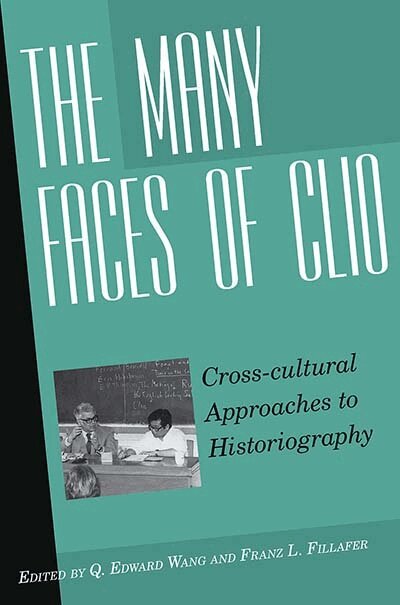
    Many Faces of Clio

    Cross-cultural Approaches to HistoriographyEssays in Honor of Georg G. Iggers

    AvQ. Edward Wang,Franz Leander Fillafer

    Inbunden, Engelska, 2006

    2 538 kr

    Beställningsvara. Skickas inom 5-8 vardagar. Fri frakt över 249 kr.

    Beskrivning

    Born in Germany, Georg Iggers escaped from Nazism to the United States in his adolescence where he became one of the most distinguished scholars of European intellectual history and the history of historiography. In his lectures, delivered all over the world, and in his numerous books, translated into many languages, Georg Iggers has reshaped historiography and indefatigably promoted cross-cultural dialogue. This volume reflects the profound impact of his oeuvre. Among the contributors are leading intellectual historians but also younger scholars who explore the various cultural contexts of modern historiography, focusing on changes of European and American scholarship as well as non-Western historical writing in relation to developments in the West. Addressing these changes from a transnational perspective, this well-rounded volume offers an excellent introduction to the field, which will be of interest to both established historians and graduate students.

    Produktinformation

    • Utgivningsdatum:2006-12-01
    • Mått:152 x 229 x 31 mm
    • Vikt:830 g
    • Format:Inbunden
    • Språk:Engelska
    • Antal sidor:494
    • Förlag:Berghahn Books
    • ISBN:9781845452704

    Utforska kategorier

    • Historia: teori och metod inom Historia och arkeologi

    Mer om författaren

    Q. Edward Wang is Professor and Chairperson of the History Department at Rowan University and has written and co-written several books in both English and Chinese, including The Ideas of History in the West: from Ancient Greece to the Present (1998); Postmodernism and Historiography: A Chinese-Western Comparison (2000), and Mirroring the Past: the Writing and Use of History in Imperial China (2005).

    Recensioner i media

    "…a thought-provoking volume that takes the challenge of transnationalism seriously.”  ·  German History

    Innehållsförteckning

    • AcknowledgmentsIntroductionQ. Edward WangPART I: THEORIESChapter 1. Ideas of Periodization in the WestDonald R. KelleyChapter 2. What is Distinctive about Modern Historiography?Allan MegillChapter 3. War and Peace: Against Historical RealismHayden WhiteChapter 4. Objectivity and Opposition: Some Émigré Historians in the 1930s and Early 1940sEdoardo TortaroloChapter 5. Of Nations, Nationalism, and National Identity: Reflections on the Historiographical Organization of the PastDaniel WoolfChapter 6. “Won’t You Tell Me, Where Have All the Good Times Gone?” On the Advantages and Disadvantages of Modernization Theory for Historical StudyChris LorenzChapter 7. Historiography, Social Sciences, and the Master NarrativesBo StråthChapter 8. Georg G. Iggers and the Challenge of A Poststructuralist HistoriographyD. A. Jeremy TelmanChapter 9. Future-Directed Elements of a European Historical CultureJörn RüsenPART II: SCOPEChapter 10. Transnational Approaches to Historical Sciences in the Twentieth Century: International Historical Congresses and OrganizationsJürgen KockaChapter 11. Cross-Cultural Developments of Modern Historiography: Examples from East Asia, the Middle East, and IndiaQ. Edward WangChapter 12. Time and Space in Chinese Historiography: Concepts of Centrality in the History and Literature of the Three KingdomsRoger V. Des ForgesChapter 13. Georg G. Iggers and the Changes in Modern Chinese HistoriographyChen Qineng and Jiang PengChapter 14. The Korean Conception of History: Shin Ch’aeho’s Nationalistic HistoriographyGi-Bong KimChapter 15. “Historiology” and Historiography: An East Asian PerspectiveMasayuki SatoChapter 16. Curriculum Matters: Teaching World History in the US in the Twentieth CenturyEckhardt FuchsChapter 17. Challenges to the History of Historiography in an Age of GlobalizationMatthias Middell and Frank HadlerPART III: CASESChapter 18. Why Davila? John Adams and His DiscoursesZdenka Gredel-ManueleChapter 19. The Enlightenment on Trial: Reinhart Koselleck’s Interpretation of AufklärungFranz Leander FillaferChapter 20. Constitutional and Economic History at the University of Berlin, 1890–1933Pavel KolárChapter 21. Border Regions, Hybridity, and National Identity: The Cases of Alsace and MasuriaStefan BergerChapter 22. “Tons of Wasted Paper”? Jürgen Kuczynski and East German HistoriographyAxel Fair-SchulzChapter 23. Going to the Source: Historical Records and Interpretations of the East German DictatorshipGregory R. WitkowskiChapter 24. Fascism, Anti-Fascism, and Resistance in the Politics of Memory and Historiography in Post War ItalyGustavo CorniChapter 25. “Let the Dead Bury the Living”: Daniel Libeskind’s Monumental Counter-HistoryEwa DomanskaAppendixGeorg G. Iggers: A Brief BiographySelect BibliographyContributorsIndex