• Fri frakt över 249 kr
  • •
  • Snabba leveranser
  • •
  • Billiga böcker
Kundservice

Du är på sajten för privatpersoner.

Företag, bibliotek eller offentlig verksamhet?

Du handlar på classic.bokus.com, där alla dina funktioner finns intakta.
Till classic.bokus.com
Bokus logotyp. Gå till startsidan.
  • Erbjudanden
  • Nyheter
  • Student
  • Topplistor
  • Barn & ungdom
  • Bokus Play
  • E-böcker
  • Pocketböcker
  • Spel & pussel

10% rabatt på allt med kod: NYSTART10 →

Sidfot

Mina sidor

    Hjälp

    • Kundservice
    • Vanliga frågor och svar
    • Frakt och leverans
    • Retur vid ångerrätt
    • Reklamera vara
    • Betalning
    • Köpvillkor
    • Allmänna villkor
    • Information om webbplatsens tillgänglighet

    Om Bokus

    • Om oss
    • Pressrum
    • För studenter
    • För företag
    • För bibliotek och offentlig verksamhet
    • För leverantörer
    • Hållbarhet

    Populärt

    • Aktuella erbjudanden
    • Presentkort
    • Studentlitteratur
    • Nya böcker
    • Topplistor
    • Signerade böcker
    • Engelska böcker

    Inspiration

    • Boktips
    • BookTok
    • Populära bokserier
    • Barnbokskaraktärer
    • Populära författare
    Logotyp för Bokus
    Följ oss på Facebook (extern länk)Följ oss på Instagram (extern länk)Följ oss på YouTube (extern länk)Följ oss på TikTok (extern länk)
    bokus @ CookiesAnpassa cookiesIntegritetspolicyKöpvillkor
    Till Citymail hemsida (extern länk)Till Budbee hemsida (extern länk)Till Postnord hemsida (extern länk)Till Schenker hemsida (extern länk)Till Early Bird hemsida (extern länk)Till Walleys hemsida (extern länk)
    1. Samhälle och politik
    2. Sociologi och antropologi
    3. Antropologi

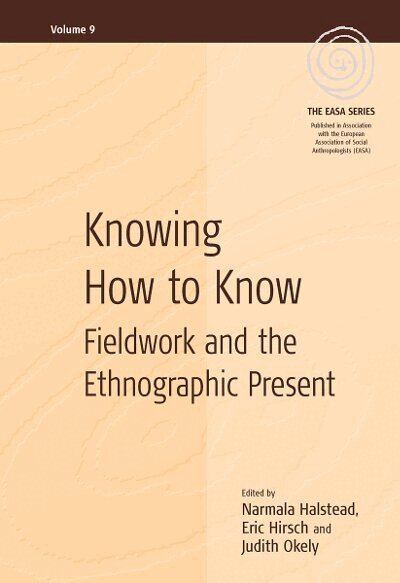
    Knowing How to Know

    Fieldwork and the Ethnographic Present

    AvNarmala Halstead,Eric Hirsch

    Häftad, Engelska, 2008

    Del i serien EASA Series

    511 kr

    Beställningsvara. Skickas inom 5-8 vardagar. Fri frakt över 249 kr.

    Beskrivning

    This volume examines some crucial issues in the conduct of fieldwork and ethnography and provides new insights into the problems of constructing anthropological knowledge. How is anthropological knowledge created from fieldwork, whose knowledge is this, who determines what is of significance in any ethnographic context, and how is the fieldsite extended in both time and place?Nine anthropologists examine these problems, drawing on diverse case studies. These range from the dilemmas of the religious refashioning of the ethnographer in contemporary Indonesia to the embodied knowledge of ballet performers, and from ignorance about post-colonial ritual innovations by the anthropologist in highland Papua to the skilled visions of slow food producers in Italy. It is a key text for new fieldworkers as much as for established researchers. The anthropological insights developed here are of interdisciplinary relevance: cultural studies scholars, sociologists and historians will be as interested as anthropologists in this re-evaluation of fieldwork and the project of ethnography.

    Produktinformation

    • Utgivningsdatum:2008-04-01
    • Mått:152 x 229 x 12 mm
    • Vikt:299 g
    • Format:Häftad
    • Språk:Engelska
    • Serie:EASA Series
    • Antal sidor:212
    • Förlag:Berghahn Books
    • ISBN:9781845454777

    Utforska kategorier

    • Antropologi inom Samhälle och politik

    Mer om författaren

    Narmala Halstead is a Senior Lecturer in Anthropology at the University of East London and was awarded a Teaching Fellowship by this university. She was a lecturer at Cardiff University and also taught at Brunel University. She has carried out research in Guyana, the U.S. and the UK . She has published numerous articles examining fieldwork encounters, belonging, violence and related issues.

    Recensioner i media

    “This book is an important stimulus to ongoing debate, and showcases some of the best of recent approaches and challenges to the ways we know what we know.”  ·  Ethos

    Innehållsförteckning

    • Introduction: Experiencing the Ethnographic Present: Knowing through ‘Crisis’Narmala HalsteadChapter 1. Knowing, Not Knowing, Knowing AnewEric HirschChapter 2. The Transformation of Indigenous Knowledge into Anthropological Knowledge: Whose Knowledge Is It?David P. CrandallChapter 3. Knowing without NotesJudith OkelyChapter 4. To Know the Dancer: Formations of Fieldwork in the Ballet WorldHelena WulffChapter 5. Knowledge as Gifts of Self and OtherNarmala HalsteadChapter 6. Knowledge from the Body: Fieldwork, Power and the Acquisition of a New SelfKonstantinos RetsikasChapter 7. What is Sacred about that Pile of Stones at Mt Tendong? Serendipity, Complicity and Circumstantial Activism in the Production of Anthropological Knowledge of Sikkim, IndiaVibha AroraChapter 8. Learning to See: World-views, Skilled Visions, Skilled PracticeCristina GrasseniChapter 9. Rescuing Theory from the NationViranjini MunasingheNotes on ContributorsIndex