• Fri frakt över 249 kr
  • •
  • Snabba leveranser
  • •
  • Billiga böcker
Kundservice

Du är på sajten för privatpersoner.

Företag, bibliotek eller offentlig verksamhet?

Du handlar på classic.bokus.com, där alla dina funktioner finns intakta.
Till classic.bokus.com
Bokus logotyp. Gå till startsidan.
  • Erbjudanden
  • Student
  • Topplistor
  • Barn & ungdom
  • Bokus Play
  • E-böcker
  • Ljudböcker
  • Pocketböcker
  • Spel och pussel

5% studentrabatt – använd koden KURSBOK27 →

Sidfot

Mina sidor

    Hjälp

    • Kundservice
    • Vanliga frågor och svar
    • Frakt och leverans
    • Retur vid ångerrätt
    • Reklamera vara
    • Betalning
    • Köpvillkor
    • Allmänna villkor
    • Information om webbplatsens tillgänglighet

    Om Bokus

    • Om oss
    • Pressrum
    • För studenter
    • För företag
    • För bibliotek och offentlig verksamhet
    • För leverantörer
    • Hållbarhet

    Populärt

    • Aktuella erbjudanden
    • Presentkort
    • Studentlitteratur
    • Nya böcker
    • Topplistor
    • Signerade böcker
    • Engelska böcker

    Inspiration

    • Boktips
    • BookTok
    • Barnbokskaraktärer
    • Populära författare
    Logotyp för Bokus
    Följ oss på Facebook (extern länk)Följ oss på Instagram (extern länk)Följ oss på YouTube (extern länk)Följ oss på TikTok (extern länk)
    bokus @ CookiesAnpassa cookiesIntegritetspolicyKöpvillkor
    Till Citymail hemsida (extern länk)Till Budbee hemsida (extern länk)Till Postnord hemsida (extern länk)Till Schenker hemsida (extern länk)Till Early Bird hemsida (extern länk)Till Walleys hemsida (extern länk)
    1. Naturvetenskap och teknik
    2. Teknik och industri
    3. Tillverkningsteknik

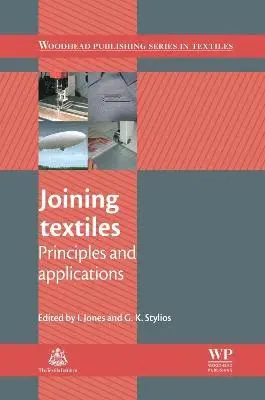
    Joining Textiles

    Principles and Applications

    AvI Jones,G K Stylios

    Inbunden, Engelska, 2013

    Del i serien Woodhead Publishing Series in Textiles

    2 554 kr

    Beställningsvara. Skickas inom 10-15 vardagar. Fri frakt över 249 kr.

    Beskrivning

    Understanding the techniques for joining fabrics together in a way that considers durability, strength, leak-tightness, comfort in wear and the aesthetics of the joints is critical to the production of successful, structurally secure fabric products. Joining textiles: Principles and applications is an authoritative guide to the key theories and methods used to join fabrics efficiently.Part one provides a clear overview of sewing technology. The mechanics of stitching, sewing and problems related to sewn textiles are discussed, along with mechanisms of sewing machines and intelligent sewing systems. Part two goes on to explore adhesive bonding of textiles, including principles, methods and applications, along with a review of bonding requirements in coating and laminating of textiles. Welding technologies are the focus of part three. Heat sealing, ultrasonic and dielectric textile welding are covered, as are laser seaming of fabrics and the properties and performance of welded or bonded seams. Finally, part four reviews applications of joining textiles such as seams in non-iron shirts and car seat coverings, joining of wearable electronic components and technical textiles, and the joining techniques involved in industrial and medical products including nonwoven materials.With its distinguished editors and international team of expert contributors, Joining textiles is an important reference work for textile product manufacturers, designers and technologists, fibre scientists, textile engineers and academics working in this area.

    • Provides an authoritative guide to the key theories and methods used to efficiently join fabrics
    • Discusses the mechanics of stitching and sewing and problems related to sewn textiles, alongside mechanisms of sewing machines, and intelligent sewing systems
    • Explores adhesive bonding of textiles, including principles, methods and applications, along with a review of bonding requirements in coating and laminating of textiles

    Produktinformation

    • Utgivningsdatum:2013-01-24
    • Mått:156 x 234 x undefined mm
    • Vikt:1 420 g
    • Format:Inbunden
    • Språk:Engelska
    • Serie:Woodhead Publishing Series in Textiles
    • Antal sidor:624
    • Förlag:Elsevier Science
    • ISBN:9781845696276

    Utforska kategorier

    • Tillverkningsteknik inom Naturvetenskap och teknik

    Mer om författaren

    Ian Jones is Principal Research Engineer at TWI Ltd, UK. George K. Stylios is Professor of Textiles and Director of RIFleX at Heriot-Watt University, UK.

    Innehållsförteckning

    • Contributor contact detailsWoodhead Publishing Series in TextilesIntroductionChapter 1: Types of fabric and their joining requirementsAbstract:1.1 Introduction1.2 The main types of natural fibre1.3 Synthetic fibres1.4 High performance fibres1.5 The process of creating fabrics from fibres1.6 Woven fabric structures1.7 Knitted fabric structures1.8 Non-woven fabrics1.9 Joining fabrics: seams and stitches1.10 Stitching in practice: the case of high performance fabrics1.11 Alternative methods of joining fabrics: welded seams1.12 Ultrasonic welding1.13 Conclusions1.14 AcknowledgementsPart 1: Sewing technologyChapter 2: The mechanics of stitchingAbstract:2.1 Introduction2.2 The principles of stitching2.3 Conclusion2.5 Appendix: nomenclature and notationChapter 3: The sewing of textilesAbstract:3.1 Introduction3.2 Types of sewing machine3.3 Machine feeding systems3.4 Machine settings and sewing quality3.5 Needle size and point type3.6 Stitch classification and applications3.7 Seam classification and applications3.8 Sewing threads3.9 Seaming quality problems3.10 Seam pucker: causes and prevention3.11 Thread breakage: causes and prevention3.12 Needle breakage3.13 Slipped/missed stitching: causes and prevention3.14 Uneven seams: causes and prevention3.15 Comparing welded and sewn seams3.16 Future trendsChapter 4: Mechanisms of sewing machinesAbstract:4.1 Introduction4.2 The evolution of the sewing machine4.3 Machine categorisation4.4 Integrated stitching unit (ISU)4.5 Types of motors used in sewing machines4.6 Three-thread overlock with a microprocessor4.7 Mechanised sewing machines4.8 Semi-automatic machines, automated workstations and transfer lines4.9 Advantages and limitations of machine automation4.10 Computer numerical control (CNC)4.11 Achieving fully automated apparel manufacture through the application of robotics4.12 Conclusion4.13 Sources of further information and adviceChapter 5: Problems relating to sewingAbstract:5.1 Introduction5.2 Seam elasticity5.3 Seam failure5.4 Seam problems related to material feeding5.5 Problems in stitch formation5.6 Seam pucker and other surface distortions5.7 Future trends5.8 Sources of further information and adviceChapter 6: The quality and performance of sewn seamsAbstract:6.1 Introduction6.2 Seam strength6.3 Seam extensibility and recovery6.4 Seam puckering6.5 Seam slippage6.6 Drape and bending6.7 Seam grinning/gaping6.8 Barrier properties of seams6.9 Flame retardancy of seams6.10 Degradation/damage of seams6.11 Sources of further information and adviceChapter 7: Intelligent sewing systems for garment automation and roboticsAbstract:7.1 Introduction7.2 Developments in the automation of sewing7.3 Operational principles of the intelligent sewability environment (ISE)7.4 ConclusionsPart II: Adhesive bonding of textilesChapter 8: Adhesive bonding of textiles: principles, types of adhesive and methods of useAbstract:8.1 Introduction to adhesives in the textile industry8.2 Reasons for the success and failure of adhesives8.3 Classification of adhesives used in textile applications8.4 Bonding processes8.5 Trends in adhesive typesChapter 9: Adhesive bonding of textiles: applicationsAbstract:9.1 Introduction: textiles and adhesive joining9.2 Adhesives and adhesive applications9.3 Properties achieved by adhesive joining9.4 Examples of adhesive use9.5 Future trends9.6 AcknowledgementsChapter 10: Bonding requirements in coating and laminating of textilesAbstract:10.1 Introduction10.2 Materials and adhesives in coating and laminating10.3 Coating process10.4 Laminating process10.5 Properties and applications of coated and laminated fabrics10.6 ConclusionPart III: Welding technologiesChapter 11: The use of heat sealing, hot air and hot wedge to join textile materialsAbstract:11.1 Heat sealing of textiles: introduction11.2 Equipment for heat sealing11.3 Factors affecting the quality of heat sealing11.4 Applications of heat sealing in textiles11.5 Hot air wedge and hot wedge welding of textiles: introduction11.6 Equipment for hot air/wedge welding11.7 Factors affecting the quality of hot air/wedge welding11.8 Applications of hot air/wedge welding in textilesChapter 12: Ultrasonic and dielectric welding of textilesAbstract:12.1 Ultrasonic welding: an introduction12.2 Equipment for ultrasonic welding12.3 Factors affecting the quality of ultrasonic welding12.4 Applications of ultrasonic welding in textiles12.5 Dielectric welding: an introduction12.6 Equipment for dielectric welding12.7 Factors affecting the quality of dielectric welding12.8 Applications of dielectric weldingChapter 13: Laser seaming of fabricsAbstract:13.1 Introduction13.2 The laser welding process13.3 The main processing parameters in laser welding and their effects13.4 Equipment in laser welding13.5 Textile materials that can be laser welded13.6 Joint designs in laser welding13.7 Monitoring and quality control in laser welding13.8 Comparison between stitched and laser welded seams13.9 Applications of laser welding13.10 Future trendsChapter 14: Properties and performance of welded or bonded seamsAbstract:14.1 Introduction14.2 Performance properties of seams14.3 Quality evaluation of welded or bonded seams14.4 ConclusionPart IV: Applications of joining textilesChapter 15: The appearance of seams in non-iron shirtsAbstract:15.1 Introduction15.2 Wrinkle-free fabrics15.3 Non-iron shirts and seam pucker15.4 Interlinings as sewing aids15.5 The stitching of non-iron shirts15.6 Discussion and conclusion15.7 Acknowledgements15.8 Appendix: key terms and definitionsChapter 16: Seams in car seat coverings: properties and performanceAbstract:16.1 Introduction16.2 Materials and machines for sewing car seat covers16.3 Influence of the seam on materials for making car seat covers16.4 Seaming problems in car seat covers and their solution16.5 Future trends16.6 Conclusions16.7 AcknowledgementChapter 17: Joining of wearable electronic componentsAbstract:17.1 Introduction17.2 Conducting fibres17.3 Conducting yarns17.4 Fabrics and composites17.5 Connecting technologies17.6 Requirements of electronic interconnects17.7 Applications17.8 Future trends17.9 Sources of further information and advice17.10 AcknowledgementsChapter 18: Joining of technical textiles with stringent seam demandsAbstract:18.1 Introduction18.2 Joining techniques for textiles with stringent seam demands18.3 Applications of stringent seams in technical textiles18.4 Future trends18.5 Sources of further information and advice18.6 AcknowledgementChapter 19: Nonwoven materials and joining techniquesAbstract:19.1 Introduction19.2 Principles of nonwovens19.3 Raw materials19.4 Web formation technology19.5 Web bonding technology19.6 Nonwoven fabric finishing19.7 Techniques for joining nonwoven materials19.8 Future trends in the nonwoven market19.9 AcknowledgementsChapter 20: Epilogue: joining textilesIndex