• Fri frakt över 249 kr
  • •
  • Snabba leveranser
  • •
  • Billiga böcker
Kundservice

Du är på sajten för privatpersoner.

Företag, bibliotek eller offentlig verksamhet?

Du handlar på classic.bokus.com, där alla dina funktioner finns intakta.
Till classic.bokus.com
Bokus logotyp. Gå till startsidan.
  • Erbjudanden
  • Nyheter
  • Student
  • Topplistor
  • Barn & ungdom
  • Bokus Play
  • E-böcker
  • Pocketböcker
  • Spel & pussel

10% rabatt på allt med kod: NYSTART10 →

Sidfot

Mina sidor

    Hjälp

    • Kundservice
    • Vanliga frågor och svar
    • Frakt och leverans
    • Retur vid ångerrätt
    • Reklamera vara
    • Betalning
    • Köpvillkor
    • Allmänna villkor
    • Information om webbplatsens tillgänglighet

    Om Bokus

    • Om oss
    • Pressrum
    • För studenter
    • För företag
    • För bibliotek och offentlig verksamhet
    • För leverantörer
    • Hållbarhet

    Populärt

    • Aktuella erbjudanden
    • Presentkort
    • Studentlitteratur
    • Nya böcker
    • Topplistor
    • Signerade böcker
    • Engelska böcker

    Inspiration

    • Boktips
    • BookTok
    • Populära bokserier
    • Barnbokskaraktärer
    • Populära författare
    Logotyp för Bokus
    Följ oss på Facebook (extern länk)Följ oss på Instagram (extern länk)Följ oss på YouTube (extern länk)Följ oss på TikTok (extern länk)
    bokus @ CookiesAnpassa cookiesIntegritetspolicyKöpvillkor
    Till Citymail hemsida (extern länk)Till Budbee hemsida (extern länk)Till Postnord hemsida (extern länk)Till Schenker hemsida (extern länk)Till Early Bird hemsida (extern länk)Till Walleys hemsida (extern länk)
    1. Kultur
    2. Scenkonst och film
    3. Film

    H. G. Wells, Modernity and the Movies

    AvKeith Williams

    Häftad, Engelska, 2007

    Del 36 i serien Liverpool Science Fiction Texts and Studies

    784 kr

    Beställningsvara. Skickas inom 3-6 vardagar. Fri frakt över 249 kr.

    Fler format och utgåvor

    Inbunden

    2 322 kr

    Beskrivning

    This book investigates Wells’s interest in cinema and related media technologies, by placing it back into the contemporary cultural and scientific contexts giving rise to them. It plugs a gap in understanding Wells’s contribution to exploring and advancing the possibilities of cinematic narrative and its social and ideological impacts in the modern period. Previous studies concentrate on adaptations: this book accounts for the specifically (proto)cinematic techniques and concerns of Wells’s texts. It also focuses on contemporary film-making ‘in dialogue’ with his ideas. Alongside Hollywood’s later transactions, it gives equal weight to neglected British and continental European dimensions. Chapter 1 shows how early writings (The Time Machine and short stories) feature many kinds of radically defamiliarised vision. These constitute imaginative speculations about the forms and potentials of moving image and electronic media. Chapter 2 discusses the power of voyeurism, ‘absent presence’ and the disjunction of sound-image reproduction implied in The Invisible Man and its topical politics, updated in notable screen versions. Chapter 3 extends this to dystopian warnings of systematic surveillance, broadcasting of celebrity personae and ‘post-literate’ video culture in When the Sleeper Wakes, a crucial template for urban futures on film. Chapter 4 analyses Wells’s belated return to screenwriting in the 1930s. It accounts for his ‘broadbrow’ ambition of mediating between popular and avant-garde tendencies to promote his cause and its mixed results in Things to Come, The Man Who Could Work Miracles, etc. Chapter 5 finally surveys Wells’s legacy on both small and large screens. It considers whether, as well as being raided for scenarios for spectacular effects, his subtexts still nourish an evolving tradition of alternative SF, which duly critiques the innovations and applications of its host media.

    Produktinformation

    • Utgivningsdatum:2007-12-01
    • Mått:156 x 234 x undefined mm
    • Format:Häftad
    • Språk:Engelska
    • Serie:Liverpool Science Fiction Texts and Studies
    • Antal sidor:288
    • Förlag:Liverpool University Press
    • ISBN:9781846310607

    Utforska kategorier

    • Film inom Kultur
    • Litteraturvetenskap inom Skönlitteratur

    Mer om författaren

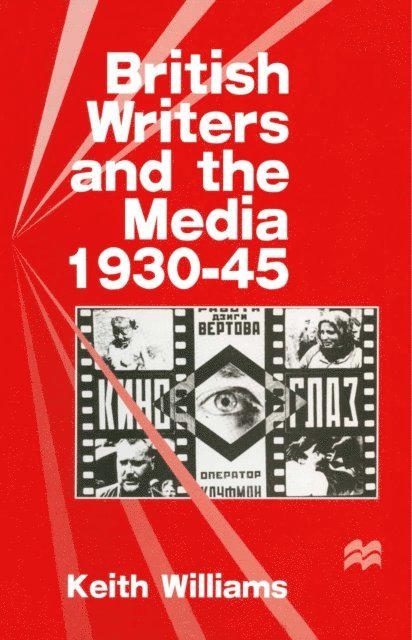
    Keith Williams is Senior Lecturer in English Literature at Dundee University. He recently acted as a consultant for BBC 4's trilogy of programmes on the history of British Science Fiction, The Martians and Us. Previous publications include British Writers and the Media 1930-45 (London: Macmillan/New York: St Martins Press, 1996)

    Recensioner i media

    Williams's study captures Well's interaction with cinema comprehensively. The Wellsian, No. 31 2008 Wellsian scholars will appreciate H. G. Wells: Modernity and the Movies for its freshness and insight. The book also provides an excellent framework for a course on Wells that studies the interactions for his work in written and cinematic forms. Science Fiction Studies, Volume 35 2008 Keith Williams's H. G. Wells, Modernity and the Movies reckons in very different terms with another figure who carried his Victorianism into the twentieth century, Williams looks not only at Wells's actual writings about and engagements with early cinema but also at ways in which his work anticipated-or, indeed, pioneered-"filmic" techniques and habits of perception before film itself had fully arrived. Here the book joins recent work in media studies that seeks to uncover the technological infrastructures of historical ways of seeing and feeling. While never quite free of the risk of retroactively conforming its object of study to a subsequently apparent development path, Williams's close readings of the links with particular optical technologies and efforts in Wells's writing are never less than resourceful and engaging. Studies in English Literature 1500-1900, The Nineteenth Century Volume 50, Number 4 2010

    Innehållsförteckning

    • AcknowledgementsAbbreviationsIntroduction: Wells’s Prescience1 Optical Speculations in the Early Writings: The Time Machine and the Short Stories2 The Dis/Appearance of the Subject: Wells, Whale and The Invisible Man3 ‘Seeing the Future’: Visual Technology in When the Sleeper Wakes and Fritz Lang’s Metropolis4 The ‘Broadbrow’ and the Big Screen: Wells’s Film Writing5 Afterimages: Adaptations and InfluencesConclusion NotesBibliographyIndex