• Fri frakt över 249 kr
  • •
  • Snabba leveranser
  • •
  • Billiga böcker
Kundservice

Du är på sajten för privatpersoner.

Företag, bibliotek eller offentlig verksamhet?

Du handlar på classic.bokus.com, där alla dina funktioner finns intakta.
Till classic.bokus.com
Bokus logotyp. Gå till startsidan.
  • Erbjudanden
  • Nyheter
  • Student
  • Topplistor
  • Barn & ungdom
  • Bokus Play
  • E-böcker
  • Pocketböcker
  • Spel & pussel

10% rabatt på allt med kod: NYSTART10 →

Sidfot

Mina sidor

    Hjälp

    • Kundservice
    • Vanliga frågor och svar
    • Frakt och leverans
    • Retur vid ångerrätt
    • Reklamera vara
    • Betalning
    • Köpvillkor
    • Allmänna villkor
    • Information om webbplatsens tillgänglighet

    Om Bokus

    • Om oss
    • Pressrum
    • För studenter
    • För företag
    • För bibliotek och offentlig verksamhet
    • För leverantörer
    • Hållbarhet

    Populärt

    • Aktuella erbjudanden
    • Presentkort
    • Studentlitteratur
    • Nya böcker
    • Topplistor
    • Signerade böcker
    • Engelska böcker

    Inspiration

    • Boktips
    • BookTok
    • Populära bokserier
    • Barnbokskaraktärer
    • Populära författare
    Logotyp för Bokus
    Följ oss på Facebook (extern länk)Följ oss på Instagram (extern länk)Följ oss på YouTube (extern länk)Följ oss på TikTok (extern länk)
    bokus @ CookiesAnpassa cookiesIntegritetspolicyKöpvillkor
    Till Citymail hemsida (extern länk)Till Budbee hemsida (extern länk)Till Postnord hemsida (extern länk)Till Schenker hemsida (extern länk)Till Early Bird hemsida (extern länk)Till Walleys hemsida (extern länk)
    1. Ekonomi och Ledarskap
    2. Företagsekonomi
    3. Affärsutveckling

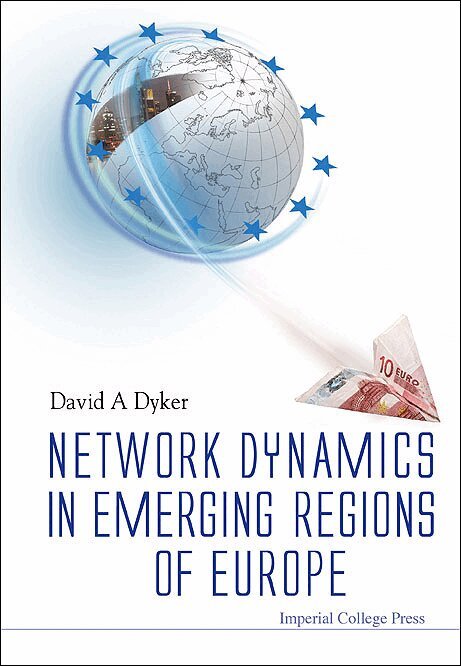
    NETWORK DYNAMICS IN EMERGING REGIONS OF EUROPE

    AvDYKER DAVID A,David A Dyker

    Inbunden, Engelska, 2010

    2 365 kr

    Tillfälligt slut

    Beskrivning

    This important book focuses on post-Lisbon Agenda issues of alignment and misalignment on different dimensions of European society and the European economy, including industrial systems, R&D systems, educational systems and job markets. It also looks in particular at the peripheral regions of Europe — the less developed parts of ‘old’ Europe, the parts of old Europe that are outside or only half-inside the EU, the new member-states of the EU, and Turkey as the most important EU candidate country. It takes as its methodological starting point the theory of network alignment as developed in SPRU, notably by Nick von Tunzelmann, and builds on this to produce an incisive assessment of the institutions, individual actors and markets that drive the knowledge economy. In all of this, it sets the European picture firmly in the context of global developments in investment, labour and intellectual property flows. Key authors include the editor himself, von Tunzelmann, Andrea Salavetz of the Hungarian Academy of Sciences and Matija Rojec of the University of Ljubljana, Slovenia.Sample Chapter(s)

    Produktinformation

    • Utgivningsdatum:2010-04-22
    • Mått:171 x 249 x 28 mm
    • Vikt:856 g
    • Format:Inbunden
    • Språk:Engelska
    • Antal sidor:416
    • Förlag:Imperial College Press
    • ISBN:9781848163737

    Utforska kategorier

    • Affärsutveckling inom Ekonomi och Ledarskap

    Mer om författaren

    David A Dyker was born in Aberdeen, Scotland, in 1944. He was educated at the University of Glasgow and the Economics University of Tashkent in Uzbekistan. He has been studying the countries of Central-East Europe and Eurasia for over 30 years, and in his extensive published work he has charted the decay of socialism, the difficult beginnings of transition, and the broadening-out of the agenda facing second-stage transition at the start of the new century. His Process of Investment in the Soviet Union (CUP, 1983), Technology of Transition (CEUP, 1997) and Foreign Direct Investment and Technology Transfer in the Former Soviet Union (Edward Elgar, 1999) are classics in the field. In addition to teaching and scholarly research, Dyker has been deeply involved in the transition process as a practitioner, and has worked as a consultant for the Russian, Romanian and Kazakhstani governments, and also for the UN Economic Commission for Europe. David Dyker is an academician of the Academy of Social Sciences. He is married with three children.

    Innehållsförteckning

    • Innovation Networks: The Slovakian National Innovation System: Why Doesn't It Work? (S Salis); Innovation and the R&D System in Poland (M Kondratiuk); Labour Markets, Job Matching and Social Networking: Job Matching, Human Capital Accumulation and Economic Development (D A Dyker); Human Capital and Skills in Hungary - Matching Demand and Supply (A Salavetz); Human Resources and Skills Gap in a Regional Context: The Campania Case (M Del Sorbo); Industrial Networks and International Spillovers: R&D Spillovers, Innovation and Growth in Firm-Level Productivity in Slovenia (J Damijan et al.); FDI in the East German Innovation System (J Gunther et al.); Network Alignment in the Automotive Clusters of Turkey and Poland (G Ozatagan); and other papers.