• Fri frakt över 249 kr
  • •
  • Snabba leveranser
  • •
  • Billiga böcker
Kundservice

Du är på sajten för privatpersoner.

Företag, bibliotek eller offentlig verksamhet?

Du handlar på classic.bokus.com, där alla dina funktioner finns intakta.
Till classic.bokus.com
Bokus logotyp. Gå till startsidan.
  • Erbjudanden
  • Nyheter
  • Student
  • Topplistor
  • Barn & ungdom
  • Bokus Play
  • E-böcker
  • Pocketböcker
  • Spel & pussel

10% rabatt på allt med kod NYSTART10 →

Sidfot

Mina sidor

    Hjälp

    • Kundservice
    • Vanliga frågor och svar
    • Frakt och leverans
    • Retur vid ångerrätt
    • Reklamera vara
    • Betalning
    • Köpvillkor
    • Allmänna villkor
    • Information om webbplatsens tillgänglighet

    Om Bokus

    • Om oss
    • Pressrum
    • För studenter
    • För företag
    • För bibliotek och offentlig verksamhet
    • För leverantörer
    • Hållbarhet

    Populärt

    • Aktuella erbjudanden
    • Presentkort
    • Studentlitteratur
    • Nya böcker
    • Topplistor
    • Signerade böcker
    • Engelska böcker

    Inspiration

    • Boktips
    • BookTok
    • Populära bokserier
    • Barnbokskaraktärer
    • Populära författare
    Logotyp för Bokus
    Följ oss på Facebook (extern länk)Följ oss på Instagram (extern länk)Följ oss på YouTube (extern länk)Följ oss på TikTok (extern länk)
    bokus @ CookiesAnpassa cookiesIntegritetspolicyKöpvillkor
    Till Citymail hemsida (extern länk)Till Budbee hemsida (extern länk)Till Postnord hemsida (extern länk)Till Schenker hemsida (extern länk)Till Early Bird hemsida (extern länk)Till Walleys hemsida (extern länk)
    1. Naturvetenskap och teknik
    2. Matematik och naturvetenskap
    3. Biologi
    4. Marinbiologi

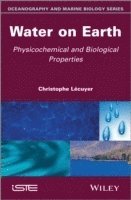
    Water on Earth

    Physicochemical and Biological Properties

    AvChristophe Lécuyer

    Inbunden, Engelska, 2013

    1 801 kr

    Beställningsvara. Skickas inom 5-8 vardagar. Fri frakt över 249 kr.

    Beskrivning

    The presence of water on Earth is discussed in this book using various theories about its origin as a basis. These theories include a massive degassing of the primitive parent bodies that built our planet as well as a late addition from comets that collided with the Earth’s surface. The extraordinary physico-chemical properties of the water molecules, combined with its abundance and distribution over the Earth’s surface, have contributed to regulating the global climate and favoring species’ evolution for more than 4 billion years. The early emergence of life in the deep ocean and its further diversification were closely linked to the global water cycle whose dynamics result from the energy balance between solar radiation and the internal heat flux of the Earth.Chapter 1 of this book deals with the extraordinary physico-chemical properties of the water molecule while Chapter 2 provides insight on theories regarding the origin of water on Earth. In the third chapter, the author focuses on the chemical composition of the main water reservoirs of our planet. Chapters 4 and 5 discuss water’s relationship with plate tectonics and life, respectively. The sixth and final chapter uses stable isotope tracking to look into the water cycle and past climates.

    Produktinformation

    • Utgivningsdatum:2013-11-29
    • Mått:163 x 241 x 28 mm
    • Vikt:617 g
    • Format:Inbunden
    • Språk:Engelska
    • Antal sidor:272
    • Förlag:ISTE Ltd and John Wiley & Sons Inc
    • ISBN:9781848214774

    Utforska kategorier

    • Marinbiologi inom Naturvetenskap och teknik
    • Hydrologi inom Naturvetenskap och teknik

    Mer om författaren

    Christophe Lécuyer is Professor at University of Lyon 1 and Institut Universitaire de France. His current research interests include stable isotope studies of fossil meteoric or marine waters to reconstruct past water cycles and climates.

    Innehållsförteckning

    • Preface ixAcknowledgments xiChapter 1. Water: A Molecule Endowed with Extraordinary Physicochemical Properties 11.1. Molecular geometry and electrical properties 11.2. Phase diagram 31.3. Stable isotopes of hydrogen and oxygen 111.4. Thermodynamic properties 121.4.1. Conduction of heat 201.5. Optical properties 201.5.1. Turbidity, ternary mixtures and the “Ouzo” effect 231.6. Underwater propagation of sound 281.7. Synthesis and electrolysis 301.8. Bibliography 32Chapter 2. Theories about the Origin of Water on Earth 352.1. The blue planet of the solar system 352.2. Comets 382.3. Carbonaceous chondrites and icy asteroids 422.4. Small magnitude evolution of the D/H ratio of the oceans 472.5. Chemical composition of the primordial Earth’s oceans 492.5.1. The early huge “greenhouse effect” 492.5.2. pH and redox state of the primordial Earth’s oceans 502.5.3. Archean ultramafic rocks: a trap for carbon dioxide 522.5.4. The salinity of the primordial Earth’s oceans 532.6. Bibliography 55Chapter 3. The Main Water Reservoirs on Earth and their Chemical Composition 573.1. Masses of water reservoirs 573.1.1. Ice caps 603.1.2. Groundwaters 613.1.3. Rivers 633.1.4. Lakes 653.1.5. Brackish waters 673.1.6. Oceans 683.1.7. Salinity 703.1.8. The definition of water masses 733.1.9. The wind-driven surface ocean circulation 763.1.10. Thermohaline circulation: the global ocean conveyor 803.2. The superficial hydrological cycle, water fluxes and residence times 833.3. Chemical composition of rivers 853.4. Ocean chemical composition 903.4.1. Dissolved salts 903.4.2. Dissolved gases 913.4.3. Variations of dissolved O2 and CO2 with oceanic depth 943.4.4. Brief concept of alkalinity 943.4.5. The oceanic carbon pump and the pH of seawater 943.5. Chemical composition of rainfall 963.6. Why are oceans salty? 1003.7. Hypersaline waters 1023.7.1. The Dead Sea 1033.7.2. Mono Lake, USA 1053.8. Geothermal waters and the “petrifying springs” 1073.9. Bibliography 109Chapter 4. Water and Plate Tectonics 1134.1. A brief introduction to the theory of “plate tectonics” 1134.2. Catastrophic events related to global tectonics: tsunamis 1154.3. Oceanic hydrothermal activity 1234.4. Water in the Earth’s mantle 1374.4.1. Water in nominally anhydrous minerals 1374.4.2. IR spectroscopy or how to see water traces in mantle minerals 1394.5. Subduction and volcanic activity 1414.6. Continental growth and recycling 1464.7. Bibliography 151Chapter 5. Water and Life 1555.1. Cell functioning and metabolic activity 1555.1.1. Human body water, blood and pH 1565.1.2. Cell functioning 1575.1.3. Body water balance 1585.1.4. Body heat balance 1595.2. Adaptation and readaptation of tetrapods to the aquatic environment 1595.3. Biodiversity in the aquatic environment 1695.3.1. Freshwater biodiversity 1705.3.2. Marine biodiversity 1725.4. Bibliography 176Chapter 6. Stable Isotope Tracking: Water Cycles and Climates of the Past 1816.1. Principles of stable isotope fractionation between substances 1816.1.1. Quantum mechanics and isotopic fractionation 1816.1.2. Physicochemical processes responsible for isotopic fractionation 1836.1.3. Techniques of stable isotope measurements of aqueous solutions 1896.1.4. The “salt effect” and the isotopic measurement of brines 1906.2. The surface water cycle 1926.2.1. Isotopic fractionations during water evaporation and condensation 1976.2.2. Precipitation 1996.2.3. The concept of “amount effect” 2056.2.4. Geographic distribution of rainfall δD and δ18O values 2066.2.5. δD and δ18O variations of rainfall with altitude 2086.2.6. Rainfall δD and δ18O values as a function of air temperature 2106.2.7. The δ18O of the sea surface waters 2146.2.8. S and δ18O relationships in the ocean 2166.2.9. S and δ18O relationships in the coastal waters 2176.3. The stable isotope memory of fossil biominerals 2206.3.1. Isotopic fractionation equation between biominerals and water 2206.3.2. Robustness of the isotopic record through time 2246.3.3. Tracking the ecology of extinct vertebrate species 2286.3.4. The aquatic environments of the Jurassic turtles of Western Europe 2306.3.5. Isotopic records of long-term climate changes 2336.3.6. Variations in the δD and δ18O of polar ice caps 2346.3.7. Isotopic records of climatic seasonal variations 2396.4. Aqueous inclusions trapped in minerals 2456.5. Bibliography 250Index 255