• Fri frakt över 249 kr
  • •
  • Snabba leveranser
  • •
  • Billiga böcker
Kundservice

Du är på sajten för privatpersoner.

Företag, bibliotek eller offentlig verksamhet?

Du handlar på classic.bokus.com, där alla dina funktioner finns intakta.
Till classic.bokus.com
Bokus logotyp. Gå till startsidan.
  • Erbjudanden
  • Nyheter
  • Student
  • Topplistor
  • Barn & ungdom
  • Bokus Play
  • E-böcker
  • Pocketböcker
  • Spel & pussel

10% rabatt på allt med kod: NYSTART10 →

Sidfot

Mina sidor

    Hjälp

    • Kundservice
    • Vanliga frågor och svar
    • Frakt och leverans
    • Retur vid ångerrätt
    • Reklamera vara
    • Betalning
    • Köpvillkor
    • Allmänna villkor
    • Information om webbplatsens tillgänglighet

    Om Bokus

    • Om oss
    • Pressrum
    • För studenter
    • För företag
    • För bibliotek och offentlig verksamhet
    • För leverantörer
    • Hållbarhet

    Populärt

    • Aktuella erbjudanden
    • Presentkort
    • Studentlitteratur
    • Nya böcker
    • Topplistor
    • Signerade böcker
    • Engelska böcker

    Inspiration

    • Boktips
    • BookTok
    • Populära bokserier
    • Barnbokskaraktärer
    • Populära författare
    Logotyp för Bokus
    Följ oss på Facebook (extern länk)Följ oss på Instagram (extern länk)Följ oss på YouTube (extern länk)Följ oss på TikTok (extern länk)
    bokus @ CookiesAnpassa cookiesIntegritetspolicyKöpvillkor
    Till Citymail hemsida (extern länk)Till Budbee hemsida (extern länk)Till Postnord hemsida (extern länk)Till Schenker hemsida (extern länk)Till Early Bird hemsida (extern länk)Till Walleys hemsida (extern länk)
    1. Naturvetenskap och teknik
    2. Teknik och industri
    3. Tillverkningsteknik

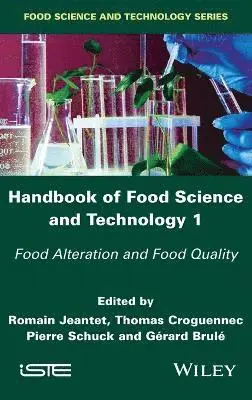
    Handbook of Food Science and Technology 1

    Food Alteration and Food Quality

    AvRomain Jeantet,Thomas Croguennec

    Inbunden, Engelska, 2016

    1 805 kr

    Beställningsvara. Skickas inom 5-8 vardagar. Fri frakt över 249 kr.

    Beskrivning

    This book serves as a general introduction to food science and technology, based on the academic courses presented by the authors as well as their personal research experiences.The authors' main focus is on the biological and physical-chemical stabilization of food, and the quality assessment control methods and normative aspects of the subsequent processes.Presented across three parts, the authors offer a detailed account of the scientific basis and technological knowledge needed to understand agro-food transformation. From biological analyses and process engineering, through to the development of food products and biochemical and microbiological changes, the different parts cover all aspects of the control of food quality.

    Produktinformation

    • Utgivningsdatum:2016-01-08
    • Mått:163 x 241 x 21 mm
    • Vikt:544 g
    • Format:Inbunden
    • Språk:Engelska
    • Antal sidor:272
    • Förlag:ISTE Ltd and John Wiley & Sons Inc
    • ISBN:9781848219328

    Utforska kategorier

    • Tillverkningsteknik inom Naturvetenskap och teknik

    Mer om författaren

    Romain Jeantet is Deputy Director at the STLO joint research unit INRA-Agrocampus Ouest, as well as Professor at Agrocampus Ouest in Rennes, France. His research focuses on food engineering with a special interest in dairy products.Thomas Croguennec is Professor at Agrocampus Ouest in Rennes, France as well as a Research Scientist at STLO, with research focused on physical chemistry and dairy technology.Pierre Schuck is a research engineer and Partnership Officer at STLO INRA in Rennes, France. He has extensive experience in the dairy industries and his research has largely focused on concentration and drying.Gérard Brulé was Professor Emeritus at Agrocampus Ouest in Rennes, France before he retired in 2010.

    Innehållsförteckning

    • Introduction ixGérard BRULÉPart 1. Water and Other Food Constituents 1Chapter 1. Water 3Pierre SCHUCK1.1. Structure and state of water 31.2. Properties of water71.2.1. Water activity (aw) 81.2.2. Glass transition 191.2.3. Phase diagram 25Chapter 2. Other Food Constituents 27Thomas CROGUENNEC2.1. Carbohydrates 272.1.1. Structure of carbohydrates 282.1.2. Carbohydrates in solution 302.2. Proteins 362.2.1. Structure of proteins 362.2.2. Solubility of proteins 382.3. Lipids 412.3.1. Composition of the lipid fraction 412.3.2. Thermal properties of lipids 472.4. Vitamins 51Part 2. Food Modifying Agents and Mechanisms 53Chapter 3. Microbial Spoilage 55Florence BARON and Michel GAUTIER3.1. Microbial profile of food 553.1.1. Origin of microorganisms 553.1.2. Factors influencing the growth of microorganisms 663.2. Food spoilage 783.2.1. Changes in texture and structure 793.2.2. Changes in flavor 803.3. Sanitary risks 823.3.1. Foodborne disease outbreak 823.3.2. Main pathogens and toxin producers 86Chapter 4. Lipid Oxidation 99Thomas CROGUENNEC4.1. Lipid substrates 1004.2. Lipid oxidation mechanisms 1004.2.1. Lipid autoxidation 1014.2.2. Lipid oxidation by singlet oxygen 1064.3. Main compounds derived from lipid oxidation 1084.4. Factors affecting lipid oxidation 1104.4.1. Oxygen content 1114.4.2. Catalysts of lipid oxidation 1124.4.3. Inhibitors of lipid oxidation 1164.4.4. Physical-chemical factors 1194.5. Evaluation of susceptibility to oxidation and the level of oxidation 1224.5.1. Measuring the consumption of oxidation substrates 1244.5.2. Determination of the peroxide value 1244.5.3. Measurement of peroxide decomposition products 1264.6. Control and prevention of lipid oxidation 1264.6.1. Stabilization using physical means 1284.6.2. Formulation 129Chapter 5. Non-Enzymatic Browning 133Thomas CROGUENNEC5.1. Substrates 1345.2. Mechanism of non-enzymatic browning 1355.2.1. Condensation 1365.2.2. Amadori or Heyns rearrangement 1375.2.3. Degradation of ketosamines 1385.2.4. Polymerization reactions 1445.3. Factors influencing the Maillard reaction 1455.3.1. Substrates 1455.3.2. Physical-chemical conditions 1475.3.3. Presence of activators and inhibitors 1495.4. Consequences of non-enzymatic browning 1495.4.1. Sensory consequences 1505.4.2. Functional consequences 1505.4.3. Nutritional consequences 1515.5. Evaluation of non-enzymatic browning 1525.6. Control and prevention of non-enzymatic browning 1535.6.1. Removal of substrates 1545.6.2. Physical-chemical factors 1555.6.3. Formulation (addition of inhibitors) 155Chapter 6. Enzymatic Browning 159Thomas CROGUENNEC6.1. Substrates and browning enzymes 1606.1.1. Phenolic substrates 1606.1.2. Browning enzymes 1656.2. Mechanism of enzymatic browning 1676.2.1. Formation of quinones 1676.2.2. Reactions with quinones 1676.3. Factors influencing enzymatic browning 1696.3.1. Substrates 1696.3.2. Physical-chemical conditions and presence of natural inhibitors 1706.4. Consequences of enzymatic browning 1716.5. Evaluation of enzymatic browning 1746.6. Control and prevention of enzymatic browning 1756.6.1. Denaturation or inhibition of polyphenol oxidase 1756.6.2. Modification or removal of oxidation substrates 1776.6.3. Control of reaction products 179Chapter 7. Molecular Dynamics in Food Matrices 183Thomas CROGUENNEC and Pierre SCHUCK7.1. Water migration and changes in food quality 1847.1.1. Water migration 1847.1.2. Equilibration with the atmosphere 1857.1.3. Equilibration in heterogeneous foods 1867.1.4. Equilibration after a phase and/or structure change 1867.2. Control and prevention 1907.2.1. Thermodynamic factors 1907.2.2. Kinetic factors 191Part 3. Quality Control and Assessment 195Chapter 8. Food Safety Control 197Florence BARON and Gérard BRULÉ8.1. EU Legislation 1978.1.1. Directive 93/43/EEC of June 14 1993 on the hygiene of foodstuffs 1978.1.2. Food safety regulations 1978.2. Tools 1988.2.1. Guide to good practice 1988.2.2. HACCP 1998.2.3. Food safety and quality assurance management 204Chapter 9. Evaluation of the Physical-chemical Properties and Quality of Food 205Florence BARON, Gérard BRULÉ and Michel GAUTIER9.1. Microbiological evaluation 2069.1.1. Choice of microbiological assays 2069.1.2. Methods 2109.1.3. Limitations of microbiological evaluation 2199.2. Biochemical and physicochemical analysis 2209.2.1. Texture analysis by rheological methods 2209.2.2. Color analysis 2289.2.3. Analysis of food composition 230Bibliography 235List of Authors 245Index 247