• Fri frakt över 249 kr
  • •
  • Snabba leveranser
  • •
  • Billiga böcker
Kundservice

Du är på sajten för privatpersoner.

Företag, bibliotek eller offentlig verksamhet?

Du handlar på classic.bokus.com, där alla dina funktioner finns intakta.
Till classic.bokus.com
Bokus logotyp. Gå till startsidan.
  • Erbjudanden
  • Nyheter
  • Student
  • Topplistor
  • Barn & ungdom
  • Bokus Play
  • E-böcker
  • Pocketböcker
  • Spel & pussel

10% rabatt på allt med kod NYSTART10 →

Sidfot

Mina sidor

    Hjälp

    • Kundservice
    • Vanliga frågor och svar
    • Frakt och leverans
    • Retur vid ångerrätt
    • Reklamera vara
    • Betalning
    • Köpvillkor
    • Allmänna villkor
    • Information om webbplatsens tillgänglighet

    Om Bokus

    • Om oss
    • Pressrum
    • För studenter
    • För företag
    • För bibliotek och offentlig verksamhet
    • För leverantörer
    • Hållbarhet

    Populärt

    • Aktuella erbjudanden
    • Presentkort
    • Studentlitteratur
    • Nya böcker
    • Topplistor
    • Signerade böcker
    • Engelska böcker

    Inspiration

    • Boktips
    • BookTok
    • Populära bokserier
    • Barnbokskaraktärer
    • Populära författare
    Logotyp för Bokus
    Följ oss på Facebook (extern länk)Följ oss på Instagram (extern länk)Följ oss på YouTube (extern länk)Följ oss på TikTok (extern länk)
    bokus @ CookiesAnpassa cookiesIntegritetspolicyKöpvillkor
    Till Citymail hemsida (extern länk)Till Budbee hemsida (extern länk)Till Postnord hemsida (extern länk)Till Schenker hemsida (extern länk)Till Early Bird hemsida (extern länk)Till Walleys hemsida (extern länk)
    1. Ekonomi och Ledarskap
    2. Nationalekonomi
    3. Internationell ekonomi

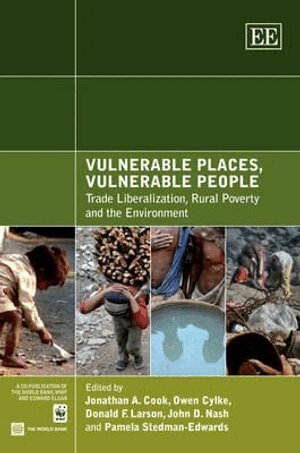
    Vulnerable Places, Vulnerable People

    Trade Liberalization, Rural Poverty and the Environment

    AvJonathan A. Cook,Owen Cylke

    Inbunden, Engelska, 2010

    1 847 kr

    Beställningsvara. Skickas inom 5-8 vardagar. Fri frakt över 249 kr.

    Beskrivning

    While some argue that trade liberalization has raised incomes and led to environmental protection in developing countries, others claim that it generates neither poverty reduction nor sustainability. The detailed case studies in this book demonstrate that neither interpretation is universally correct, given how much depends on specific policies and institutions that determine ‘on-the-ground’ outcomes. Drawing on research from six countries around the developing world, the book also presents the unique perspectives of researchers at both the world’s largest development organization (The World Bank) and the world’s largest conservation organization (World Wildlife Fund) on the debate over trade liberalization and its effects on poverty and the environment. The authors trace international trade rules and events down through national development contexts to investigate on-the-ground outcomes for real people and places. The studies underscore the importance of evaluating trade from a perspective that pays attention to environmental and social vulnerability and understands the linkages between poverty reduction and environmental protection. The lessons drawn provide a critical first step in developing the appropriate response options needed to ensure that trade plays a positive role in promoting truly sustainable development. Academics and students in environmental economics, development economics and agriculture, as well as policymakers and those in development institutions will appreciate this groundbreaking work.

    Produktinformation

    • Utgivningsdatum:2010-04-30
    • Mått:156 x 234 x undefined mm
    • Format:Inbunden
    • Språk:Engelska
    • Förlag:Edward Elgar Publishing Ltd
    • ISBN:9781848443433

    Utforska kategorier

    • Internationell ekonomi inom Ekonomi och Ledarskap
    • Miljöekonomi inom Ekonomi och Ledarskap

    Mer om författaren

    Edited by Jonathan A. Cook, former Deputy Director, Climate Change Adaptation Program, WWF-US, Owen Cylke, Director, WWF’s Macroeconomics Programme Office, Donald F. Larson, International Institute for Development and Environmental Studies, John D. Nash, Lead Economist, The World Bank’s Latin American and Caribbean Sustainable Development Department and Pamela Stedman-Edwards, Senior Adviser, WWF’s Macroeconomics Programme Office, Washington, DC, US

    Recensioner i media

    ‘. . . the case studies and subsequent summarizing discussions provide interesting insights on the many interactions of trade, poverty and the environment. . . digestible also for those without an academic background in economics.’

    Innehållsförteckning

    • Contents:Preface Warren Evans and David Reed1. Trade Liberalization, Rural Poverty and the Environment Jonathan A. Cook, Owen Cylke, Donald F. Larson, John D. Nash and Pamela Stedman-Edwards2. Trade Liberalization, Rural Poverty and the Environment: A Case Study of the Forest and Salmon Sectors in ChileRaúl O’Ryan, with Mario Niklitschek, Edwin Niklitschek, Andrés Ulloa and Nicolo Gligo3. The Impacts of Trade Liberalization in Pingbian, ChinaHe Daming and Liu Jiang, with Bobby Cochran4. Shrimp Exports, Environment and Human Well-being in the Sunderbans, West BengalKanchan Chopra, with Pushpam Kumar and Preeti Kapuria5. Trade Liberalization, Rural Poverty and the Environment: Two Studies of Agricultural Exports in MadagascarBart Minten, with Philippe Méral, Lalaina Randrianarison and Johan Swinnen6. Trade Liberalization, Rural Poverty and the Environment: A Case Study of Sugarcane Production in the Incomati River Basin in Mpumalanga, South AfricaJo Lorentzen, Anton Cartwright and Charles Meth 7. Expansion of Shrimp Farming in Ca Mau, VietnamMai Trong Thong, with Hoang Xuan Thanh, Ha Thi Phuong Tien, Nguyen Thu Huong, Tran Tuyet Hanh, Ngo Van Hai, Vu Ngoc Huyen, Le Dang Trung, Le Phu Cuong, Le Van Hung, Cao Chi Hung, Tham Thi Ngoc Diep and Jacques Marcille8. Lessons from the Case Studies: 1Pamela Stedman-Edwards, Jonathan A. Cook and Owen Cylke9. Lessons from the Case Studies: 2John D. Nash and Donald F. Larson10. Beyond Trade: Economic Transition in the Globalization Era and Prospects for Poverty and EnvironmentBruno LoschIndex