• Fri frakt över 249 kr
  • •
  • Snabba leveranser
  • •
  • Billiga böcker
Kundservice

Du är på sajten för privatpersoner.

Företag, bibliotek eller offentlig verksamhet?

Du handlar på classic.bokus.com, där alla dina funktioner finns intakta.
Till classic.bokus.com
Bokus logotyp. Gå till startsidan.
  • Erbjudanden
  • Student
  • Topplistor
  • Barn & ungdom
  • Bokus Play
  • E-böcker
  • Ljudböcker
  • Pocketböcker
  • Spel och pussel

Pocketfynda! Hundratals böcker för 49 kr/st →

Sidfot

Mina sidor

    Hjälp

    • Kundservice
    • Vanliga frågor och svar
    • Frakt och leverans
    • Retur vid ångerrätt
    • Reklamera vara
    • Betalning
    • Köpvillkor
    • Allmänna villkor
    • Information om webbplatsens tillgänglighet

    Om Bokus

    • Om oss
    • Pressrum
    • För studenter
    • För företag
    • För bibliotek och offentlig verksamhet
    • För leverantörer
    • Hållbarhet

    Populärt

    • Aktuella erbjudanden
    • Presentkort
    • Studentlitteratur
    • Nya böcker
    • Topplistor
    • Signerade böcker
    • Engelska böcker

    Inspiration

    • Boktips
    • BookTok
    • Barnbokskaraktärer
    • Populära författare
    Logotyp för Bokus
    Följ oss på Facebook (extern länk)Följ oss på Instagram (extern länk)Följ oss på YouTube (extern länk)Följ oss på TikTok (extern länk)
    bokus @ CookiesAnpassa cookiesIntegritetspolicyKöpvillkor
    Till Citymail hemsida (extern länk)Till Budbee hemsida (extern länk)Till Postnord hemsida (extern länk)Till Schenker hemsida (extern länk)Till Early Bird hemsida (extern länk)Till Walleys hemsida (extern länk)
    1. Data och IT
    2. Människa – datorinteraktion

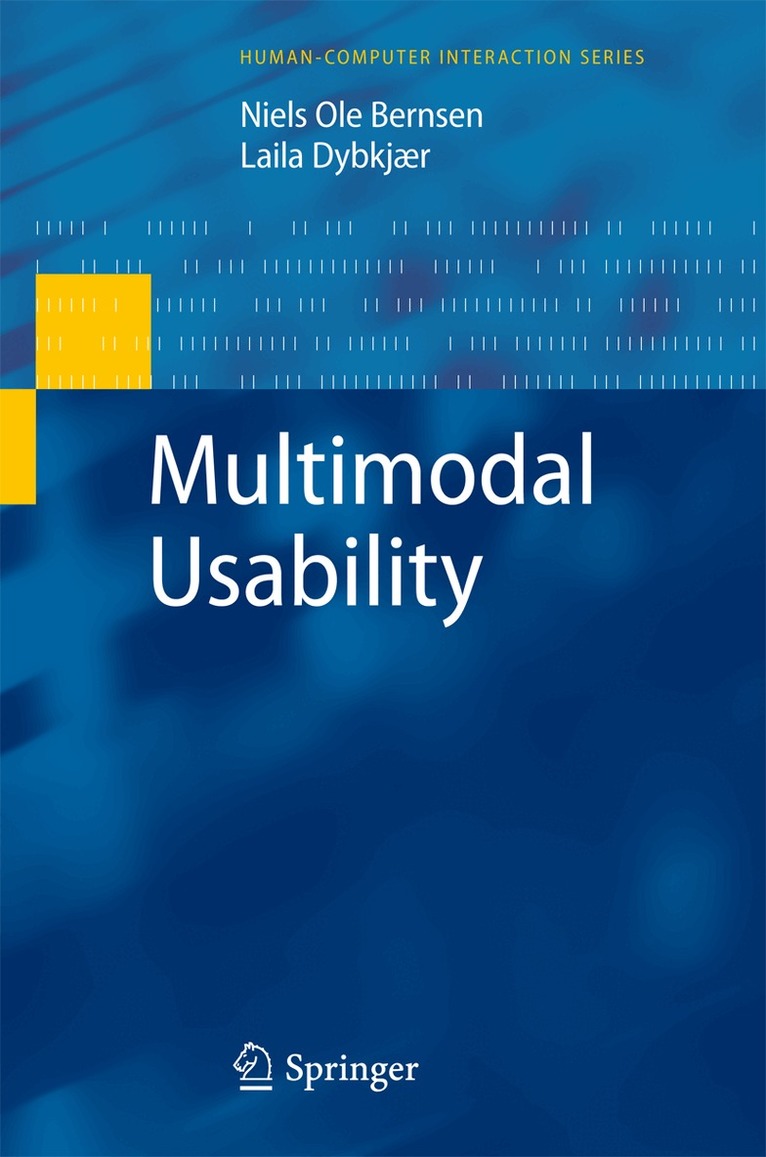
    Multimodal Usability

    AvNiels Ole Bernsen,Laila Dybkjær

    Inbunden, Engelska, 2009

    Del i serien Human–Computer Interaction Series

    1 662 kr

    Beställningsvara. Skickas inom 10-15 vardagar. Fri frakt över 249 kr.

    Fler format och utgåvor

    Häftad

    1 662 kr

    Beskrivning

    This preface tells the story of how Multimodal Usability responds to a special challenge. Chapter 1 describes the goals and structure of this book. The idea of describing how to make multimodal computer systems usable arose in the European Network of Excellence SIMILAR – “Taskforce for cre- ing human-machine interfaces SIMILAR to human-human communication”, 2003– 2007, www. similar. cc. SIMILAR brought together people from multimodal signal processing and usability with the aim of creating enabling technologies for new kinds of multimodal systems and demonstrating results in research prototypes. Most of our colleagues in the network were, in fact, busy extracting features and guring out how to demonstrate progress in working interactive systems, while claiming not to have too much of a notion of usability in system development and evaluation. It was proposed that the authors support the usability of the many multimodal pro- types underway by researching and presenting a methodology for building usable multimodal systems. We accepted the challenge, rst and foremost, no doubt, because the formidable team spirit in SIMILAR could make people accept outrageous things. Second, h- ing worked for nearly two decades on making multimodal systems usable, we were curious – curious at the opportunity to try to understand what happens to traditional usability work, that is, work in human–computer interaction centred around tra- tional graphical user interfaces (GUIs), when systems become as multimodal and as advanced in other ways as those we build in research today.

    Produktinformation

    • Utgivningsdatum:2009-10-19
    • Mått:155 x 235 x 38 mm
    • Vikt:791 g
    • Format:Inbunden
    • Språk:Engelska
    • Serie:Human–Computer Interaction Series
    • Antal sidor:431
    • Upplaga:2010
    • Förlag:Springer London Ltd
    • ISBN:9781848825529

    Utforska kategorier

    • Människa – datorinteraktion inom Data och IT

    Innehållsförteckning

    • Structure, Usability, Readership.- Intermezzo 1: Three Multimodal Cases.- Creating a Model of Use.- Modalities and Devices.- Intermezzo 2: Status on Cases and Next Steps.- Common Approaches, Methods, Planning.- Intermezzo 3: Case Usability Workplan, Design.- Question-Answering.- Meetings with Discussion.- Observation of Users.- Imagination.- Interaction with the System.- Lab Sessions with Subjects.- Intermezzo 4: Case Usability Method Plan.- Data Handling.- Usability Data Analysis and Evaluation.- Intermezzo 5: Sudoku Usability Evaluation.- Multimodal Usability: Conclusions and Future Work.