• Fri frakt över 249 kr
  • •
  • Snabba leveranser
  • •
  • Billiga böcker
Kundservice

Du är på sajten för privatpersoner.

Företag, bibliotek eller offentlig verksamhet?

Du handlar på classic.bokus.com, där alla dina funktioner finns intakta.
Till classic.bokus.com
Bokus logotyp. Gå till startsidan.
  • Erbjudanden
  • Nyheter
  • Student
  • Topplistor
  • Barn & ungdom
  • Bokus Play
  • E-böcker
  • Pocketböcker
  • Spel & pussel

10% rabatt på allt med kod: NYSTART10 →

Sidfot

Mina sidor

    Hjälp

    • Kundservice
    • Vanliga frågor och svar
    • Frakt och leverans
    • Retur vid ångerrätt
    • Reklamera vara
    • Betalning
    • Köpvillkor
    • Allmänna villkor
    • Information om webbplatsens tillgänglighet

    Om Bokus

    • Om oss
    • Pressrum
    • För studenter
    • För företag
    • För bibliotek och offentlig verksamhet
    • För leverantörer
    • Hållbarhet

    Populärt

    • Aktuella erbjudanden
    • Presentkort
    • Studentlitteratur
    • Nya böcker
    • Topplistor
    • Signerade böcker
    • Engelska böcker

    Inspiration

    • Boktips
    • BookTok
    • Populära bokserier
    • Barnbokskaraktärer
    • Populära författare
    Logotyp för Bokus
    Följ oss på Facebook (extern länk)Följ oss på Instagram (extern länk)Följ oss på YouTube (extern länk)Följ oss på TikTok (extern länk)
    bokus @ CookiesAnpassa cookiesIntegritetspolicyKöpvillkor
    Till Citymail hemsida (extern länk)Till Budbee hemsida (extern länk)Till Postnord hemsida (extern länk)Till Schenker hemsida (extern länk)Till Early Bird hemsida (extern länk)Till Walleys hemsida (extern länk)
    1. Samhälle och politik
    2. Politik och statsskick
    3. Statsskick och politiska processer

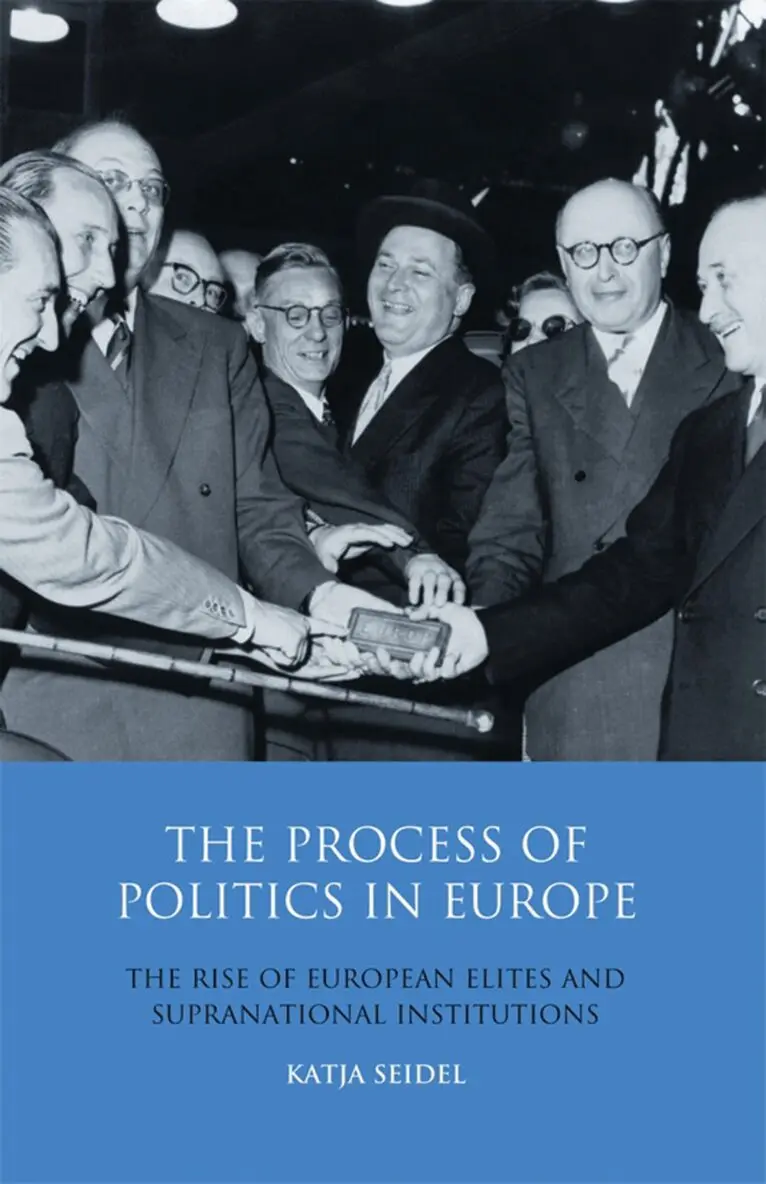
    Process of Politics in Europe

    The Rise of European Elites and Supranational Institutions

    AvKatja Seidel

    Inbunden, Engelska, 2010

    1 950 kr

    Beställningsvara. Skickas inom 10-15 vardagar. Fri frakt över 249 kr.

    Fler format och utgåvor

    E-bok

    2 113 kr

    Beskrivning

    With the launch of the European integration process after World War II, a new type of administration emerged which was neither an international organisation nor a national administration. Drawing on extensive archival records and oral history interviews, this book is the first comprehensive study of the High Authority of the European Coal and Steel Community (ECSC) and the Commission of the European Economic Community (EEC), and their personnel, the European civil servants. This administrative elite was to have a vital influence on the European integration process, devising and administering key European policies such as the Common Agricultural Policy. Katja Seidel combines administrative and biographical history and provides significant insights into the origins of Europe's supranational institutions and the administrative cultures that developed in them. She effectively shows how European administrative elites and supranational administrations are vital to understanding the process of politics in Europe. This book will be invaluable for scholars of politics, history and the development of European integration.

    Produktinformation

    • Utgivningsdatum:2010-07-30
    • Mått:138 x 216 x 24 mm
    • Vikt:450 g
    • Format:Inbunden
    • Språk:Engelska
    • Antal sidor:264
    • Förlag:Bloomsbury Publishing PLC
    • ISBN:9781848853263

    Utforska kategorier

    • Statsskick och politiska processer inom Samhälle och politik
    • Internationella relationer inom Samhälle och politik

    Mer om författaren

    Katja Seidel is Postdoctoral Research Fellow at the German Historical Institute in Paris. She holds a PhD in European History from the University of Portsmouth.

    Recensioner i media

    'Katja Seidel's book will be the first study of the supranational institutions in action in the formative years of the present-day European Union. - it will be of interest also to current and former 'Eurocrats', as it includes substantial evidence from private papers and interviews about 'culture clashes' and social life in Brussels, for example, obviously contextualized and interpreted appropriately for the purposes of academic analysis, but still making for an interesting read for non-specialists.' - Wolfram Kaiser, Professor of European Studies, University of Portsmouth and Visiting Professor, College of Europe, Bruges; 'A genuinely original and path-setting study, which should be of interest to both contemporary historians and political scientists. Seidel's approach, which focuses in on those men and women responsible for implementing the various European treaties, is entirely new and should constitute a very refreshing addition to the current literature. I would certainly recommend the book warmly to those in the field, both undergraduates and postgraduates.' - N. Piers Ludlow, Reader in International History, London School of Economics and Political Science

    Innehållsförteckning

    • IntroductionPART I: THE HIGH AUTHORITY OF THE EUROPEAN COAL AND STEEL COMMUNITYChapter 1. Establishing a supranational administration: Challenges and constraints 1.1 Organisation1.2 Working methods1.3 Recruitment patternsChapter 2. Towards a European administrative elite? The first European civil servants2.1 The officials’ biographical background2.2 Living and working in Luxembourg2.3 Biographies of High Authority officialsPART II: THE COMMISSION OF THE EUROPEAN ECONOMIC COMMUNITYChapter 3. Prudence and Pragmatism: the institutional establishment of the Commission3.1 The institutional set-up of the Commission3.2 The establishment of practices and working methods3.3 Recruitment patterns and personnel policy3.4 Inflexibility, inefficiency and dissatisfaction: reforming the administrationChapter 4. Biographical studies: high officials in the Commission4.1 Internal factors of Europeanization: biographical background4.2 Space and time: external factors of Europeanization4.3 Biographies of Commission officials4.4 Identities, images and roles of Commission officialsChapter 5. Institutions, administrative cultures and their role in EU policy-making: the Directorates-General for Agriculture and Competition5.1 Step One: The legacy of context and previous experiences5.2 Step Two: The emergence of administrative cultures5.3 Step Three: Socialisation processes in DG Agriculture and DG Competition Conclusions