• Fri frakt över 249 kr
  • •
  • Snabba leveranser
  • •
  • Billiga böcker
Kundservice

Du är på sajten för privatpersoner.

Företag, bibliotek eller offentlig verksamhet?

Du handlar på classic.bokus.com, där alla dina funktioner finns intakta.
Till classic.bokus.com
Bokus logotyp. Gå till startsidan.
  • Erbjudanden
  • Nyheter
  • Student
  • Topplistor
  • Barn & ungdom
  • Bokus Play
  • E-böcker
  • Pocketböcker
  • Spel & pussel

Må bättre, för mindre! Upp till 50% rabatt på hälsoböcker

Sidfot

Mina sidor

    Hjälp

    • Kundservice
    • Vanliga frågor och svar
    • Frakt och leverans
    • Retur vid ångerrätt
    • Reklamera vara
    • Betalning
    • Köpvillkor
    • Allmänna villkor
    • Information om webbplatsens tillgänglighet

    Om Bokus

    • Om oss
    • Pressrum
    • För studenter
    • För företag
    • För bibliotek och offentlig verksamhet
    • För leverantörer
    • Hållbarhet

    Populärt

    • Aktuella erbjudanden
    • Presentkort
    • Studentlitteratur
    • Nya böcker
    • Topplistor
    • Signerade böcker
    • Engelska böcker

    Inspiration

    • Boktips
    • BookTok
    • Populära bokserier
    • Barnbokskaraktärer
    • Populära författare
    Logotyp för Bokus
    Följ oss på Facebook (extern länk)Följ oss på Instagram (extern länk)Följ oss på YouTube (extern länk)Följ oss på TikTok (extern länk)
    bokus @ CookiesAnpassa cookiesIntegritetspolicyKöpvillkor
    Till Citymail hemsida (extern länk)Till Budbee hemsida (extern länk)Till Postnord hemsida (extern länk)Till Schenker hemsida (extern länk)Till Early Bird hemsida (extern länk)Till Walleys hemsida (extern länk)
    1. Juridik
    2. Rättsvetenskap
    3. Juridik: metod och teori
    4. Rättssystem

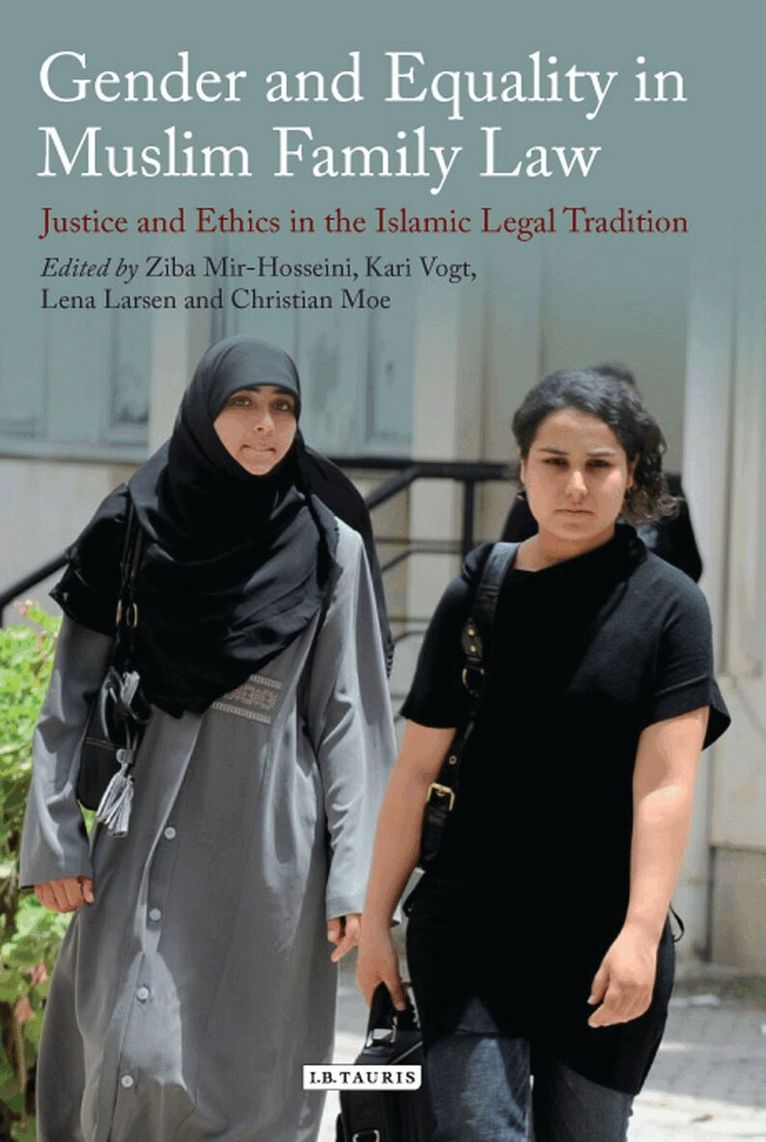
    Gender and Equality in Muslim Family Law

    Justice and Ethics in the Islamic Legal Tradition

    AvLena Larsen,Ziba Mir-Hosseini

    Inbunden, Engelska, 2013

    772 kr

    Beställningsvara. Skickas inom 10-15 vardagar. Fri frakt över 249 kr.

    Beskrivning

    Gender equality is a modern ideal, which has only recently, with the expansion of human rights and feminist discourses, become inherent to generally accepted conceptions of justice. In Islam, as in other religious traditions, the idea of equality between men and women was neither central to notions of justice nor part of the juristic landscape, and Muslim jurists did not begin to address it until the twentieth century. The personal status of Muslim men, women and children continues to be defined by understandings of Islamic law - codified and adapted by modern nation-states - that assume authority to be the natural prerogative of men, that disadvantage women and that are prone to abuse. This volume argues that effective and sustainable reform of these laws and practices requires engagement with their religious rationales from within the tradition. Gender and Equality in Muslim Family Law offers a ground-breaking analysis of family law, based on fieldwork in family courts, and illuminated by insights from distinguished clerics and scholars of Islam from Morocco, Egypt, Iran, Pakistan and Indonesia, as well as by the experience of human rights and women's rights activists.It explores how male authority is sustained through law and court practice in different contexts, the consequences for women and the family, and the demands made by Muslim women's groups. The book argues for women's full equality before the law by re-examining the jurisprudential and theological arguments for male guardianship (qiwama, wilaya) in Islamic legal tradition. Using contemporary examples from various contexts, from Morocco to Malaysia, this volume presents an informative and vital analysis of these societies and gender relations within them. It unpicks the complex and often contradictory attitudes towards Muslim family law, and the ways in which justice and ethics are conceived in the Islamic tradition. The book offers a new framework for rethinking old formulations so as to reflect contemporary realities and understandings of justice, ethics and gender rights.

    Produktinformation

    • Utgivningsdatum:2013-04-25
    • Mått:156 x 234 x 20 mm
    • Vikt:581 g
    • Format:Inbunden
    • Språk:Engelska
    • Antal sidor:288
    • Förlag:Bloomsbury Publishing PLC
    • ISBN:9781848859227

    Utforska kategorier

    • Rättssystem inom Juridik
    • Familjerätt inom Juridik

    Mer om författaren

    Ziba Mir-Hosseini is a legal anthropologist, specializing in Islamic law, gender and development, and a founding member of the Musawah Global Movement for Equality and Justice in the Muslim Family. She has published books on Islamic family law in Iran and Morocco, Iranian clerical discourses on gender, Islamic reformist thinkers, and the revival of zina laws. She has also co-directed two award-winning feature-length documentary films on Iran: Divorce Iranian Style (1998) and Runaway (2001). Kari Vogt is Associate Professor (Emerita) at the Department of Cultural Studies and Oriental Languages at the University of Oslo, Norway. She has published widely on Islamic and Middle East issues. Lena Larsen has been the co-ordinator of the Oslo Coalition at the Norwegian Center for Human Rights, University of Oslo, since 1999. Larsen obtained her PhD with a thesis on Islamic Judicial Thinking Encountering Challenges of Everyday Life: Fatwas as Proposed Solutions for Muslim Women in Western Europe (in Norwegian, 2011). Christian Moe is an independent writer and researcher based in Slovenia. He has written on Islam, human rights, and religious affairs in the Balkans.

    Innehållsförteckning

    • Introduction: Muslim Family Law and the Question of Equality. Ziba Mir-Hosseini, Kari Vogt, Lena Larsen and Christian Moe1. Justice, Equality and Muslim Family Laws: New Ideas, New Prospects. Ziba Mir-HosseiniPart I: Perspectives on Reality2. Qiw?ma in Egyptian Family Laws: ‘Wifely Obedience’ between Legal Texts, Courtroom Practices and Realities of Marriages. Mulki Al-Sharmani3. Egyptian Women’s Rights NGOs: Personal Status Law Reform between Islamic and International Human Rights Law. Marwa Sharafeldin4. The Religious Arguments in the Debate on the Reform of the Moroccan Family Code. Aïcha El Hajjami5. From Local to Global: Sisters in Islam and the Making of Musawah: A Global Movement for Equality in the Muslim Family. Zainah AnwarPart II: Approaches to Reform6. Gender Equality and the Doctrine of Wilaya. Muhammad Khalid Masud7. The Status of Women between the Qur‘an and Fiqh. Nasr Abu-Zayd8. Gender Equality and the Hadith of the Prophet Muhammad: Reinterpreting the Concepts of Mahram and Qiwama. Faqihuddin Abdul Kodir9. Rethinking Men’s Authority over Women: Qiwama, Wilaya and their Underlying Assumptions. Hassan Yousefi Eshkevari10. Revisiting Women’s Rights in Islam: ‘Egalitarian Justice’ in Lieu of ‘Deserts-based Justice’. Mohsen KadivarPart III: Instead of a Conclusion11. The Paradox of Equality and the Politics of Difference: Gender Equality, Islamic Law and the Modern Muslim State. Anver M. Emon