• Fri frakt över 249 kr
  • •
  • Snabba leveranser
  • •
  • Billiga böcker
Kundservice

Du är på sajten för privatpersoner.

Företag, bibliotek eller offentlig verksamhet?

Du handlar på classic.bokus.com, där alla dina funktioner finns intakta.
Till classic.bokus.com
Bokus logotyp. Gå till startsidan.
  • Erbjudanden
  • Nyheter
  • Student
  • Topplistor
  • Barn & ungdom
  • Bokus Play
  • E-böcker
  • Pocketböcker
  • Spel & pussel

10% rabatt på allt med kod: NYSTART10 →

Sidfot

Mina sidor

    Hjälp

    • Kundservice
    • Vanliga frågor och svar
    • Frakt och leverans
    • Retur vid ångerrätt
    • Reklamera vara
    • Betalning
    • Köpvillkor
    • Allmänna villkor
    • Information om webbplatsens tillgänglighet

    Om Bokus

    • Om oss
    • Pressrum
    • För studenter
    • För företag
    • För bibliotek och offentlig verksamhet
    • För leverantörer
    • Hållbarhet

    Populärt

    • Aktuella erbjudanden
    • Presentkort
    • Studentlitteratur
    • Nya böcker
    • Topplistor
    • Signerade böcker
    • Engelska böcker

    Inspiration

    • Boktips
    • BookTok
    • Populära bokserier
    • Barnbokskaraktärer
    • Populära författare
    Logotyp för Bokus
    Följ oss på Facebook (extern länk)Följ oss på Instagram (extern länk)Följ oss på YouTube (extern länk)Följ oss på TikTok (extern länk)
    bokus @ CookiesAnpassa cookiesIntegritetspolicyKöpvillkor
    Till Citymail hemsida (extern länk)Till Budbee hemsida (extern länk)Till Postnord hemsida (extern länk)Till Schenker hemsida (extern länk)Till Early Bird hemsida (extern länk)Till Walleys hemsida (extern länk)
    1. Samhälle och politik
    2. Politik och statsskick
    3. Internationella relationer

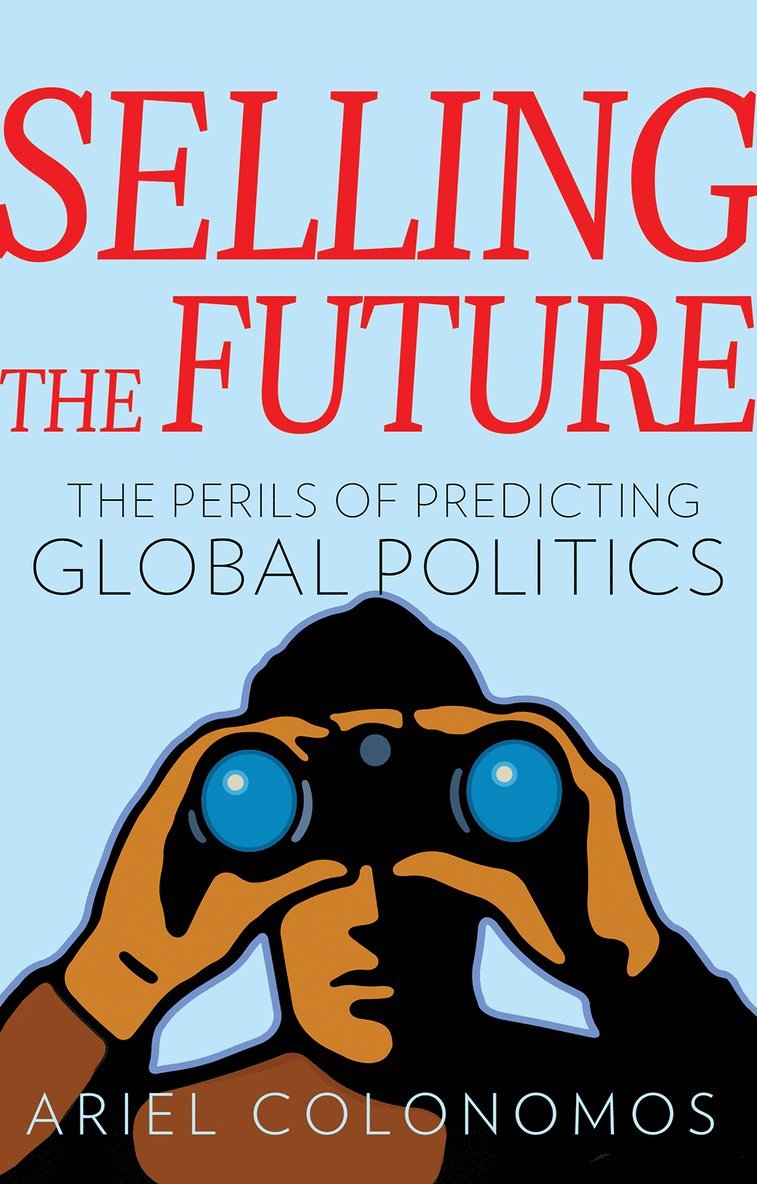
    Selling the Future

    The Paradoxes of Predicting Global Politics

    AvAriel Colonomos

    Inbunden, Engelska, 2016

    Del i serien CERI: Comparative Politics and International Studies Series

    456 kr

    Beställningsvara. Skickas inom 7-10 vardagar. Fri frakt över 249 kr.

    Beskrivning

    *** Winner of the 2017 ISA Ethics Book Award 2017*** In an age of uncertainty, those who can anticipate revolution, the outbreak of wars, or which states might default are much in demand. The marketplace of ideas about the future is huge, and includes 'wonks', scholars and pundits who produce scenarios, predictions and ratings. The more opaque the future seems to be, so the relation between knowledge and power intensifies, above all the nexus between those who sell their expertise and those who consume it. In his investigation of the paradoxes of fore--casting, Ariel Colonomos interrogates today's knowledge factories to reveal how our futures are shaped by social scientists, think tanks and rat--ing agencies. He explains why conservative and linear predictions prevail, and why the future, especially when linked to national interest, re--flects a systematic search for stability. The notion of a globalised world whose main characteristic is speed, and where predictions have accelerat--ing, self-fulfilling effects, is obsolete. Those who are supposed to know, reassure those who are supposed to act. Their preferences converge, and thus the industry of the future has a decelerating effect on world politics. These 'lords of knowledge' reinforce pre-existing beliefs, create expectations about the future, while obstructing its vision when - inevitably - it diverges from its orderly path.

    Produktinformation

    • Utgivningsdatum:2016-07-07
    • Mått:145 x 225 x 21 mm
    • Vikt:416 g
    • Format:Inbunden
    • Språk:Engelska
    • Serie:CERI: Comparative Politics and International Studies Series
    • Antal sidor:224
    • Förlag:C Hurst & Co Publishers Ltd
    • ISBN:9781849045537
    • Utmärkelser:Winner of the 2017 ISA Ethics Book Award 2017

    Utforska kategorier

    • Internationella relationer inom Samhälle och politik

    Mer om författaren

    Ariel Colonomos is Senior Research Fellow, CERI/CNRS, Paris.

    Recensioner i media

    ‘Colonomos ends by pondering the ambivalence humans have toward knowing the future. Readers are induced to contemplate an age-old issue: the perfectibility of the human condition. Is the model ever upward evolution or civilizational rise, decline, and fall?’