• Fri frakt över 249 kr
  • •
  • Snabba leveranser
  • •
  • Billiga böcker
Kundservice

Du är på sajten för privatpersoner.

Företag, bibliotek eller offentlig verksamhet?

Du handlar på classic.bokus.com, där alla dina funktioner finns intakta.
Till classic.bokus.com
Bokus logotyp. Gå till startsidan.
  • Erbjudanden
  • Nyheter
  • Student
  • Topplistor
  • Barn & ungdom
  • Bokus Play
  • E-böcker
  • Pocketböcker
  • Spel & pussel

10% rabatt på allt med kod NYSTART10 →

Sidfot

Mina sidor

    Hjälp

    • Kundservice
    • Vanliga frågor och svar
    • Frakt och leverans
    • Retur vid ångerrätt
    • Reklamera vara
    • Betalning
    • Köpvillkor
    • Allmänna villkor
    • Information om webbplatsens tillgänglighet

    Om Bokus

    • Om oss
    • Pressrum
    • För studenter
    • För företag
    • För bibliotek och offentlig verksamhet
    • För leverantörer
    • Hållbarhet

    Populärt

    • Aktuella erbjudanden
    • Presentkort
    • Studentlitteratur
    • Nya böcker
    • Topplistor
    • Signerade böcker
    • Engelska böcker

    Inspiration

    • Boktips
    • BookTok
    • Populära bokserier
    • Barnbokskaraktärer
    • Populära författare
    Logotyp för Bokus
    Följ oss på Facebook (extern länk)Följ oss på Instagram (extern länk)Följ oss på YouTube (extern länk)Följ oss på TikTok (extern länk)
    bokus @ CookiesAnpassa cookiesIntegritetspolicyKöpvillkor
    Till Citymail hemsida (extern länk)Till Budbee hemsida (extern länk)Till Postnord hemsida (extern länk)Till Schenker hemsida (extern länk)Till Early Bird hemsida (extern länk)Till Walleys hemsida (extern länk)
    1. Samhälle och politik
    2. Samhälle och kultur
    3. Kultur och medier
    4. Referensverk och tvärvetenskap

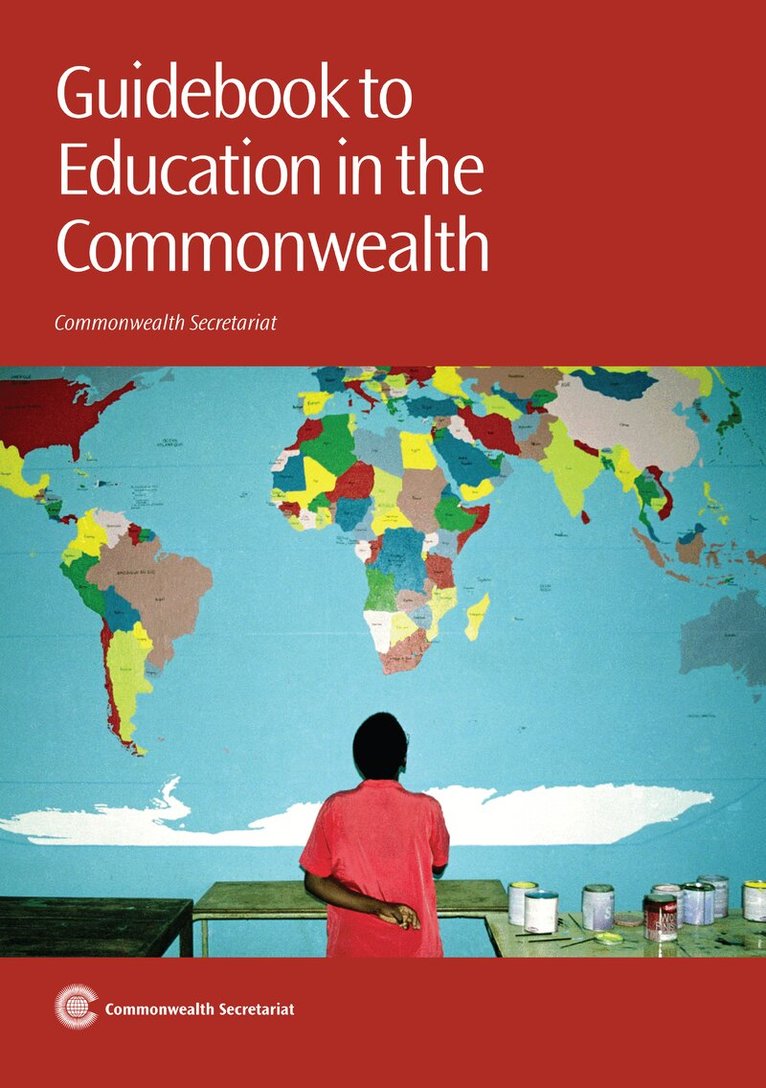
    Guidebook to Education in the Commonwealth

    AvCommonwealth Secretariat

    Häftad, Engelska, 2012

    872 kr

    Beställningsvara. Skickas inom 5-8 vardagar. Fri frakt över 249 kr.

    Beskrivning

    Despite their inherent commonalities, there can be no ‘one size fits all’ model for achieving the Millennium Development Goals and for the provision of Education for All. As a result, a diverse range of innovative programmes has been developed to help meet these global targets.This Guidebook showcases successful education initiatives from around the Commonwealth, in a concise and easy-to-use format. It provides policy-makers with examples of best practice and effective solutions that will assist them in devising strategies to counter their own educational challenges.It is also a useful resource for all regional and district education offices, schools, colleges, teacher training institutes, research institutions, multilateral and non-governmental organisations and other stakeholders with an interest in education good practices and improving educational outcomes.Part I contains background and current education priorities of 31 countries selected from around the Commonwealth. Part II reports on more than 60 education initiatives, with activity-specific, detailed information about: •themes and key issues addressed•target beneficiaries•goals, objectives, outputs and outcomes•implementation, challenges and advice•contact details for further information

    Produktinformation

    • Utgivningsdatum:2012-08-24
    • Mått:210 x 297 x undefined mm
    • Format:Häftad
    • Språk:Engelska
    • Förlag:Commonwealth Secretariat
    • ISBN:9781849290845

    Utforska kategorier

    • Referensverk och tvärvetenskap inom Samhälle och politik
    • Internationell ekonomi inom Ekonomi och Ledarskap
    • Utbildningsstrategier och utbildningspolitik inom Psykologi och pedagogik

    Innehållsförteckning

    • ForewordAbbreviations and AcronymsPart I COUNTRY PROFILES1. Introduction1.1 Structure of guidebook1.2 Locations of initiatives1.3 Background to country education systems2. Country Profiles2.1 Australia2.2 The Bahamas2.3 Bangladesh2.4 Barbados2.5 Cameroon2.6 Canada2.7 Cook Islands2.8 Dominica2.9 The Gambia2.10 Grenada2.11 Guyana2.12 Jamaica2.13 Kenya2.14 Malawi2.15 Malaysia2.16 Malta2.17 Mauritius2.18 Mozambique2.19 Namibia2.20 Papua New Guinea2.21 Seychelles2.22 Singapore2.23 Solomon Islands2.24 South Africa2.25 Sri Lanka2.26 St Kitts and Nevis2.27 St Lucia2.28 St Vincent and the Grenadines2.29 Uganda2.30 United Kingdom2.31 United Republic of TanzaniaPart II COUNTRY INITIATIVES3. Introduction3.1 Commonwealth country initiatives by focus area3.2 Definitions of focus areas3.3 Methodology4. Country Initiatives4.1 Access to education, through partnerships with the private sector, Cameroon4.2 Apprenticeship scheme, Mauritius4.3 Assessment and recognition of foreign credentials for the teaching profession, Canada4.4 Australian Early Development Index (AEDI), Australia4.5 Better Communication Research Programme, United Kingdom4.6 Bridging the Gap programme, Mauritius4.7 Certificate of Primary Education repeaters project, Mauritius4.8 Child-friendly approach in primary education, Sri Lanka4.9 Closing the gap on indigenous disadvantage, Australia4.10 Developing a national curriculum, Australia4.11 Direct support to schools programme, Mozambique4.12 Early Grade Reading Assessment, The Gambia4.13 Early literacy programme, Mauritius4.14 Eco-schools environmental education programme, Seychelles4.15 EdTech Leadership Cohort, Canada4.16 Education and Training Sector Improvement Programme, Namibia4.17 Education Sector Enhancement Programme, Barbados4.18 Education sector planning for quality outcomes, Bangladesh4.19 Educators' forum on Aboriginal education, Canada4.20 Enhancement programme for primary students, Mauritius4.21 Establishing a national curriculum framework, Dominica4.22 Financial literacy scheme, Jamaica4.23 Free education at all levels, in all areas, St Kitts and Nevis4.24 Green Skills Agreement, Australia4.25 Human Resource, Knowledge and Arts Development Fund, Mauritius4.26 ICT professional development strategy for teachers, Guyana4.27 Improved access to secondary and tertiary education for all learners, Grenada4.28 Improvement of education through the use of ICT, St Vincent and the Grenadines4.29 Improving Cook Islands education – a learning and teaching approach, Cook Islands4.30 Improving numeracy, South Africa4.31 Improving quality of teaching and learning, Malaysia4.32 Improving Reception Year practitioners' professional competence, South Africa4.33 Improving school leadership, United Republic of Tanzania4.34 Increasing the number of participants in community colleges' programmes, Malaysia4.35 In-service training for the grandfathering of directors and caregivers of private daycare and pre-school centres, The Bahamas4.36 Kenya Education Sector Support Programme 2005–2010, Kenya4.37 My School website, Australia4.38 MyUniversity website, Australia4.39 National Assessment Programme, Australia4.40 National Partnership for Improving Teacher Quality, Australia4.41 National policy and strategy for the attainment of core competences in primary education, Malta4.42 National School Nutrition Programme, South Africa4.43 New academies, free schools and university technical colleges, United Kingdom4.44 Non-formal education resource centre, Sri Lanka4.45 Open and distance learning at secondary education, teacher education levels, Malawi4.46 Pan-Canadian Assessment Programme, Canada4.47 Primary Education Review and Implementation, Singapore4.48 Quality assurance of the Tertiary Education Commission, Mauritius4.49 Quality education, improved access, and inclusive education initiative, Cameroon4.50 Quality Enhancement Initiative, Uganda4.51 Recognition of Prior Learning, Mauritius4.52 Roving Caregivers Programme, St Lucia4.53 School health screening programme, South Africa4.54 School Improvement Grant, Malawi4.55 School-based apprenticeships, Australia4.56 Schools as values-based environments for learning and teaching, Seychelles4.57 Second chance programme, Mauritius4.58 Special Bilingual Education Programme (SBEP), Cameroon4.59 Strengthening foundation phase teacher education, South Africa4.60 Support for Disadvantaged Students, Australia4.61 Technical workshop on pan-Canadian Aboriginal data, Canada4.62 Training for untrained teachers (by distance education) in primary schools, Solomon Islands4.63 University strategic planning, Papua New Guinea4.64 Zones d’education prioritaires – ZEP (Education priority areas), MauritiusNotesReferencesMonitoring Form