• Fri frakt över 249 kr
  • •
  • Snabba leveranser
  • •
  • Billiga böcker
Kundservice

Du är på sajten för privatpersoner.

Företag, bibliotek eller offentlig verksamhet?

Du handlar på classic.bokus.com, där alla dina funktioner finns intakta.
Till classic.bokus.com
Bokus logotyp. Gå till startsidan.
  • Erbjudanden
  • Nyheter
  • Student
  • Topplistor
  • Barn & ungdom
  • Bokus Play
  • E-böcker
  • Pocketböcker
  • Spel & pussel

10% rabatt på allt med kod: NYSTART10 →

Sidfot

Mina sidor

    Hjälp

    • Kundservice
    • Vanliga frågor och svar
    • Frakt och leverans
    • Retur vid ångerrätt
    • Reklamera vara
    • Betalning
    • Köpvillkor
    • Allmänna villkor
    • Information om webbplatsens tillgänglighet

    Om Bokus

    • Om oss
    • Pressrum
    • För studenter
    • För företag
    • För bibliotek och offentlig verksamhet
    • För leverantörer
    • Hållbarhet

    Populärt

    • Aktuella erbjudanden
    • Presentkort
    • Studentlitteratur
    • Nya böcker
    • Topplistor
    • Signerade böcker
    • Engelska böcker

    Inspiration

    • Boktips
    • BookTok
    • Populära bokserier
    • Barnbokskaraktärer
    • Populära författare
    Logotyp för Bokus
    Följ oss på Facebook (extern länk)Följ oss på Instagram (extern länk)Följ oss på YouTube (extern länk)Följ oss på TikTok (extern länk)
    bokus @ CookiesAnpassa cookiesIntegritetspolicyKöpvillkor
    Till Citymail hemsida (extern länk)Till Budbee hemsida (extern länk)Till Postnord hemsida (extern länk)Till Schenker hemsida (extern länk)Till Early Bird hemsida (extern länk)Till Walleys hemsida (extern länk)
    1. Ekonomi och Ledarskap
    2. Nationalekonomi
    3. Internationell ekonomi

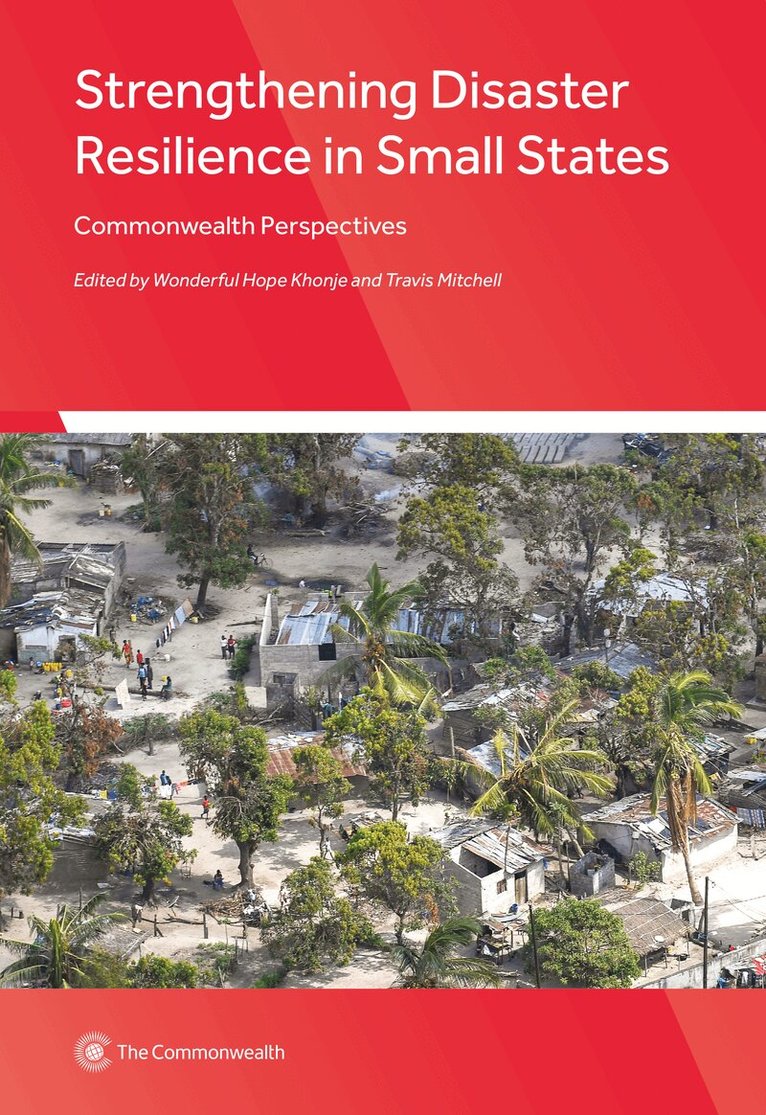
    Strengthening Disaster Resilience in Small States

    Commonwealth Perspectives

    AvWonderful Hope Khonje,Travis Mitchell

    Häftad, Engelska, 2019

    759 kr

    Beställningsvara. Skickas inom 5-8 vardagar. Fri frakt över 249 kr.

    Beskrivning

    Strengthening Disaster Resilience in Small States: Commonwealth Perspectives offers timely and expert analysis of differentiated exposure of small states to natural disasters, including an examination of specific interventions for strengthening small states’ resilience to this phenomenon.This book explores cutting-edge disaster risk reduction techniques useful for informing small states’ economic and disaster risk management policies, with the aim of collating and sharing important lessons with member governments, and galvanising international efforts for reducing the impact of natural disasters.This volume highlights transformative perspectives drawn from expert discussions and analyses of a select number of topics, including, environmental governance; information and communication technologies (ICT), capacity-building, gender and blockchain. The book also provides a ready and accessible resource for policy-makers in small states, experts, academia, private sector, civil society as well as the general public.

    Produktinformation

    • Utgivningsdatum:2019-10-07
    • Mått:165 x 240 x 0 mm
    • Vikt:292 g
    • Format:Häftad
    • Språk:Engelska
    • Antal sidor:252
    • Förlag:Commonwealth Secretariat
    • ISBN:9781849291897

    Utforska kategorier

    • Internationell ekonomi inom Ekonomi och Ledarskap
    • Miljövetenskap och miljöpolitik inom Naturvetenskap och teknik

    Innehållsförteckning

    • ForewordPreface List of Figures List of TablesContributors 1. Uses of Free Geoinformatics for Disaster Risk Reduction in Small Island Developing States – A Case Study from Honiara, Solomon Islands by Richard M Teeuw and Mathias Leidig 1.1 Introduction 1.2 Case Study: Honiara, Solomon Islands 1.3 Methodology 1.4 Results 1.5 Discussion 1.6 Conclusion Acknowledgements References 2. From Science to Science-based: Using state-of-the-art climate information to strengthen DRR in Small Island Statesby Denyse S Dookie, Markus Enenkel and Jacqueline Spence 2.1 Introduction 2.2 The Caribbean: vulnerability and disasters in context 2.3 Understanding weather and climate information 2.4 The availability and utility of climate information for DRR: Jamaica case study 2.5 The way forward Notes References 3. #Betterfit# Building Resilience Through Information and Communications Technologies: An E-resilience Approach for Small Island Developing Statesby Ankie Scott-Joseph 3.1 Introduction 3.2 Theoretical framework 3.3 Literature review 3.4 Conceptual framework: An e-resilience approach for small island developing states 3.5 Recommendation –the proposed approach 3.6 Conclusion Notes References 4. ICT for Disaster Management and Emergency Telecoms – Preparation, Migration and Recovery for the Island of Mauritiusby Roopesh Kevin Sungkur and Ashveen Kissoonah 4.1 Introduction 4.2 Literature review 4.3 Methodology 4.4 Recommendations 4.5 Discussions 4.6 Conclusion Acknowledgements References 5. A Critical Analysis of the Capacity of Blockchain-Based Parametric Insurance in Tackling The Financial Impact of Climatic Disastersby Christopher Sandland, Dale Schillingand Alastair Marke 5.1 Insurance for climate resilience 5.2 The ‘protection gap’ 5.3 The attributes of blockchain-based parametric insurance 5.4 The landscape of disaster response actions 5.5 The role of blockchain technology in insurance 5.6 BBPI – a faster, fairer and cheaper approach 5.7 Blockchain for wider impact on humanitarian assistance 5.8 Blockchain avoiding the pitfalls of traditional disaster insurance 5.9 Coverage in developing countries 5.10 Challenges of BBPI roll-out 5.11 A call to action References 6. Leveraging Blockchain Technology to Build Resilience and Disaster Risk Reduction in Small Statesby JP Fabri and Stephanie Fabri 6.1 The nexus between small states, vulnerability and disasters 6.2 The role of resilience 6.3 Blockchain and distributed ledger technology 6.4 The role of blockchain in DRR 6.5 Opportunities for the Commonwealth Secretariat 6.6 Conclusion Notes References 7. A Knowledge Management Initiative in Support of the Caribbean Comprehensive Disaster Management Framework and DRM Capacity Building by Barbara Carby 7.1 Introduction 7.2 Caribbean countries’ exposure to hazards 7.3 Risk management approaches in CARICOM states 7.4 Background to the Enhancing Knowledge Application for Comprehensive Disaster Management (EKACDM) project 7.5 Methodology 7.6 EKACDM as a knowledge management project 7.7 Discussion 7.8 Lessons learnt 7.9 Conclusion References 8. Capacity-building at the Community Level in the Face of Disaster Risk Reduction in Mauritiusby Nirmal Kumar Betchoo 8.1 Introduction 8.2 Methodology 8.3 Disasters in Mauritius today 8.4 Developing a National Disaster Risk Reduction Policy in Mauritius 8.5 Capacity-building at the community level 8.6 Conclusion Note References 9. Fresh Lessons on Preparedness for Disasters by John L Roberts and Gina Bonne 9.1 Best buys in disaster risk reduction? 9.2 The long tail of the aftermath of disasters 9.3 Adapting DRR strategy from the lessons from Hurricane Maria 2017 9.4 Three phases of preparedness 9.5 Current emphasis on capacity building for DRR 9.6 Planning, investment and action after the storm: protecting the most vulnerable 9.7 How well are the South-West Indian Ocean islands protected against the impact and aftermath of disasters? 9.8 Follow up of the 2015 UNISDR and IOC studies9.9 The indirect impact of disasters 9.10 SDGs and the Sendai Indicators: a heavy burden for small states 9.11 Essential DRR issues for small island states 9.12 Conclusions and recommendations Notes References 10. Strengthening Resilience Through Disaster Risk Reduction: A Gender-centred Perspective for Maltaby Roberta Lepre and Isotta Rossoni 10.1 Introduction 10.2 Gender-centred approaches to DRR 10.3 What’s missing? 10.4 Gender inequality in Malta – gender and its intersections 10.5 Gender and DRR 10.6 Differential impacts 10.7 Improving today for a better tomorrow: resilience through gender-responsive approaches to DRR 10.8 Suggestions for gender-responsive policies 10.9 Final considerations for Malta and other small states 10.10 Conclusions Notes References 11. Gender and Environmental Governance for Disaster Risk Reduction in Jamaica by Siddier Chambers 11.1 Jamaica’s vulnerability to disasters 11.2 Enabling policy framework: International, regional and national 11.3 Regional Comprehensive Disaster Management (CDM) Strategy and Programming Framework 2014–2024 11.4 Gender mainstreaming in disaster risk reduction 11.5 Methodology, limitations and areas for future research 11.6 Key projects and initiatives implemented under CDM Framework 2014–2024 by the Office of Disaster Preparedness and Emergency Management (ODPEM) and the Disaster Risk Reduction Centre (DRRC) 11.7 Discussion on gender and DRR projects of the ODPEM and DRRC 11.8 Best practices in DRR project implementation that contributed to gender mainstreaming 11.9 Gaps in gender mainstreaming in DRR in Jamaica 11.10 Conclusions, recommendations and policy implications Acknowledgement Note References