• Fri frakt över 249 kr
  • •
  • Snabba leveranser
  • •
  • Billiga böcker
Kundservice

Du är på sajten för privatpersoner.

Företag, bibliotek eller offentlig verksamhet?

Du handlar på classic.bokus.com, där alla dina funktioner finns intakta.
Till classic.bokus.com
Bokus logotyp. Gå till startsidan.
  • Erbjudanden
  • Nyheter
  • Student
  • Topplistor
  • Barn & ungdom
  • Bokus Play
  • E-böcker
  • Pocketböcker
  • Spel & pussel

10% rabatt på allt med kod: NYSTART10 →

Sidfot

Mina sidor

    Hjälp

    • Kundservice
    • Vanliga frågor och svar
    • Frakt och leverans
    • Retur vid ångerrätt
    • Reklamera vara
    • Betalning
    • Köpvillkor
    • Allmänna villkor
    • Information om webbplatsens tillgänglighet

    Om Bokus

    • Om oss
    • Pressrum
    • För studenter
    • För företag
    • För bibliotek och offentlig verksamhet
    • För leverantörer
    • Hållbarhet

    Populärt

    • Aktuella erbjudanden
    • Presentkort
    • Studentlitteratur
    • Nya böcker
    • Topplistor
    • Signerade böcker
    • Engelska böcker

    Inspiration

    • Boktips
    • BookTok
    • Populära bokserier
    • Barnbokskaraktärer
    • Populära författare
    Logotyp för Bokus
    Följ oss på Facebook (extern länk)Följ oss på Instagram (extern länk)Följ oss på YouTube (extern länk)Följ oss på TikTok (extern länk)
    bokus @ CookiesAnpassa cookiesIntegritetspolicyKöpvillkor
    Till Citymail hemsida (extern länk)Till Budbee hemsida (extern länk)Till Postnord hemsida (extern länk)Till Schenker hemsida (extern länk)Till Early Bird hemsida (extern länk)Till Walleys hemsida (extern länk)
    1. Juridik
    2. Internationell rätt
    3. Folkrätt

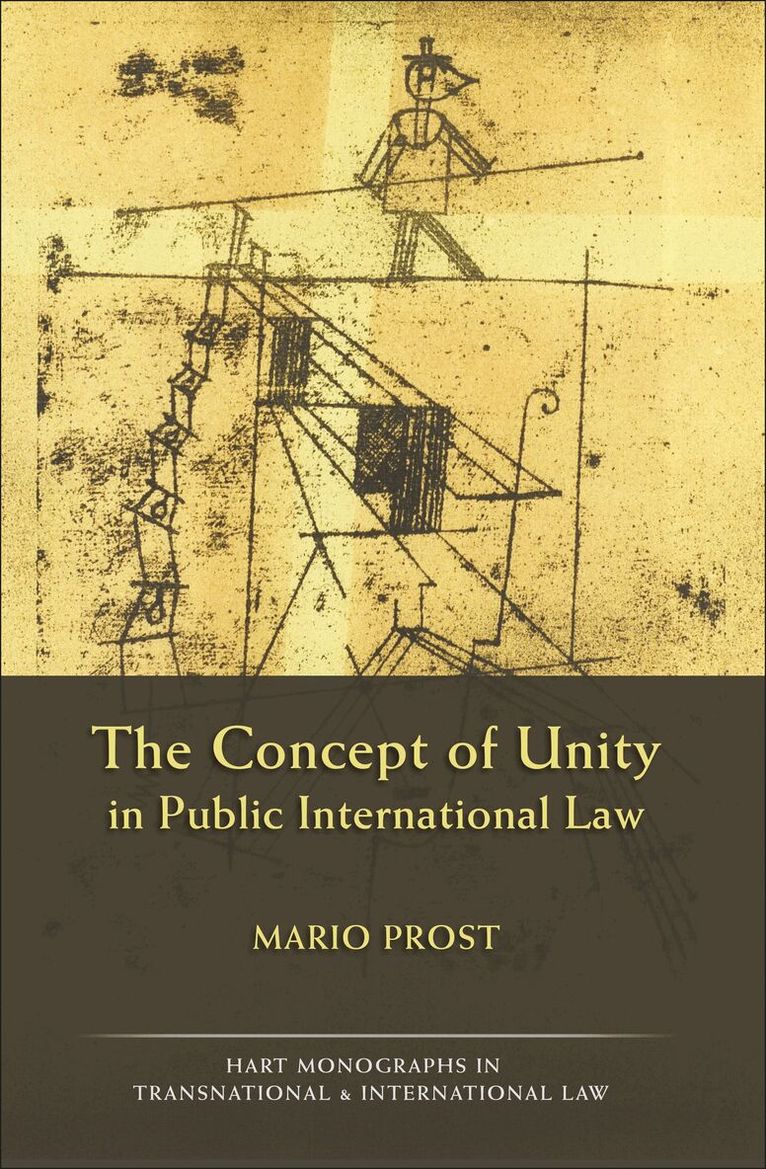
    Concept of Unity in Public International Law

    AvMario Prost,Craig Martin Scott

    Inbunden, Engelska, 2012

    Del i serien Hart Monographs in Transnational and International Law

    1 283 kr

    Beställningsvara. Skickas inom 10-15 vardagar. Fri frakt över 249 kr.

    Fler format och utgåvor

    E-bok

    1 392 kr

    E-bok

    1 388 kr

    Beskrivning

    'Fragmentation' has become a defining, albeit controversial, metaphor of international law scholarship in the era of globalisation. Some scholars see it as a new development, others as history repeating itself; some approach it as a technical issue and some as the reflection of deeper political struggles. But there is near-consensus about the fact that the established vision of international law as a unitary whole is under threat. At the core of the fragmentation debate lies the concept of unity, but this is hardly ever rationalised and is more assumed than explained. Its meaning remains vague and intuitive. 'The Concept of Unity in Public International Law' attempts to dispel that vagueness by exploring the various possible meanings of the concept of unity in international law. However, eschewing one grand theory of unity, it identifies and compares five candidates. Intentionally pluralistic in its outlook, the book does not engage in normative arguments about whether international law is or should be unitary but seeks to show instead that the concept of unity is contested and that discourses on fragmentation are necessarily contingent.The thesis on which the book is based won the 2009 Prize for best doctoral thesis from the Association des professeurs de droit du Québec.

    Produktinformation

    • Utgivningsdatum:2012-03-15
    • Mått:156 x 234 x 14 mm
    • Vikt:499 g
    • Format:Inbunden
    • Språk:Engelska
    • Serie:Hart Monographs in Transnational and International Law
    • Antal sidor:226
    • Förlag:Bloomsbury Publishing PLC
    • ISBN:9781849460439

    Utforska kategorier

    • Folkrätt inom Juridik

    Mer om författaren

    Mario Prost is a Law Lecturer at Keele University.

    Recensioner i media

    The Concept of Unity in Public International Law is an important book for those who are interested in fragmentation theory and international legal theory in general. It challenges traditional international legal epistemology from within and outside the legal perspectives and opens up new research paths. In doing so, it ties together huge amounts of recent and classical literature without losing its main research focus.

    Innehållsförteckning

    • 1 Introduction I. The roots of a postmodern anxiety II. From too little to too much law: mapping the fragmentation debate III. Towards an exploratory philosophy of unity IV. Outline of the book V. Some caveats and clarifications 2 Of Unity, Perspective and Perception: An Ontological Preamble I. From the simple to the complex: elementary unity and unity by composition II. In flesh and ideas: unity as interpretation III. Multi-causational unity IV. Unity and the laws of perspective V. Intermediate conclusions: unity, choice and ruse3 Unity, Unification, Universality: A Terminological Disambiguation I. Unity and unificationII. Unity and universality III. Intermediate conclusions – complexity on the global marketplace of law: the MOX Plant Dispute 4 Material Unity I. The 'no conflict' theory of unity II. The definition of 'norm conflict' in theory and practice III. Intermediate conclusions 5 Formal Unity I. Three conceptions of the legal order II. Taking Hart seriously: secondary rules, determinacy and acceptance III. Issues of determinacy: questioning the sources of international law IV. Issues of acceptance: the International Islamic Court of Justice and the Shari'a as the ultimate rule of recognition V. Intermediate conclusions 6 Cultural Unity I. International law as an intellectual and professional discipline II. The concept of legal culture III. The unity of international law as a cultural system IV. Intermediate conclusions: the invisible hand of legal culture 7 Logical Unity I. Epistemo-logical unity: Ah! In the hypothesis! II. Axio-logical unity III. Intermediate conclusions: the hesitant fettering of the thousand necks 8 General Conclusion: Unitas Multiplex I. Changing lenses: Tadic revisited II. Territorial battles and merchants of unity