• Fri frakt över 249 kr
  • •
  • Snabba leveranser
  • •
  • Billiga böcker
Kundservice

Du är på sajten för privatpersoner.

Företag, bibliotek eller offentlig verksamhet?

Du handlar på classic.bokus.com, där alla dina funktioner finns intakta.
Till classic.bokus.com
Bokus logotyp. Gå till startsidan.
  • Erbjudanden
  • Nyheter
  • Student
  • Topplistor
  • Barn & ungdom
  • Bokus Play
  • E-böcker
  • Pocketböcker
  • Spel & pussel

10% rabatt på allt med kod: NYSTART10 →

Sidfot

Mina sidor

    Hjälp

    • Kundservice
    • Vanliga frågor och svar
    • Frakt och leverans
    • Retur vid ångerrätt
    • Reklamera vara
    • Betalning
    • Köpvillkor
    • Allmänna villkor
    • Information om webbplatsens tillgänglighet

    Om Bokus

    • Om oss
    • Pressrum
    • För studenter
    • För företag
    • För bibliotek och offentlig verksamhet
    • För leverantörer
    • Hållbarhet

    Populärt

    • Aktuella erbjudanden
    • Presentkort
    • Studentlitteratur
    • Nya böcker
    • Topplistor
    • Signerade böcker
    • Engelska böcker

    Inspiration

    • Boktips
    • BookTok
    • Populära bokserier
    • Barnbokskaraktärer
    • Populära författare
    Logotyp för Bokus
    Följ oss på Facebook (extern länk)Följ oss på Instagram (extern länk)Följ oss på YouTube (extern länk)Följ oss på TikTok (extern länk)
    bokus @ CookiesAnpassa cookiesIntegritetspolicyKöpvillkor
    Till Citymail hemsida (extern länk)Till Budbee hemsida (extern länk)Till Postnord hemsida (extern länk)Till Schenker hemsida (extern länk)Till Early Bird hemsida (extern länk)Till Walleys hemsida (extern länk)
    1. Juridik
    2. Särskilda rättsområden
    3. Straffrätt: process och brott

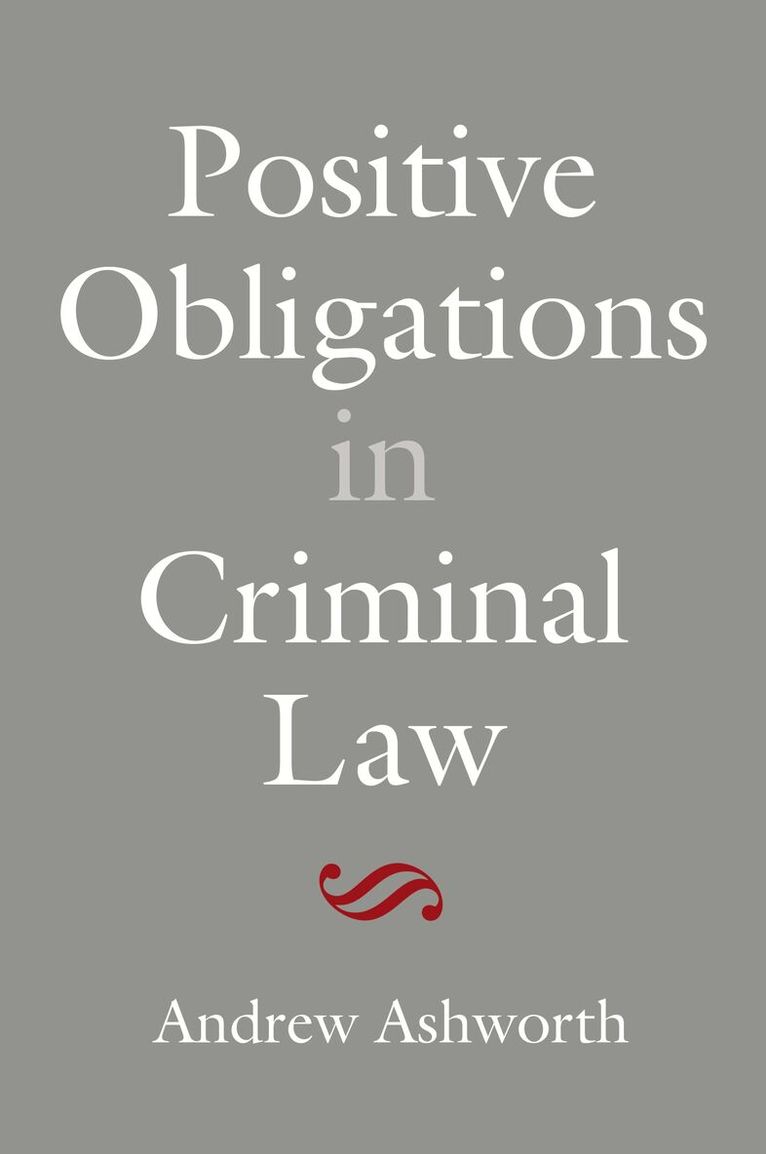
    Positive Obligations in Criminal Law

    AvAndrew Ashworth

    Häftad, Engelska, 2015

    428 kr

    Beställningsvara. Skickas inom 10-15 vardagar. Fri frakt över 249 kr.

    Fler format och utgåvor

    E-bok

    458 kr

    E-bok

    460 kr

    Inbunden

    1 092 kr

    Beskrivning

    This book offers a set of essays, old and new, examining the positive obligations of individuals and the state in matters of criminal law. The centrepiece is a new, extended essay on the criminalisation of omissions-examining the duties to act imposed on individuals and organisations by the criminal law, and assessing their moral and social foundations. Alongside this is another new essay on the state’s positive obligations to put in place criminal laws to protect certain individual rights. Introducing the volume is the author’s much-cited essay on criminalisation, ‘Is the Criminal Law a Lost Cause?’. The book sets out to shed new light on contemporary arguments about the proper boundaries of the criminal law, not least by exploring the justifications for imposing positive duties (reinforced by the criminal law) on individuals and their relation to the positive obligations of the state.

    Produktinformation

    • Utgivningsdatum:2015-11-05
    • Mått:142 x 232 x 14 mm
    • Vikt:340 g
    • Format:Häftad
    • Språk:Engelska
    • Antal sidor:232
    • Förlag:Bloomsbury Publishing PLC
    • ISBN:9781849469890

    Utforska kategorier

    • Straffrätt: process och brott inom Juridik

    Mer om författaren

    Andrew Ashworth CBE KC FBA is Vinerian Professor Emeritus of English Law in the University of Oxford and Emeritus Fellow of All Souls College.

    Recensioner i media

    This is a timely and welcome collection of essays, both old and new, from the pen of someone who, I hesitate to remind him, has been, for not far short of half a century, one of the common law's most distinguished thinkers in the field of criminal law.

    Innehållsförteckning

    • 1: Is the Criminal Law a Lost Cause? 1.1 Distinguishing Criminal Offences by Reference to their Content 1.2 The Procedural Distinction 1.3 The Functional Distinction1.4 Proceedings and Protections 1.5 The Seriousness of Wrongdoing 1.6 Equal Treatment, Countervailing Interests and Differential Enforcement 1.7 Criminalisation and Sentencing 1.8 The Principled Core of Criminal Law 2: Criminalising Omissions 2.1 The Place of Omissions in the Criminal Law 2.2 The Foundations of Legal Duties 2.3 A Re-appraisal of Duty-Situations 2.4 Omissions Offences and the Rule of Law 2.5 The Contours of Omissions Liability 2.6 Omissions as Offence-Elements 2.7 What Duty-Situations Should Require 2.8 Conclusions 3: Ignorance of the Criminal Law, and Duties to Avoid it 3.1 Is Ignorance of the Criminal Law No Defence? 3.2 The Ignorance-of-Law Doctrine and the Principle of Legality 3.3 Three Different Contexts for Ignorance of the Criminal Law 3.4 What are the State's Obligations? 3.5 Some Practical Implications 3.6 Conclusions 4: Should Strict Criminal Liability be Removed from All Imprisonable Offences? 4.1 What is Strict Criminal Liability? 4.2 Reasons for Requiring Fault for Criminal Conviction 4.3 Serious Crime: Limitations and Exceptions 4.4 Imprisonment Without Fault 4.5 Conclusions 5: A Change of Normative Position: Determining the Contours of Culpability in Criminal Law 5.1 Unlawful Act Theory 5.2 The Nub of Subjectivism 5.3 Moderate Constructivism, Autonomy and the Rule of Law 5.4 The Idea of Change of Normative Position 5.5 Determining the Effect of a Change of Normative Position 5.6 Change of Normative Position by Acting Knowingly 5.7 Moderate Constructivism Re-Stated 6: The Unfairness of Risk-Based Possession Offences 6.1 Risk-Based Possession Offences96.2 Possession Offences and Core Doctrines 6.3 Possession as a Form of Endangerment 6.4 If Possession is Criminalised, How should it be Sentenced? 6.5 Conclusions: Possession Offences and Criminal Law Doctrine 7: Child Defendants and the Doctrines of the Criminal Law 7.1 Childhood 7.2 Children as Moral Agents 7.3 The State's Response to Children's Bad Behaviour 7.4 The Effect of Childhood on General Defences to Criminal Liability 7.5 The Effect of Childhood on Consent 7.6 The Effect of Childhood on Mens Rea 7.7 Conclusions 8: Human Rights and Positive Obligations to Create Particular Criminal Offences 8.1 The Range of Positive Obligations under the European Convention on Human Rights 8.2 Duty to Secure Article 8 Rights 8.3 Duty to Secure Article 3 Rights 8.4 Duty to Secure Article 2 Rights 8.5 Duty to Secure Article 4 Rights 8.6 Conclusions 9: Epilogue: Emphasising the Positive