• Fri frakt över 249 kr
  • •
  • Snabba leveranser
  • •
  • Billiga böcker
Kundservice

Du är på sajten för privatpersoner.

Företag, bibliotek eller offentlig verksamhet?

Du handlar på classic.bokus.com, där alla dina funktioner finns intakta.
Till classic.bokus.com
Bokus logotyp. Gå till startsidan.
  • Erbjudanden
  • Nyheter
  • Student
  • Topplistor
  • Barn & ungdom
  • Bokus Play
  • E-böcker
  • Pocketböcker
  • Spel & pussel

10% rabatt på allt med kod NYSTART10 →

Sidfot

Mina sidor

    Hjälp

    • Kundservice
    • Vanliga frågor och svar
    • Frakt och leverans
    • Retur vid ångerrätt
    • Reklamera vara
    • Betalning
    • Köpvillkor
    • Allmänna villkor
    • Information om webbplatsens tillgänglighet

    Om Bokus

    • Om oss
    • Pressrum
    • För studenter
    • För företag
    • För bibliotek och offentlig verksamhet
    • För leverantörer
    • Hållbarhet

    Populärt

    • Aktuella erbjudanden
    • Presentkort
    • Studentlitteratur
    • Nya böcker
    • Topplistor
    • Signerade böcker
    • Engelska böcker

    Inspiration

    • Boktips
    • BookTok
    • Populära bokserier
    • Barnbokskaraktärer
    • Populära författare
    Logotyp för Bokus
    Följ oss på Facebook (extern länk)Följ oss på Instagram (extern länk)Följ oss på YouTube (extern länk)Följ oss på TikTok (extern länk)
    bokus @ CookiesAnpassa cookiesIntegritetspolicyKöpvillkor
    Till Citymail hemsida (extern länk)Till Budbee hemsida (extern länk)Till Postnord hemsida (extern länk)Till Schenker hemsida (extern länk)Till Early Bird hemsida (extern länk)Till Walleys hemsida (extern länk)
    1. Medicin
    2. Andra medicinska specialiteter
    3. Farmakologi

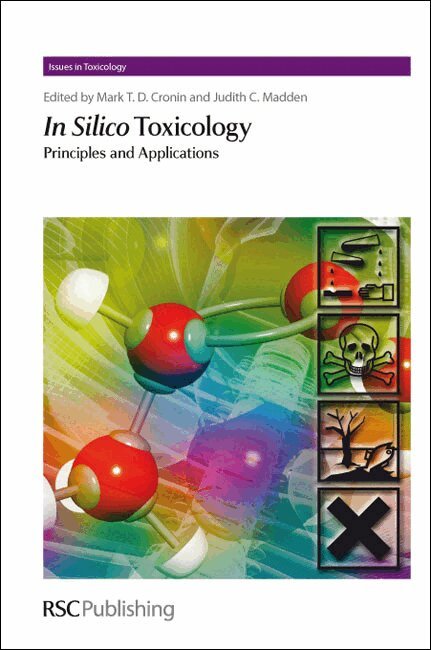
    In Silico Toxicology

    Principles and Applications

    AvMark Cronin,Judith Madden

    Inbunden, Engelska, 2010

    Del i serien Issues in Toxicology

    2 757 kr

    Beställningsvara. Skickas inom 5-8 vardagar. Fri frakt över 249 kr.

    Beskrivning

    In Silico methods to predict toxicity have become increasingly important recently, particularly in light of European legislation such as REACH and the Cosmetics Regulation. They are also being used extensively worldwide e.g. in the USA, Canada, Japan and Australia. In assessing the risk that a chemical may pose to human health or to the environment, focus is now being directed towards exploitation of in silico methods to replace in vivo or in vitro techniques. A prediction of potential toxicity requires several stages: 1) Collation and organisation of data available for the compound, or if this is not available, information for related compounds. 2) An assessment of the quality of the data. 3) Generation of additional information about the compound using computational techniques at various levels of complexity - calculation of physico-chemical properties, 2-D, 3-D / MO descriptors and specific receptor modelling / interaction. 4) Use of an appropriate strategy to predict toxicity - ie a statistically valid method which makes best use of all available information (mechanism of action, activity for related compounds, extrapolation across species and endpoints, likely exposure scenario amounts over time etc). 5) Consideration then needs to be given to how this information is used in the real world ie use of expert systems / tools as relevant to assessors (if sufficiently different to previous) - weight of evidence approaches. 6) Finally evidence should be presented from case studies within this area. No other publication brings together information on all of these areas in one book and this publication is unique in that it provides a logical progression through every one of these key stages and defines the use of computational approaches to predict the environmental toxicity and human health effects of organic chemicals. The volume is aimed at the developers and users of in silico toxicology and provides an analysis of all aspects required for in silico prediction of toxicology, including data collation, quality assessment and computational approaches. The contributions from recognised leaders in each of these areas include evidence of the use and applicability of approaches using real world case studies concerning both environmental and human health effects. The book provides a very useful single source reference for people working in this area including academics, professionals, under- and post-graduate students as well as Governmental Regulatory Scientists involved in chemical risk assessment and REACH.

    Produktinformation

    • Utgivningsdatum:2010-10-28
    • Mått:156 x 234 x 37 mm
    • Vikt:1 132 g
    • Format:Inbunden
    • Språk:Engelska
    • Serie:Issues in Toxicology
    • Antal sidor:688
    • Förlag:Royal Society of Chemistry
    • ISBN:9781849730044

    Utforska kategorier

    • Farmakologi inom Medicin
    • Kemi inom Naturvetenskap och teknik
    • Programmeringsböcker inom Data och IT

    Mer om författaren

    Mark Cronin is Professor of Predictive Toxicology at the Liverpool John Moores University. He has a BSc in Applied Biology and a PhD in Environmental QSAR and has co-edited 1 book and over 150 papers. He was the co-organiser of the 11th International Workshop on the Human Health and Environmental Sciences, Liverpool, May 2004 as well as a number of one day meetings at the Society of Chemical Industry, London. Judith Madden is a Senior Lecturer in Pharmaceutical and Chemical Sciences at the Liverpool John Moores University. She has a BSc in Chemistry and Pharmacology and a PhD in QSAR and Drug Design and over 25 publications to her name. She was the co-organiser of the 11th International Workshop on the Human Health and Environmental Sciences, Liverpool, May 2004 and the SETAC-UK Annual Meeting, Liverpool, September 2006.

    Innehållsförteckning

    • Introduction;Section 1: Compiling the Model;Sources of Toxicity Data for In Silico Toxicology;Calculation of Physico-Chemical Properties;Calculation of Theoretical 2-D Descriptors;Calculation of Molecular Orbital Descriptors;QSAR Methods: Receptor Modelling in Toxicology;Evaluating Data Quality;Section 2: Data Integration, Analysis and Utilisation;QSAR Methods: Statistical Methodologies;Characterisation, Evaluation and Possible Validation of a QSAR;Applicability Domain Mechanisms of Toxic Action in In Silico Toxicology;Formation of Categories;Read-Across Endpoint-Based Extrapolation;Role of Exposure in Modelling;Expert Systems Tools for Category Formation and Read-Across;Section 3: Application of In Silico Toxicology to Risk Assessment;Weight of Evidence in Toxicity Prediction;Integrated Testing Strategies;Case Study: Predicting Environmental Toxicity;Case Study: Predicting Human Health;In Silico Toxicology in Risk Assessment