• Fri frakt över 249 kr
  • •
  • Snabba leveranser
  • •
  • Billiga böcker
Kundservice

Du är på sajten för privatpersoner.

Företag, bibliotek eller offentlig verksamhet?

Du handlar på classic.bokus.com, där alla dina funktioner finns intakta.
Till classic.bokus.com
Bokus logotyp. Gå till startsidan.
  • Erbjudanden
  • Nyheter
  • Student
  • Topplistor
  • Barn & ungdom
  • Bokus Play
  • E-böcker
  • Pocketböcker
  • Spel & pussel

Må bättre, för mindre! Upp till 50% rabatt på hälsoböcker

Sidfot

Mina sidor

    Hjälp

    • Kundservice
    • Vanliga frågor och svar
    • Frakt och leverans
    • Retur vid ångerrätt
    • Reklamera vara
    • Betalning
    • Köpvillkor
    • Allmänna villkor
    • Information om webbplatsens tillgänglighet

    Om Bokus

    • Om oss
    • Pressrum
    • För studenter
    • För företag
    • För bibliotek och offentlig verksamhet
    • För leverantörer
    • Hållbarhet

    Populärt

    • Aktuella erbjudanden
    • Presentkort
    • Studentlitteratur
    • Nya böcker
    • Topplistor
    • Signerade böcker
    • Engelska böcker

    Inspiration

    • Boktips
    • BookTok
    • Populära bokserier
    • Barnbokskaraktärer
    • Populära författare
    Logotyp för Bokus
    Följ oss på Facebook (extern länk)Följ oss på Instagram (extern länk)Följ oss på YouTube (extern länk)Följ oss på TikTok (extern länk)
    bokus @ CookiesAnpassa cookiesIntegritetspolicyKöpvillkor
    Till Citymail hemsida (extern länk)Till Budbee hemsida (extern länk)Till Postnord hemsida (extern länk)Till Schenker hemsida (extern länk)Till Early Bird hemsida (extern länk)Till Walleys hemsida (extern länk)
    1. Samhälle och politik
    2. Samhälle och kultur
    3. Sociala och etiska frågor

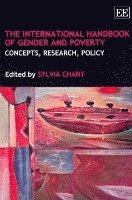
    International Handbook of Gender and Poverty

    Concepts, Research, Policy

    AvSylvia Chant

    Häftad, Engelska, 2011

    890 kr

    Beställningsvara. Skickas inom 5-8 vardagar. Fri frakt över 249 kr.

    Beskrivning

    'With its breadth and depth, The International Handbook of Gender and Poverty certainly deserves a place on the bookshelves of university libraries and of every academic and development professional with a specific interest in gender and development.' Gender in Management: An International Journal 'I recommend this book to be a staple of reference libraries.' British Politics and Policy 'These diverse, thoughtful essays go far beyond a mere summary of international scholarship. They outline a fascinating and provocative agenda for future policy-relevant research. This book will help redefine and revitalise the field of gender and development.'- Professor Nancy Folbre, Department of Economics, University of Massachusetts, AmherstIn the interests of contextualizing (and nuancing) the multiple interrelations between gender and poverty, Sylvia Chant has gathered writings on diverse aspects of the subject from a range of disciplinary and professional perspectives, achieving extensive thematic as well as geographical coverage. This benchmark volume presents women's and men's experiences of gendered poverty with respect to a vast spectrum of intersecting issues including local to global economic transformations, family, age, 'race', migration, assets, paid and unpaid work, health, sexuality, human rights, and conflict and violence.The handbook also provides up-to-the-minute reflections on how to theorize, measure and represent the connections between gender and poverty, and to contemplate how gendered poverty is affected - and potentially redressed - by policy and grassroots interventions. An unprecedented and ambitious blend of conceptual, methodological, empirical and practical offerings from a host of established as well as upcoming scholars and professionals from across the globe lends the volume a distinctive and critical edge. Notwithstanding the broad scope of The International Handbook of Gender and Poverty, one theme in common to most of its 100-plus chapters is the need to 'en-gender' analysis and initiatives to combat poverty and inequality at local, national and international levels. As such, the volume will inspire its readers not only to reflect deeply on poverty and gender injustice, but also to consider what to do about it.This book will be essential reading for all with academic, professional or personal interests in gender, poverty, inequality, development, and social, political and economic change in the contemporary world.

    Produktinformation

    • Utgivningsdatum:2011-11-30
    • Mått:169 x 244 x undefined mm
    • Format:Häftad
    • Språk:Engelska
    • Förlag:Edward Elgar Publishing Ltd
    • ISBN:9781849800952

    Utforska kategorier

    • Sociala och etiska frågor inom Samhälle och politik
    • Genusvetenskap inom Samhälle och politik
    • Referensverk och tvärvetenskap inom Samhälle och politik

    Mer om författaren

    Edited by the late Sylvia Chant FRSA, FAcSS, formerly Professor of Development Geography, London School of Economics and Political Science, UK

    Recensioner i media

    Possibly the most comprehensive contribution to a detailed and thorough analysis of gendered dimensions of international poverty contexts, causes, and consequences ever brought together into one volume. --Suzanne Clisby Gender and DevelopmentWith international attention focused on halving poverty by 2015, the appearance of The International Handbook of Gender and Poverty is both timely and essential. Sylvia Chant is to be congratulated for producing a state-of-the-art compendium of everything you need to know about the often hidden, gendered, dimensions of poverty. Edited and written by leading scholars and policy advisers, the Handbook comprehensively covers the key themes that are vital to understanding poverty as a gendered process, combining policy lessons with theoretical insight. Richly illustrated with examples from across the world, this book will not only be welcomed by all those dedicated to the study of poverty, but, by casting new light on its causes, will also help to develop appropriate measures to tackle it. --Professor Maxine Molyneux, Institute for the Study of the Americas, University of London, UK While each of the articles in this impressive collection makes an original contribution to the conceptual, empirical and policy analysis of gender and poverty, together they provide a comprehensive overview of the field and an essential resource for all sections of the development community. Professor Sylvia Chant is to be congratulated for bringing together some of the leading thinkers in the field from across the world. This is not only an unprecedented feat of international co-operation but feminist collaboration at its best. --Professor Naila Kabeer, Institute of Development Studies, University of Sussex, UKWith international attention focused on halving poverty by 2015, the appearance of The International Handbook of Gender and Poverty is both timely and essential. Sylvia Chant is to be congratulated for producing a state-of-the-art compendium of everything you need to know about the often hidden, gendered, dimensions of poverty. Edited and written by leading scholars and policy advisers, the Handbook comprehensively covers the key themes that are vital to understanding poverty as a gendered process, combining policy lessons with theoretical insight. Richly illustrated with examples from across the world, this book will not only be welcomed by all those dedicated to the study of poverty, but, by casting new light on its causes, will also help to develop appropriate measures to tackle it. --Professor Maxine Molyneux, Institute for the Study of the Americas, University of London, UKWhile each of the articles in this impressive collection makes an original contribution to the conceptual, empirical and policy analysis of gender and poverty, together they provide a comprehensive overview of the field and an essential resource for all sections of the development community. Professor Sylvia Chant is to be congratulated for bringing together some of the leading thinkers in the field from across the world. This is not only an unprecedented feat of international co-operation but feminist collaboration at its best. --Professor Naila Kabeer, Institute of Development Studies, University of Sussex, UK

    Innehållsförteckning

    • Contents:1. Gendered Poverty Across Space and Time: Introduction and OverviewSylvia ChantPART I: CONCEPTS AND METHODOLOGIES FOR GENDERED POVERTY2. Strategic Gendering: One Factor in the Constituting of Novel Political EconomiesSaskia Sassen3. Subjectivity, Sexuality and Social InequalitiesHenrietta L. Moore4. Power, Privilege and Gender as Reflected in Poverty Analysis and Development GoalsGerd Johnsson-Latham5. Gender Into Poverty Won’t Go: Reflections on Economic Growth, Gender Inequality and Poverty with Particular Reference to IndiaCecile Jackson6. Advancing the Scope of Gender and Poverty Indices: An Agenda and Work in ProgressThomas Pogge 7. Methodologies for Gender-sensitive and Pro-poor Poverty MeasuresSharon Bessell8. Multidimensional Poverty Measurement in Mexico and Central America: Incorporating Rights and EqualityAnna Coates9. Gender, Time Poverty and Amartya Sen’s Capability Approach: Evidence From GuatemalaSarah Gammage 10. Why is Progress in Gender Equality So Slow? An Introduction to the ‘Social Institutions and Gender’ IndexDennis Drechsler and Johannes Jütting 11. Diamonds are a Girl’s Best Friend? Experiences with the Gender Action Learning SystemLinda MayouxPART II: DEBATES ON THE ‘FEMINISATION OF POVERTY’, AND FEMALE-HEADED HOUSEHOLDS12. The ‘Feminisation of Poverty’: A Widespread Phenomenon?Marcelo Medeiros and Joana Costa 13. Poor Households or Poor Women: Is There a Difference?Gita Sen14. Globalisation and the Need for a ‘Gender Lens’: A Discussion of Dichotomies and Orthodoxies with Particular Reference to the ‘Feminisation of Poverty’Tine Davids and Francien van Driel15. Towards a (Re)Conceptualisation of the ‘Feminisation of Poverty’:Reflections on Gender-differentiated Poverty from The Gambia, Philippines and Costa RicaSylvia Chant16. Post-adjustment, Post-mitigation, 'Post-poverty’? The Feminisation of Family Responsibility in Contemporary GhanaLynne Brydon17. Female-headed Households and Poverty in Latin America: State Policy in Cuba, Puerto Rico and the Dominican RepublicHelen I. Safa18. Gender, Households and Poverty in the Caribbean: Shadows Over Islands in the SunJanet Momsen19. Poverty and Female-headed Households in Post-genocide RwandaMarian Koster20. Between Stigmatisation and Survival: Poverty Among Migrant and Non-migrant Lone Mothers in the Netherlands Annelou Ypeij21. Lone Mothers, Poverty and Paid Work in the United KingdomJane Millar22. Urban Poverty and Gender in Advanced Economies: The Persistence of Feminised DisadvantageFran TonkissPART III: GENDER, FAMILY AND LIFECOURSE23. Gender and Household Decision-making in Developing Countries: A Review of EvidenceAgnes R. Quisumbing24. Linking Women’s and Children’s PovertyRuth Lister25. Reducing the Gender Gap in Education: The Role of Wage Labour for Rural Women in MozambiqueJohn Sender 26. Understanding the Gender Dynamics of Russia’s Economic Transformation: Women’s and Men’s Experiences of Employment, Domestic Labour and PovertySarah Ashwin27. Gender, Poverty and Transition in Central AsiaJane Falkingham and Angela Baschieri28. Urban Poverty, Heteronormativity and Women’s Agency in Lima, Peru: Family Life on the MarginsCarolyn H. Williams 29. Youth, Gender and Work on the Streets of MexicoGareth A. Jones and Sarah Thomas de Benítez30. Sexuality, Poverty and Gender Among Gambian YouthAlice Evans 31. Ghettoisation, Migration or Sexual Connection? Negotiating Survival Among Gambian Male YouthsStella Nyanzi 32. Poverty and Old Age in Sub-Saharan Africa: Examining the Impacts of Gender with Particular Reference to GhanaIsabella Aboderin33. Gender, Urban Poverty and Ageing in India: Conceptual and Policy IssuesPenny Vera-Sanso34. Poverty, Gender and Old Age: Pension Models in Costa Rica and ChileMonica Budowski35. Gender, Poverty and Pensions in the United KingdomJane Falkingham, Maria Evandrou and Athina VlachantoniPART IV: GENDER, ‘RACE’ AND MIGRATION36. Assessing Poverty, Gender and Well-being in ‘Northern’ Indigenous CommunitiesJanet Hunt37. Gender and Ethnicity in the Shaping of Differentiated Outcomes of Mexico’s Progresa-Oportunidades Conditional Cash Transfer ProgrammeMercedes González de la Rocha38. Gender, Poverty, and National Identity in Afrodescendent and Indigenous Movements Helen I. Safa39. The Gendered Exclusions of International Migration: Perspectives from Latin American Migrants in LondonCathy McIlwaine 40. Latino Immigrants, Gender and Poverty in the United StatesCecilia Menjívar41. Culturing Poverty? Ethnicity, Religion, Gender and Social Disadvantage Among South Asian Muslim Communities in the United KingdomClaire Alexander42. Gender, Occupation, Loss and Dislocation: A Latvian PerspectiveLinda McDowell43. Gender, Poverty and Migration in MexicoHaydea Izazola44. Migration, Gender and Sexual Economies: Young Female Rural–Urban Migrants in NigeriaDaniel Jordan Smith45. Internal Mobility, Migration and Changing Gender Relations: Case Study Perspectives from Mali, Nigeria, Tanzania and VietnamCecilia Tacoli46. Picturing Gender and Poverty: From ‘Victimhood’ to ‘Agency’?Kalpana Wilson PART V: GENDER, HEALTH AND POVERTY47. Poverty Gender and the Right to Health: Reflections with Particular Reference to ChileJasmine Gideon48. Maternal Mortality in Latin America: A Matter of Gender and Ethnic Equality Anna Coates49. New Labyrinths of Solitude: Lonesome Mexican Migrant Men and AIDSMatthew Gutmann50. Gender, Poverty and AIDS: Perspectives with Particular Reference to Sub-Saharan AfricaCatherine Campbell and Andrew Gibbs51. Gender, HIV/AIDS and Carework in India: A Need for Gender-sensitive PolicyKeerty Nakray52. Women’s Smoking and Social DisadvantageHilary Graham PART VI: GENDER, POVERTY AND ASSETS53. Household Wealth and Women’s Poverty: Conceptual and Methodological Issues in Assessing Gender Inequality in Asset OwnershipCarmen Diana Deere 54. Gender, Poverty and Access to Land in Cities of the South Carole Rakodi55. Power, Patriarchy and Land: Examining Women’s Land Rights in Uganda and RwandaKate Bird and Jessica Espey 56. Gender, Livelihoods and Rental Housing Markets in the Global South: The Urban Poor as Landlords and TenantsSunil Kumar57. Renegotiating the Household: Successfully Leveraging Women’s Access to Housing Microfinance in South AfricaSophie Mills58. Gender Issues and Shack/Slum Dweller FederationsSheela Patel and Diana Mitlin 59. Gender, Poverty and Social Capital: The Case of Oaxaca City, MexicoKatie Willis60. Moving Beyond Gender and Poverty to Asset Accumulation: Evidence from Low-income Households in Guayaquil, EcuadorCaroline Moser61. Conceptual and Practical Issues for Gender and Social Protection: Lessons from Lesotho Rachel Slater, Rebecca Holmes, Nicola Jones and Matšeliso MphalePART VII: GENDER, POVERTY AND WORK62. Gender, Work and Poverty in High-income Countries Diane Perrons63. The Extent and Origin of the Gender Pay Gap in EuropeJanneke Plantenga and Eva Fransen64. Women’s Work, Nimble Fingers and Women’s Mobility in the Global EconomyRuth Pearson65. Gender, Poverty and Inequality: The Role of Markets, States and HouseholdsShahra Razavi and Silke Staab 66. Women’s Employment, Economic Risk and PovertyJames Heintz 67. Gender and Ethical Trade: Can Vulnerable Women Workers Benefit?Stephanie Barrientos68. Fraternal Capital and the Feminisation of Labour in South IndiaSharad Chari 69. Economic Transition and the Gender Wage Gap in Vietnam: 1992–2002Amy Y.C. Liu70. Gender, Poverty and Work in CambodiaKatherine Brickell71. Informality, Poverty, and Gender: Evidence from the Global SouthMarty Chen72. The Empowerment Trap: Gender, Poverty and the Informal Economy in Sub-Saharan AfricaKate Meagher73. A Gendered Analysis of Decent Work Deficits in India’s Urban Informal Economy: Case Study Perspectives from SuratPaula Kantor 74. Gender and Quality of Work in Latin AmericaJavier Pineda75. Gender Inequalities and Poverty: A Simulation of the Likely Impacts of Reducing Labour Market Inequalities on Poverty Incidence in Latin AmericaJoana Costa and Elydia Silva PART VIII: GENDERED POVERTY AND POLICY INTERVENTIONS76. Gender, Poverty and Aid ArchitectureGwendolyn Beetham77. Brand Aid? How Shopping Has Become ‘Saving African Women and Children with AIDS’Lisa Ann Richey 78. Sweden to the Rescue? Fitting Brown Women into a Poverty FrameworkKatja Jassey 79. Poverty Alleviation in a Changing Policy and Political Context: The Case of PRSPs with Particular Reference to NicaraguaSarah Bradshaw and Brian Linneker80. Gender-responsive Budgeting and Women’s PovertyDiane Elson and Rhonda Sharp81. Reducing Gender Inequalities in Poverty: Considering Gender-sensitive Social Programmes in Costa RicaMonica Budowski and Laura Guzmán Stein82. Is Gender Inequality a Form of Poverty? Shifting Semantics in Oxfam GB’s Thinking and PracticeNicholas Piálek83. Tackling Poverty: Learning Together to Improve Women’s Rights Through Partnership – The Case of WOMANKIND Worldwide Tina Wallace and Ceri Hayes 84. Millennial Woman: The Gender Order of DevelopmentAnanya RoyPART IX: MICROFINANCE AND WOMEN’S EMPOWERMENT85. The Housewife and the Marketplace: Practices of Credit and Savings from the Early Modern to Modern EraBeverly Lemire86. Money as Means or Money as End? Gendered Poverty, Microcredit and Women's Empowerment in TanzaniaFauzia Mohamed87. Capitalising on Women’s Social Capital: Gender and Microfinance in BoliviaKate Maclean88. ‘A Woman and an Empty House are Never Alone For Long’: Autonomy, Control, Marriage and Microfinance in Women’s Livelihoods in Addis Ababa, EthiopiaCaroline Sweetman 89. Gender and Poverty in Egypt: Do Credit Projects Empower the Marginalised and the Destitute?Iman Bibars90. Women’s Empowerment: A Critical Re-evaluation of a GAD Poverty-alleviation Project in EgyptJoanne Sharp, John Briggs, Hoda Yacoub and Nabila Hamed 91. Impacting Women through Financial Services: The Self Help Group Bank Linkage Programme in India and its Effects on Women’s EmpowermentRanjula Bali Swain92. Microcredit and Women’s Empowerment: Understanding the ‘Impact Paradox’ with Particular Reference to South IndiaSupriya Garikipati93. Gender and Poverty in Microfinance: Illustrations from ZambiaIrene Banda Mutalima94. The Impact of Microcredit Programmes on Survivalist Women Entrepreneurs in The Gambia and SenegalBart Casier95. Methodologies for Evaluating Women’s Empowerment in Poverty Alleviation Programmes: Illustrations from Paraguay and HondurasYoko FujikakePART X: NEW FRONTIERS IN GENDERED POVERTY RESEARCH AND ANALYSIS96. Women, Poverty and Disasters: Exploring the Links through Hurricane Mitch in NicaraguaSarah Bradshaw97. Decentralisation, Women’s Rights and Poverty: Learning from India and South AfricaJo Beall98. Poverty, Entitlement and Citizenship: Vernacular Rights Cultures in Southern AsiaSumi Madhok99. Contradictions in the Gender–Poverty Nexus: Reflections on the Privatisation of Social Reproduction and Urban Informality in South African TownshipsFaranak Miraftab100. Gender, Neoliberalism and Post-neoliberalism: Re-assessing the Institutionalisation of Women’s Struggles for Survival in Ecuador and VenezuelaAmy Lind101. Who Does the Counting? Gender Mainstreaming, Grassroots Initiatives and Linking Women Across Space and ‘Race’ in Guyana D. Alissa Trotz102. Poverty, Religion and Gender: Perspectives from AlbaniaClaire Brickell103. Sexuality, Gender and PovertySusie Jolly and Andrea Cornwall104. Masculinity, Poverty and the ‘New Wars’Jane L. ParpartIndex