• Fri frakt över 249 kr
  • •
  • Snabba leveranser
  • •
  • Billiga böcker
Kundservice

Du är på sajten för privatpersoner.

Företag, bibliotek eller offentlig verksamhet?

Du handlar på classic.bokus.com, där alla dina funktioner finns intakta.
Till classic.bokus.com
Bokus logotyp. Gå till startsidan.
  • Erbjudanden
  • Nyheter
  • Student
  • Topplistor
  • Barn & ungdom
  • Bokus Play
  • E-böcker
  • Pocketböcker
  • Spel & pussel

10% rabatt på allt med kod: NYSTART10 →

Sidfot

Mina sidor

    Hjälp

    • Kundservice
    • Vanliga frågor och svar
    • Frakt och leverans
    • Retur vid ångerrätt
    • Reklamera vara
    • Betalning
    • Köpvillkor
    • Allmänna villkor
    • Information om webbplatsens tillgänglighet

    Om Bokus

    • Om oss
    • Pressrum
    • För studenter
    • För företag
    • För bibliotek och offentlig verksamhet
    • För leverantörer
    • Hållbarhet

    Populärt

    • Aktuella erbjudanden
    • Presentkort
    • Studentlitteratur
    • Nya böcker
    • Topplistor
    • Signerade böcker
    • Engelska böcker

    Inspiration

    • Boktips
    • BookTok
    • Populära bokserier
    • Barnbokskaraktärer
    • Populära författare
    Logotyp för Bokus
    Följ oss på Facebook (extern länk)Följ oss på Instagram (extern länk)Följ oss på YouTube (extern länk)Följ oss på TikTok (extern länk)
    bokus @ CookiesAnpassa cookiesIntegritetspolicyKöpvillkor
    Till Citymail hemsida (extern länk)Till Budbee hemsida (extern länk)Till Postnord hemsida (extern länk)Till Schenker hemsida (extern länk)Till Early Bird hemsida (extern länk)Till Walleys hemsida (extern länk)
    1. Samhälle och politik
    2. Sociologi och antropologi
    3. Antropologi

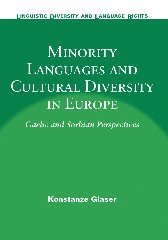
    Minority Languages and Cultural Diversity in Europe

    Gaelic and Sorbian Perspectives

    AvKonstanze Glaser

    Inbunden, Engelska, 2007

    Del 3 i serien Linguistic Diversity and Language Rights

    1 138 kr

    Tillfälligt slut

    Beskrivning

    To what extent is linguistic continuity a prerequisite for ethno-cultural survival? Focusing on the Gaelic community in Scotland and the Sorbs of Lusatia, this study illuminates core assumptions and rationales in relation to minority language revitalisation ideologies in Scotland and Germany and shows how they have been affected by assimilation processes arising from modernisation and globalisation. A thorough review of relevant theoretical debates is followed by a presentation of historical contexts and a detailed analysis of contemporary discourses about bilingualism, cultural difference and ethno-cultural belonging within the Gaelic and Sorbian communities. Drawing on more than 100 interviews, a questionnaire survey and a wide range of comments by Gaelic and Sorbian speakers in the media, the author identifies current ideological faultlines in Gaelic and Sorbian activist circles and argues that minority language planners must critically engage with competing theoretical paradigms if revitalisation efforts are to be successful.

    Produktinformation

    • Utgivningsdatum:2007-08-06
    • Mått:148 x 210 x 27 mm
    • Vikt:636 g
    • Format:Inbunden
    • Språk:Engelska
    • Serie:Linguistic Diversity and Language Rights
    • Antal sidor:397
    • Förlag:Channel View Publications Ltd
    • ISBN:9781853599323

    Utforska kategorier

    • Antropologi inom Samhälle och politik
    • Språkvetenskap och lingvistik inom Språk och ordböcker

    Mer om författaren

    Konstanze Glaser is an Associate Lecturer for the Open University and also works as a freelance translator. Her research interests range from contact linguistics, intercultural communication and the (re)production of ethnolinguistic identities to multiculturalism, identity politics and new social movements more generally.

    Recensioner i media

    The English-speaking world has needed a book along these lines for a long time and this is a very ambitious one. The Sorbs and the Gaels allow us to reflect on minority issues from an Eastern and a Western angle. What are the differences? I hope this text will help readers of all backgrounds understand the desire of minorities to maintain their cultures and identities, and how important a contribution marginalised groups can make to Europe's vision of unity in diversity.

    Innehållsförteckning

    • 1 Introduction 2 Ethnocultural Minorities in Europe: The Political Context 3 Multilingualism as Premise of Cultural Diversity: Theories on Language, Thought and Culture from the Enlightenment to the Present 4 Gaelic in Scotland 5 Sorbian in Lusatia 6 Language Metaphysics on the Ground: Gaelic and Sorbian in Relation to Thought, Culture and Self 7 Narratives of Continuity: Language as a Unifier 8 The (Re)Production of Difference: Language as Source of Social Boundaries 9 Conclusion Bibliography Appendix