• Fri frakt över 249 kr
  • •
  • Snabba leveranser
  • •
  • Billiga böcker
Kundservice

Du är på sajten för privatpersoner.

Företag, bibliotek eller offentlig verksamhet?

Du handlar på classic.bokus.com, där alla dina funktioner finns intakta.
Till classic.bokus.com
Bokus logotyp. Gå till startsidan.
  • Erbjudanden
  • Nyheter
  • Student
  • Topplistor
  • Barn & ungdom
  • Bokus Play
  • E-böcker
  • Pocketböcker
  • Spel & pussel

10% rabatt på allt med kod: NYSTART10 →

Sidfot

Mina sidor

    Hjälp

    • Kundservice
    • Vanliga frågor och svar
    • Frakt och leverans
    • Retur vid ångerrätt
    • Reklamera vara
    • Betalning
    • Köpvillkor
    • Allmänna villkor
    • Information om webbplatsens tillgänglighet

    Om Bokus

    • Om oss
    • Pressrum
    • För studenter
    • För företag
    • För bibliotek och offentlig verksamhet
    • För leverantörer
    • Hållbarhet

    Populärt

    • Aktuella erbjudanden
    • Presentkort
    • Studentlitteratur
    • Nya böcker
    • Topplistor
    • Signerade böcker
    • Engelska böcker

    Inspiration

    • Boktips
    • BookTok
    • Populära bokserier
    • Barnbokskaraktärer
    • Populära författare
    Logotyp för Bokus
    Följ oss på Facebook (extern länk)Följ oss på Instagram (extern länk)Följ oss på YouTube (extern länk)Följ oss på TikTok (extern länk)
    bokus @ CookiesAnpassa cookiesIntegritetspolicyKöpvillkor
    Till Citymail hemsida (extern länk)Till Budbee hemsida (extern länk)Till Postnord hemsida (extern länk)Till Schenker hemsida (extern länk)Till Early Bird hemsida (extern länk)Till Walleys hemsida (extern länk)
    1. Samhälle och politik
    2. Social välfärd och brottslighet
    3. Brottslighet och kriminologi

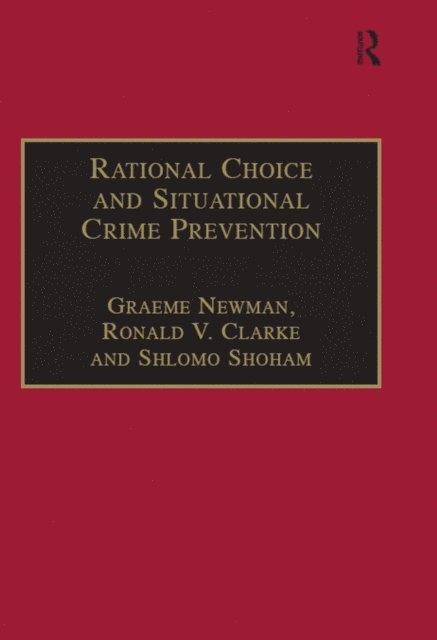
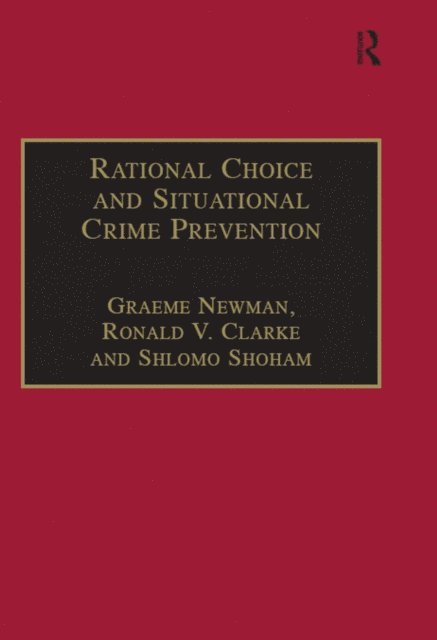
    Rational Choice and Situational Crime Prevention

    Theoretical Foundations

    AvGraeme Newman,Ronald V. Clarke

    Inbunden, Engelska, 1997

    2 421 kr

    Beställningsvara. Skickas inom 10-15 vardagar. Fri frakt över 249 kr.

    Beskrivning

    A collection of original papers examining the theoretical and philosophical bases of the perspective of situational crime prevention. Among issues examined are: the status of situational crime prevention as a theory; the theoretical traditions and context of SCP; the relationship of rational choice to SCP; utilitarianism and SCP; and the ethical./policy implications of SCP.

    Produktinformation

    • Utgivningsdatum:1997-08-28
    • Mått:153 x 219 x undefined mm
    • Vikt:1 230 g
    • Format:Inbunden
    • Språk:Engelska
    • Antal sidor:288
    • Förlag:Taylor & Francis Ltd
    • ISBN:9781855219472

    Utforska kategorier

    • Brottslighet och kriminologi inom Samhälle och politik

    Mer om författaren

    Graeme Newman, Ronald V. Clarke

    Recensioner i media

    ’...a wide ranging and challenging book...a good book to provoke group discussion of important issues. I wonder how many schools or colleges...will have it on the curriculum. They should.’ Labour Campaign for Criminal Justice

    Innehållsförteckning

    • Contents: Introduction: Towards a theory of situational crime prevention, Graeme Newman; Rational choice and the legal model of the criminal, Marcel Alexander Niggli; Limited rationality and crime, Karl-Dieter Opp; Reconsidering the role of opportunity in situational crime prevention, Richard Wortley; Situational aspects of violence, S. Giora Shoham; Realism, situational rationality and crime prevention, Nick Tilley; Situational crime prevention and the utilitarian tradition, Pietro Marongiu and Graeme Newman; Situational crime prevention and the utilitarian theories of Jeremy Bentham, Graeme Newman and Pietro Marongiu; Wartime operational research in Britain and situational crime prevention, Leslie T. Wilkins; Criminology in crisis and the social demand for crime prevention, Gaetana Russo; Philosophical justifications of situational crime prevention, René Sève; The ethics of situational crime prevention, Marcus Felson and Ronald V. Clarke; On the displacement of repeat victimization, Adam C. Bouloukos and Graham Farrell; Predicting the future: the roles of routine activity and rational choice theory, Ken Pease.