• Fri frakt över 249 kr
  • •
  • Snabba leveranser
  • •
  • Billiga böcker
Kundservice

Du är på sajten för privatpersoner.

Företag, bibliotek eller offentlig verksamhet?

Du handlar på classic.bokus.com, där alla dina funktioner finns intakta.
Till classic.bokus.com
Bokus logotyp. Gå till startsidan.
  • Erbjudanden
  • Nyheter
  • Student
  • Topplistor
  • Barn & ungdom
  • Bokus Play
  • E-böcker
  • Pocketböcker
  • Spel & pussel

10% rabatt på allt med kod: NYSTART10 →

Sidfot

Mina sidor

    Hjälp

    • Kundservice
    • Vanliga frågor och svar
    • Frakt och leverans
    • Retur vid ångerrätt
    • Reklamera vara
    • Betalning
    • Köpvillkor
    • Allmänna villkor
    • Information om webbplatsens tillgänglighet

    Om Bokus

    • Om oss
    • Pressrum
    • För studenter
    • För företag
    • För bibliotek och offentlig verksamhet
    • För leverantörer
    • Hållbarhet

    Populärt

    • Aktuella erbjudanden
    • Presentkort
    • Studentlitteratur
    • Nya böcker
    • Topplistor
    • Signerade böcker
    • Engelska böcker

    Inspiration

    • Boktips
    • BookTok
    • Populära bokserier
    • Barnbokskaraktärer
    • Populära författare
    Logotyp för Bokus
    Följ oss på Facebook (extern länk)Följ oss på Instagram (extern länk)Följ oss på YouTube (extern länk)Följ oss på TikTok (extern länk)
    bokus @ CookiesAnpassa cookiesIntegritetspolicyKöpvillkor
    Till Citymail hemsida (extern länk)Till Budbee hemsida (extern länk)Till Postnord hemsida (extern länk)Till Schenker hemsida (extern länk)Till Early Bird hemsida (extern länk)Till Walleys hemsida (extern länk)
    1. Psykologi och pedagogik
    2. Psykologi
    3. Psykologiska teorier och skolor
    4. Freudiansk psykologi

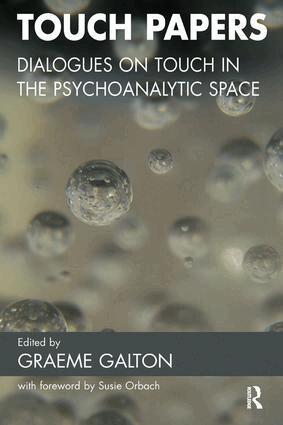
    Touch Papers

    Dialogues on Touch in the Psychoanalytic Space

    AvGraeme Galton,Graeme Galton

    Häftad, Engelska, 2006

    648 kr

    Beställningsvara. Skickas inom 10-15 vardagar. Fri frakt över 249 kr.

    Fler format och utgåvor

    Inbunden

    2 352 kr

    E-bok

    656 kr

    E-bok

    656 kr

    Beskrivning

    For the first time, the controversial issue of physical contact in the consulting room is explored by distinguished psychoanalysts and psychotherapists representing a diverse range of psychoanalytic viewpoints. The contributors focus on the unconscious meanings of touch, or absence of touch, or unwelcome touch, or accidental touch in the psychoanalytic clinical situation. There are plenty of clinical vignettes and the discussions are grounded in clinical experience.Out of all medical and therapeutic treatments, psychoanalysis remains one of the very few that uses no physical contact. Sigmund Freud stopped using the 'pressure technique' in the late 1890s, a technique whereby he would press lightly on his patient's head while insisting that they remembered forgotten events. He gave up this procedure in favour of encouraging free association, then listening and interpreting without touching his patient in any way. Psychoanalysis was born and the use of touch, as a technique reminiscent of hypnosis, was explicitly prohibited. The avoidance of physical contact between the analyst and patient was established as a key component of the classical rule of abstinence. Today, touch remains virtually non-existent in adult psychoanalysis.Contributors:Gwen Adshead; Camilla Bosanquet; Sarita Bose; Abraham Brafman; Sharmila Charles; Nicola Diamond; Em Farrell; Brett Kahr; Pearl King; Robert Langs; Susie Orbach; Maria Emilia Pozzi; Angela Pryor; Emma Ramsden; Valerie Sinason; and Nick Totton.

    Produktinformation

    • Utgivningsdatum:2006-10-13
    • Mått:147 x 230 x 16 mm
    • Vikt:354 g
    • Format:Häftad
    • Språk:Engelska
    • Antal sidor:220
    • Förlag:Taylor & Francis Ltd
    • ISBN:9781855754454

    Utforska kategorier

    • Freudiansk psykologi inom Psykologi och pedagogik

    Mer om författaren

    Graeme Galton was born in Australia and is an attachment-based psychoanalytic psychotherapist working in private practice and in the National Health Service. His clinical work is particularly influenced by attachment and psychodynamic theories. He is a consultant psychotherapist at the Clinic for Dissociative Studies. He also works at the Parkside Clinic in London with individuals and groups in an outpatient psychotherapy service. He teaches trainee psychotherapists at The Bowlby Centre, where he is a registered member and training supervisor.

    Recensioner i media

    'This is surely a time for us to put our thinking about touch on the agenda. I think psychoanalytic clinicians may need to gather and reflect on our own desire to touch, our fear of touching, our responses when asked to touch, our responses to being touched or wanting to. The essays in this collection... are an attempt to open up a space in which the issues around touch can be thought about afresh.' - Susie Orbach, from the Foreword 'A rich, fascinating and most impressive collection of differing views on touch in psychoanalytical and psychotherapeutic settings, opening a debate long overdue on this controversial and neglected (avoided) subject.' - Alex Holder, Training and Supervising Analyst; Member of the German and British Psychoanalytical Societies 'The opening up of this whole issue of touch, as presented in this book, when it might be appropriate or inappropriate in the clinical setting of psychoanalysis or psychotherapy, is timely and much to be welcomed.' - Patrick Casement, Training and Supervising Analyst; Member of the British Psychoanalytical Society

    Innehållsförteckning

    • Foreword -- Introduction -- Winnicott's experiments with physical contact: creative innovation or chaotic impingement? -- Touching and affective closeness -- Symbolic understanding of tactile communication in psychotherapy -- No touch please—we’re British psychodynamic practitioners -- Can touching be relevant to understanding some patients in psychoanalysis? -- Bearing witness to an abused patient’s physical injuries -- Between touches -- The presence of the body in psychotherapy -- The issue of physical contact in psychoanalytic work with children and adolescents -- Strong adaptive perspectives on patient–therapist physical contact -- A body psychotherapist’s approach to touch -- Something dangerous: touch in forensic practice