• Fri frakt över 249 kr
  • •
  • Snabba leveranser
  • •
  • Billiga böcker
Kundservice

Du är på sajten för privatpersoner.

Företag, bibliotek eller offentlig verksamhet?

Du handlar på classic.bokus.com, där alla dina funktioner finns intakta.
Till classic.bokus.com
Bokus logotyp. Gå till startsidan.
  • Erbjudanden
  • Nyheter
  • Student
  • Topplistor
  • Barn & ungdom
  • Bokus Play
  • E-böcker
  • Pocketböcker
  • Spel & pussel

10% rabatt på allt med kod: NYSTART10 →

Sidfot

Mina sidor

    Hjälp

    • Kundservice
    • Vanliga frågor och svar
    • Frakt och leverans
    • Retur vid ångerrätt
    • Reklamera vara
    • Betalning
    • Köpvillkor
    • Allmänna villkor
    • Information om webbplatsens tillgänglighet

    Om Bokus

    • Om oss
    • Pressrum
    • För studenter
    • För företag
    • För bibliotek och offentlig verksamhet
    • För leverantörer
    • Hållbarhet

    Populärt

    • Aktuella erbjudanden
    • Presentkort
    • Studentlitteratur
    • Nya böcker
    • Topplistor
    • Signerade böcker
    • Engelska böcker

    Inspiration

    • Boktips
    • BookTok
    • Populära bokserier
    • Barnbokskaraktärer
    • Populära författare
    Logotyp för Bokus
    Följ oss på Facebook (extern länk)Följ oss på Instagram (extern länk)Följ oss på YouTube (extern länk)Följ oss på TikTok (extern länk)
    bokus @ CookiesAnpassa cookiesIntegritetspolicyKöpvillkor
    Till Citymail hemsida (extern länk)Till Budbee hemsida (extern länk)Till Postnord hemsida (extern länk)Till Schenker hemsida (extern länk)Till Early Bird hemsida (extern länk)Till Walleys hemsida (extern länk)
    1. Psykologi och pedagogik
    2. Psykologi
    3. Psykologiska teorier och skolor
    4. Freudiansk psykologi

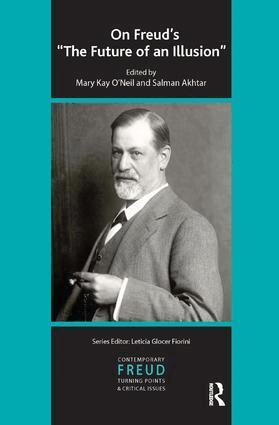
    On Freud's "The Future of an Illusion"

    AvSalman Akhtar,Mary Kay O'Neil

    Häftad, Engelska, 2009

    Del i serien International Psychoanalytical Association Contemporary Freud: Turning Points and Critical Issues Series

    648 kr

    Beställningsvara. Skickas inom 10-15 vardagar. Fri frakt över 249 kr.

    Beskrivning

    "The Future of an Illusion" reveals Freud's reflections about religion as well as his hope that in the future science will go beyond religion, and reason will replace faith in God. The discussion with an imaginary critic revealed his internal debate, mirroring the debate about this subject in the outside world. However, it also enlightens his way of thinking: deconstructing and constructing at the same time. This volume considers Freudian ideas and their implications today, while focusing on the contradictions and gaps in Freud's proposals. The question of the coexistence between religion and psychoanalysis, as well as the place of ideals, belief, illusion, and imagination - and, no less important, the benevolent and destructive aspects of religion - also come into play.

    Produktinformation

    • Utgivningsdatum:2009-12-31
    • Mått:145 x 226 x 28 mm
    • Vikt:499 g
    • Format:Häftad
    • Språk:Engelska
    • Serie:International Psychoanalytical Association Contemporary Freud: Turning Points and Critical Issues Series
    • Antal sidor:318
    • Förlag:Taylor & Francis Ltd
    • ISBN:9781855756274

    Utforska kategorier

    • Freudiansk psykologi inom Psykologi och pedagogik

    Mer om författaren

    Salman Akhtar, MD, was born in India and completed his medical and psychiatric education there. Upon arriving in the USA in 1973, he repeated his psychiatric training at the University of Virginia School of Medicine, and then obtained psychoanalytic training from the Philadelphia Psychoanalytic Institute. Currently, he is Professor of Psychiatry at Jefferson Medical College and a training and supervising analyst at the Psychoanalytic Center of Philadelphia. He has authored, edited or co-edited more than 300 publications including books on psychiatry and psychoanalysis and several collections of poetry. He is also a Scholar-in-Residence at the Inter-Act Theatre Company in Philadelphia. Salman Akhtar received the Sigourney Award in 2012. Mary Kay O'Neil, a Supervising and Training Analyst of the Canadian Institute of Psychoanalysis, is in private practice in Montreal, Quebec. Currently, she is Associate Director of the Canadian Institute of Psychoanalysis (Quebec, English). She completed her PhD at the University of Toronto, where she was on the staff at the University of Toronto Psychiatric Service and Assistant Professor in the Department of Psychiatry. She is author of 'The Unsung Psychoanalyst: The Quiet Influence of Ruth Easser' and co-editor of 'Confidentiality: Ethical Perspectives and Clinical Dilemmas'. Her research and publications include articles in areas such as depression and young adult development, emotional needs of sole-support mothers and their children, post-analytic contact between analyst and analysand, and psychoanalytic ethics. She has served on psychoanalytic ethics committees at local, national, and international levels; as a reviewer for JAPA, the Canadian Journal of Psychoanalysis; and, currently, on the North American Editorial Board of the 'International Journal of Psychoanalysis'.

    Recensioner i media

    'This is a most welcome, and overdue, rich contribution to what Freud dared to address in response to Romain Rolland's question to him, that he, the disbeliever, explain the nature of the widely experienced "oceanic feeling". The contributors to this volume accept fairly readily Freud's cogent psychoanalytic explanation that the origins of religion lie in what today we would explain as the symbiotic (therefore, 'oceanic') experience of earliest childhood and in the face of existential anxiety to wish to return to a state of "being one with the beyond". But in complement, the contributors variably take Freud's view of religion as the neurosis of society to task. This is strong scholarship, admirable thinking, some even brilliant, meaningful reading, and re-opens of the question, "Must one choose between psychoanalysis and religion, or can one be psychically healthy and engage in both?"'- Henri Parens, M.D.'Sigmund Freud, by the very act of making God a subject of metapsychological deconstruction, took a resolutely atheistic position. His pupils and followers also adhered "religiously" to the arguments and declarations he made in "The Future of Illusion" and later in "Civilization and Its Discontents". Scientific positivism of the early twentieth century provided a receptive crucible for Freud's debunking of God. He had given voice to what was brewing in the minds of the Western intelligentsia. The unspeakable atrocities that soon followed in the name of religious nationalism in Europe "confirmed" that ethnocentrism and its conceptual twin, religious belief, were dangerous commodities.They led to intoxication with in-group superiority and laid the groundwork for oppression of "others", and even cruelty and genocide. Early European psychoanalysts, themselves the victims of prejudice and violence, wholeheartedly followed the ray of hope offered by Freud's declaration that religion was a hoax and science will sooner or later assure that rationality prevails in the conduct of interpersonal and communal affairs. At that point atheism and psychoanalysis became inseparable.'- Salman Akhtar

    Innehållsförteckning

    • Contemporary Freud , Introduction , The Future of an Illusion (1927c) , The Future Of An Illusion , Discussion of The Future of an Illusion , Deconstructing Freud’s The Future of an Illusion , The illusion of a future , The past of an illusion , Religious fundamentalism and violence , The morality of an “oppressed group” , Illusion, disillusion, and delusion , Freud’s omission of the maternal in God , Three archaic contributions to the religious instinct , Re-reading Freud on religion in Hindu India , How belief in God affects my clinical work , Epilogue