• Fri frakt över 249 kr
  • •
  • Snabba leveranser
  • •
  • Billiga böcker
Kundservice

Du är på sajten för privatpersoner.

Företag, bibliotek eller offentlig verksamhet?

Du handlar på classic.bokus.com, där alla dina funktioner finns intakta.
Till classic.bokus.com
Bokus logotyp. Gå till startsidan.
  • Erbjudanden
  • Student
  • Topplistor
  • Barn & ungdom
  • Bokus Play
  • E-böcker
  • Ljudböcker
  • Pocketböcker
  • Spel & pussel

10% rabatt på allt med kod NYSTART10 →

Sidfot

Mina sidor

    Hjälp

    • Kundservice
    • Vanliga frågor och svar
    • Frakt och leverans
    • Retur vid ångerrätt
    • Reklamera vara
    • Betalning
    • Köpvillkor
    • Allmänna villkor
    • Information om webbplatsens tillgänglighet

    Om Bokus

    • Om oss
    • Pressrum
    • För studenter
    • För företag
    • För bibliotek och offentlig verksamhet
    • För leverantörer
    • Hållbarhet

    Populärt

    • Aktuella erbjudanden
    • Presentkort
    • Studentlitteratur
    • Nya böcker
    • Topplistor
    • Signerade böcker
    • Engelska böcker

    Inspiration

    • Boktips
    • BookTok
    • Populära bokserier
    • Barnbokskaraktärer
    • Populära författare
    Logotyp för Bokus
    Följ oss på Facebook (extern länk)Följ oss på Instagram (extern länk)Följ oss på YouTube (extern länk)Följ oss på TikTok (extern länk)
    bokus @ CookiesAnpassa cookiesIntegritetspolicyKöpvillkor
    Till Citymail hemsida (extern länk)Till Budbee hemsida (extern länk)Till Postnord hemsida (extern länk)Till Schenker hemsida (extern länk)Till Early Bird hemsida (extern länk)Till Walleys hemsida (extern länk)
    1. Data och IT
    2. Databaser

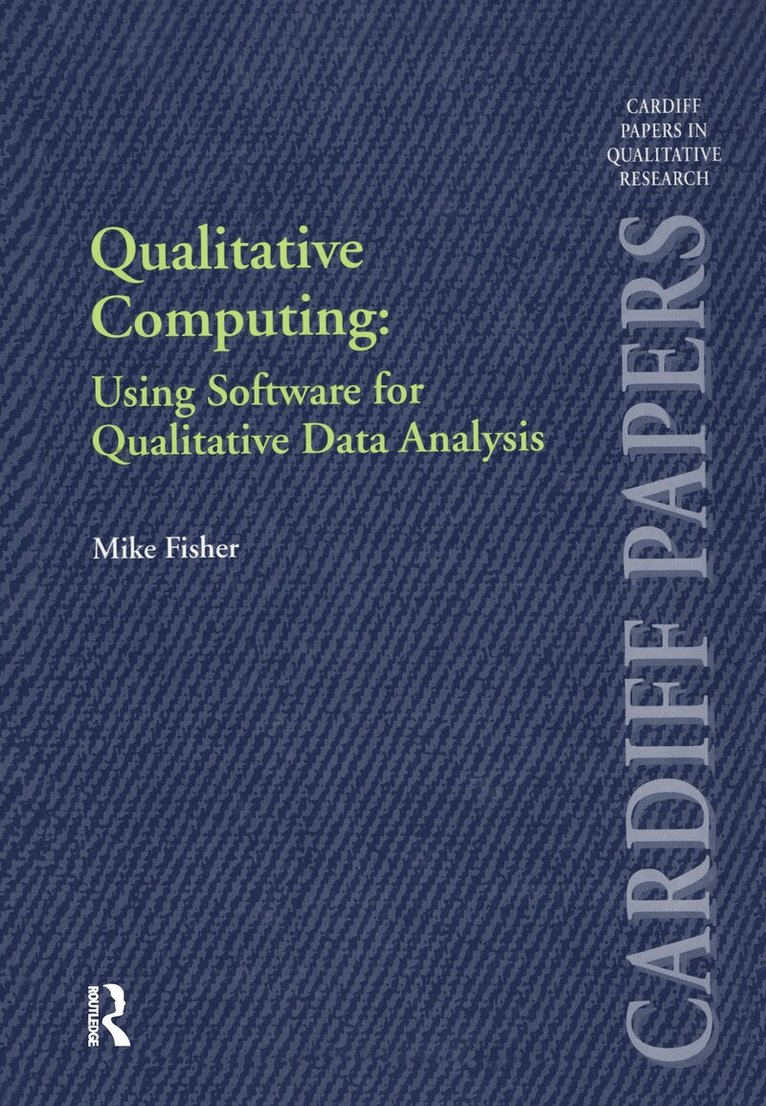
    Qualitative Computing: Using Software for Qualitative Data Analysis

    AvMike Fisher

    Inbunden, Engelska, 1997

    Del i serien Cardiff Papers in Qualitative Research

    2 418 kr

    Beställningsvara. Skickas inom 10-15 vardagar. Fri frakt över 249 kr.

    Fler format och utgåvor

    Häftad

    722 kr

    E-bok

    858 kr

    E-bok

    855 kr

    Beskrivning

    As qualitative researchers incorporate computer assistance into their analytic approaches, important questions arise about the adoption of new technology. Is it worth learning computer-assisted methods? Will the pay-off be sufficient to justify the investment? Which programs are worth learning? What are the effects on the analysis process? This book complements the existing literature by giving a detailed account of the use of four major programs in analyzing the same data. Priority is given to the tasks of qualitative analysis rather than to program capability and the programs are treated as tools rather than as a discipline to be acquired. The key is not what the programs allow researcher to do, but whether the tasks that researchers need to undertake are facilitated by the software. Thus the study develops a user-centred approach to the adoption of computer-assisted qualitative data analysis. The author emphasises qualitative analysis as a creative craft, but one which must increasingly be subject to rigorous methodological scrutiny. The adoption of computer-aided methods offers opportunities, but also dangers and ultimately this book is about the scientific qualitative research. Written in a distinctive and succinct style, this book will be valuable to social science researchers and students interested in qualitative research and in the potential for computer-assisted analysis.

    Produktinformation

    • Utgivningsdatum:1997-06-19
    • Mått:153 x 219 x undefined mm
    • Vikt:359 g
    • Format:Inbunden
    • Språk:Engelska
    • Serie:Cardiff Papers in Qualitative Research
    • Antal sidor:146
    • Förlag:Taylor & Francis Ltd
    • ISBN:9781859725610

    Utforska kategorier

    • Databaser inom Data och IT
    • Sociologi inom Samhälle och politik

    Mer om författaren

    Mike Fisher, Director, Research Unit, National Institute for Social Work, London, UK

    Innehållsförteckning

    • Contents: Getting into... and getting on with qualitative computing; Approaches to qualitative computing; Text searching and data exploration; Category building and finding meaning; Theory building; Conclusion; References.