• Fri frakt över 249 kr
  • •
  • Snabba leveranser
  • •
  • Billiga böcker
Kundservice

Du är på sajten för privatpersoner.

Företag, bibliotek eller offentlig verksamhet?

Du handlar på classic.bokus.com, där alla dina funktioner finns intakta.
Till classic.bokus.com
Bokus logotyp. Gå till startsidan.
  • Erbjudanden
  • Nyheter
  • Student
  • Topplistor
  • Barn & ungdom
  • Bokus Play
  • E-böcker
  • Pocketböcker
  • Spel & pussel

10% rabatt på allt med kod: NYSTART10 →

Sidfot

Mina sidor

    Hjälp

    • Kundservice
    • Vanliga frågor och svar
    • Frakt och leverans
    • Retur vid ångerrätt
    • Reklamera vara
    • Betalning
    • Köpvillkor
    • Allmänna villkor
    • Information om webbplatsens tillgänglighet

    Om Bokus

    • Om oss
    • Pressrum
    • För studenter
    • För företag
    • För bibliotek och offentlig verksamhet
    • För leverantörer
    • Hållbarhet

    Populärt

    • Aktuella erbjudanden
    • Presentkort
    • Studentlitteratur
    • Nya böcker
    • Topplistor
    • Signerade böcker
    • Engelska böcker

    Inspiration

    • Boktips
    • BookTok
    • Populära bokserier
    • Barnbokskaraktärer
    • Populära författare
    Logotyp för Bokus
    Följ oss på Facebook (extern länk)Följ oss på Instagram (extern länk)Följ oss på YouTube (extern länk)Följ oss på TikTok (extern länk)
    bokus @ CookiesAnpassa cookiesIntegritetspolicyKöpvillkor
    Till Citymail hemsida (extern länk)Till Budbee hemsida (extern länk)Till Postnord hemsida (extern länk)Till Schenker hemsida (extern länk)Till Early Bird hemsida (extern länk)Till Walleys hemsida (extern länk)
    1. Historia och arkeologi
    2. Historia
    3. Historia: särskilda händelser och ämnen
    4. Socialhistoria och kulturhistoria

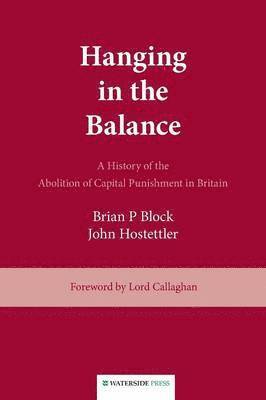
    Hanging in the Balance

    a History of the Abolition of Capital Punishment in Britain

    AvBrian P. Block,John Hostettler

    Häftad, Engelska, 1997

    357 kr

    Beställningsvara. Skickas inom 5-8 vardagar. Fri frakt över 249 kr.

    Beskrivning

    Hanging in the Balance traces the history of capital punishment in the United Kingdom from ancient times to the modern day-through periods of reform until hanging for murder was finally abolished by Parliament in 1969. It describes in detail the Parliamentary and public debates, and notes the stance taken by organizations and individuals (including the tenacious and persistent Sydney Silverman MP). The book collates data and references not previously brought together in one place - and in exploring the underlying issues and the recurring arguments about deterrence, retribution and expediency it provides an invaluable resource vis-a-vis the same debate in the many countries where capital punishment still exists. Lord Callaghan was home secretary at the time of abolition. His Foreword conveys how strong his personal feelings were concerning the death penalty from the time he entered Parliament in 1945. The book's closing chapters record how his insistence that abolition should become permanent ultimately overcame the still considerable opposition. Capital punishment was finally abolished in 1999 throughout the UK.For all practical purposes this had already happened in 1969 when the Murder (Abolition of Death Penalty) Act 1965 was made fully effective into following a trial period. 'A masterwork': Justice of the Peace

    Produktinformation

    • Utgivningsdatum:1997-09-30
    • Mått:152 x 229 x 15 mm
    • Vikt:389 g
    • Format:Häftad
    • Språk:Engelska
    • Antal sidor:288
    • Förlag:Waterside Press
    • Medarbetare:James Callaghan
    • ISBN:9781872870472

    Utforska kategorier

    • Socialhistoria och kulturhistoria inom Historia och arkeologi
    • Kriminalvård och straff inom Samhälle och politik

    Mer om författaren

    Brian P Block and John Hostettler have written many books and articles on facets of law, lawyers, politics and social history. This is their third book as co-authors.

    Recensioner i media

    'A masterwork':Justice of the PeaceFormer prime minister Lord Callaghan makes the following remarks in Hanging in the Balance:'The undoubted hero of the campaign was Sydney Silverman [MP]-small in stature, uptilted head, erect carriage, a quick pattering footstep and a prominent pointed beard which was almost a weapon in itself. In the Commons he always perched himself (perched is the word) on the corner seat just below the gangway adjoining the Government Front Bench, his feet hardly touching the ground. From that advantageous position he was always ready to jump to his feet at any moment. He was fearless in the face of hostility, of which there was plenty, and coupled this with great skill as a Parliamentarian and with considerable legal knowledge and practical experience, brought from his profession as a solicitor. He carried a formidable armoury that convinced many of us just back from the war in the late 1940s that hanging should go. I cannot say that until then, hanging had impinged on my thinking, and it was only when I reached Parliament in 1945 and was confronted by the need to take a position, that I concluded that hanging should be abolished. In the debates of 1948, I voted for abolition for the first time and after that decision, did so steadily thereafter, whenever the issue came before the House.'Lord Callaghan also indicates that '... it should not be forgotten that there are men who would have been hanged although they are innocent, but who are alive today because the law was changed. Members of Parliament show themselves to be only too aware of this and it is not surprising that whenever a proposal to reinstate hanging comes before Parliament, it has been rejected on every occasion by a large majority.' Capital punishment is in fact now unlikely ever to be reintroduced due to international obligations, the UK having ratified the Sixth Protocol to the European Convention On Human Rights which prohibits this form of punishment within the European Union.