- 10% rabatt på allt
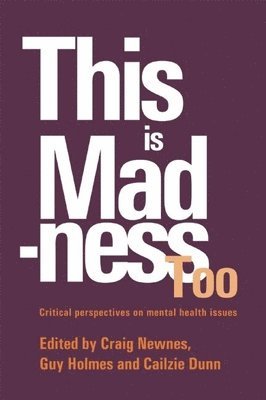
This is Madness Too
Critical Perspectives on Mental Health Services
237 kr
Beställningsvara. Skickas inom 11-20 vardagar. Fri frakt över 249 kr.
Du är på sajten för privatpersoner.
237 kr
Beställningsvara. Skickas inom 11-20 vardagar. Fri frakt över 249 kr.
Craig Newnes is editor of The Journal of Critical Psychology, Counselling and Psychotherapy (formerly Changes), and a comissioning editor and author for the PCCS Books Critical Psychology series. Prior to his retirement he was Director of Psychological Therapies for Shropshire. He has a life time commitment to the NHS and is an outspoken critic of the hypocrisy, self interest, confusion and downright lies which characterise so much of the practise of psychiatry and psychology. He believes that unhappiness is a form of heresy and most of the misery for which people seek help is only amenable to alleviation through changes in their material lives. Guy Holmes works in the NHS as a clinical psychologist in Shropshire. He has published over 40 academic articles in areas as diverse as: the medicalisation of distress; psychiatric medication; patients' councils; service users' experiences of and views on mental health services; sexual abuse of males; community psychology; and various aspects of groupwork. Cailzie Dunn is a clinical psychologist working for South Staffordshire and Shropshire Healthcare Foundation NHS Trust. She works with adults involved with the Community Mental Health Team in Shrewsbury.She co-ran Alternatives to Psychiatry courses in Shropshire and was a co-editor of This is Madness: A critical look at psychiatry and the future of mental health services (PCCS Books) and This is Madness Too: Critical perspectives on mental health services (PCCS Books). She is particularly interested in helping people with the effects of complex trauma.
Another excellent book from this trio, following up This is Madness ... Together the essays present the case for a root and branch overhaul of the mental heath system ... Go buy it, wherever you stand on these issues. This is serious, evidence-based stuff, not simply polemic. It may change minds as well as fuel the efforts of the converted. Catherine Jackson, Mental Health Today, September 2002. This is a very useful book in the armoury against the medicalization of mental distress. Its particular strength is in the forceful and eloquent contributions by service-users and survivors who offer challenging accounts of the problems they and others have experienced ... The book flags up the negative effects and potential damage of psychoactive drugs including the inappropriate prescribing of such drugs, particularly to children and people with learning disability. Throughout the chapters run repeated themes of realistic choice being made available to patients and the need to reduce discrimination from both professionals and the public. Powerful political action requires a more co-ordinated approach by service-users and survivors; this book rightly serves to aid that co-ordination. Maggie McCormack, The Journal of Critical Psychology, Counselling and Psychotherapy, Vol.2, No.3, 2002.
Du är på sajten för privatpersoner.
237 kr
Beställningsvara. Skickas inom 11-20 vardagar. Fri frakt över 249 kr.
Craig Newnes is editor of The Journal of Critical Psychology, Counselling and Psychotherapy (formerly Changes), and a comissioning editor and author for the PCCS Books Critical Psychology series. Prior to his retirement he was Director of Psychological Therapies for Shropshire. He has a life time commitment to the NHS and is an outspoken critic of the hypocrisy, self interest, confusion and downright lies which characterise so much of the practise of psychiatry and psychology. He believes that unhappiness is a form of heresy and most of the misery for which people seek help is only amenable to alleviation through changes in their material lives. Guy Holmes works in the NHS as a clinical psychologist in Shropshire. He has published over 40 academic articles in areas as diverse as: the medicalisation of distress; psychiatric medication; patients' councils; service users' experiences of and views on mental health services; sexual abuse of males; community psychology; and various aspects of groupwork. Cailzie Dunn is a clinical psychologist working for South Staffordshire and Shropshire Healthcare Foundation NHS Trust. She works with adults involved with the Community Mental Health Team in Shrewsbury.She co-ran Alternatives to Psychiatry courses in Shropshire and was a co-editor of This is Madness: A critical look at psychiatry and the future of mental health services (PCCS Books) and This is Madness Too: Critical perspectives on mental health services (PCCS Books). She is particularly interested in helping people with the effects of complex trauma.
Another excellent book from this trio, following up This is Madness ... Together the essays present the case for a root and branch overhaul of the mental heath system ... Go buy it, wherever you stand on these issues. This is serious, evidence-based stuff, not simply polemic. It may change minds as well as fuel the efforts of the converted. Catherine Jackson, Mental Health Today, September 2002. This is a very useful book in the armoury against the medicalization of mental distress. Its particular strength is in the forceful and eloquent contributions by service-users and survivors who offer challenging accounts of the problems they and others have experienced ... The book flags up the negative effects and potential damage of psychoactive drugs including the inappropriate prescribing of such drugs, particularly to children and people with learning disability. Throughout the chapters run repeated themes of realistic choice being made available to patients and the need to reduce discrimination from both professionals and the public. Powerful political action requires a more co-ordinated approach by service-users and survivors; this book rightly serves to aid that co-ordination. Maggie McCormack, The Journal of Critical Psychology, Counselling and Psychotherapy, Vol.2, No.3, 2002.
Du är på sajten för privatpersoner.
237 kr
Beställningsvara. Skickas inom 11-20 vardagar. Fri frakt över 249 kr.
Craig Newnes is editor of The Journal of Critical Psychology, Counselling and Psychotherapy (formerly Changes), and a comissioning editor and author for the PCCS Books Critical Psychology series. Prior to his retirement he was Director of Psychological Therapies for Shropshire. He has a life time commitment to the NHS and is an outspoken critic of the hypocrisy, self interest, confusion and downright lies which characterise so much of the practise of psychiatry and psychology. He believes that unhappiness is a form of heresy and most of the misery for which people seek help is only amenable to alleviation through changes in their material lives. Guy Holmes works in the NHS as a clinical psychologist in Shropshire. He has published over 40 academic articles in areas as diverse as: the medicalisation of distress; psychiatric medication; patients' councils; service users' experiences of and views on mental health services; sexual abuse of males; community psychology; and various aspects of groupwork. Cailzie Dunn is a clinical psychologist working for South Staffordshire and Shropshire Healthcare Foundation NHS Trust. She works with adults involved with the Community Mental Health Team in Shrewsbury.She co-ran Alternatives to Psychiatry courses in Shropshire and was a co-editor of This is Madness: A critical look at psychiatry and the future of mental health services (PCCS Books) and This is Madness Too: Critical perspectives on mental health services (PCCS Books). She is particularly interested in helping people with the effects of complex trauma.
Another excellent book from this trio, following up This is Madness ... Together the essays present the case for a root and branch overhaul of the mental heath system ... Go buy it, wherever you stand on these issues. This is serious, evidence-based stuff, not simply polemic. It may change minds as well as fuel the efforts of the converted. Catherine Jackson, Mental Health Today, September 2002. This is a very useful book in the armoury against the medicalization of mental distress. Its particular strength is in the forceful and eloquent contributions by service-users and survivors who offer challenging accounts of the problems they and others have experienced ... The book flags up the negative effects and potential damage of psychoactive drugs including the inappropriate prescribing of such drugs, particularly to children and people with learning disability. Throughout the chapters run repeated themes of realistic choice being made available to patients and the need to reduce discrimination from both professionals and the public. Powerful political action requires a more co-ordinated approach by service-users and survivors; this book rightly serves to aid that co-ordination. Maggie McCormack, The Journal of Critical Psychology, Counselling and Psychotherapy, Vol.2, No.3, 2002.