• Fri frakt över 249 kr
  • •
  • Snabba leveranser
  • •
  • Billiga böcker
Kundservice

Du är på sajten för privatpersoner.

Företag, bibliotek eller offentlig verksamhet?

Du handlar på classic.bokus.com, där alla dina funktioner finns intakta.
Till classic.bokus.com
Bokus logotyp. Gå till startsidan.
  • Erbjudanden
  • Nyheter
  • Student
  • Topplistor
  • Barn & ungdom
  • Bokus Play
  • E-böcker
  • Pocketböcker
  • Spel & pussel

10% rabatt på allt med kod NYSTART10 →

Sidfot

Mina sidor

    Hjälp

    • Kundservice
    • Vanliga frågor och svar
    • Frakt och leverans
    • Retur vid ångerrätt
    • Reklamera vara
    • Betalning
    • Köpvillkor
    • Allmänna villkor
    • Information om webbplatsens tillgänglighet

    Om Bokus

    • Om oss
    • Pressrum
    • För studenter
    • För företag
    • För bibliotek och offentlig verksamhet
    • För leverantörer
    • Hållbarhet

    Populärt

    • Aktuella erbjudanden
    • Presentkort
    • Studentlitteratur
    • Nya böcker
    • Topplistor
    • Signerade böcker
    • Engelska böcker

    Inspiration

    • Boktips
    • BookTok
    • Populära bokserier
    • Barnbokskaraktärer
    • Populära författare
    Logotyp för Bokus
    Följ oss på Facebook (extern länk)Följ oss på Instagram (extern länk)Följ oss på YouTube (extern länk)Följ oss på TikTok (extern länk)
    bokus @ CookiesAnpassa cookiesIntegritetspolicyKöpvillkor
    Till Citymail hemsida (extern länk)Till Budbee hemsida (extern länk)Till Postnord hemsida (extern länk)Till Schenker hemsida (extern länk)Till Early Bird hemsida (extern länk)Till Walleys hemsida (extern länk)
    1. Data och IT
    2. Programmeringsböcker
    3. Programvaruutveckling

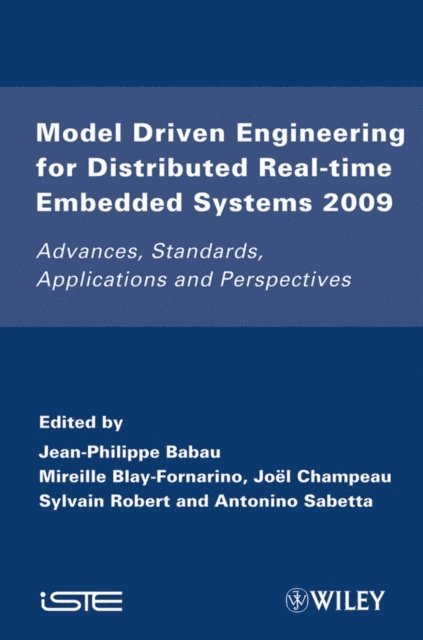
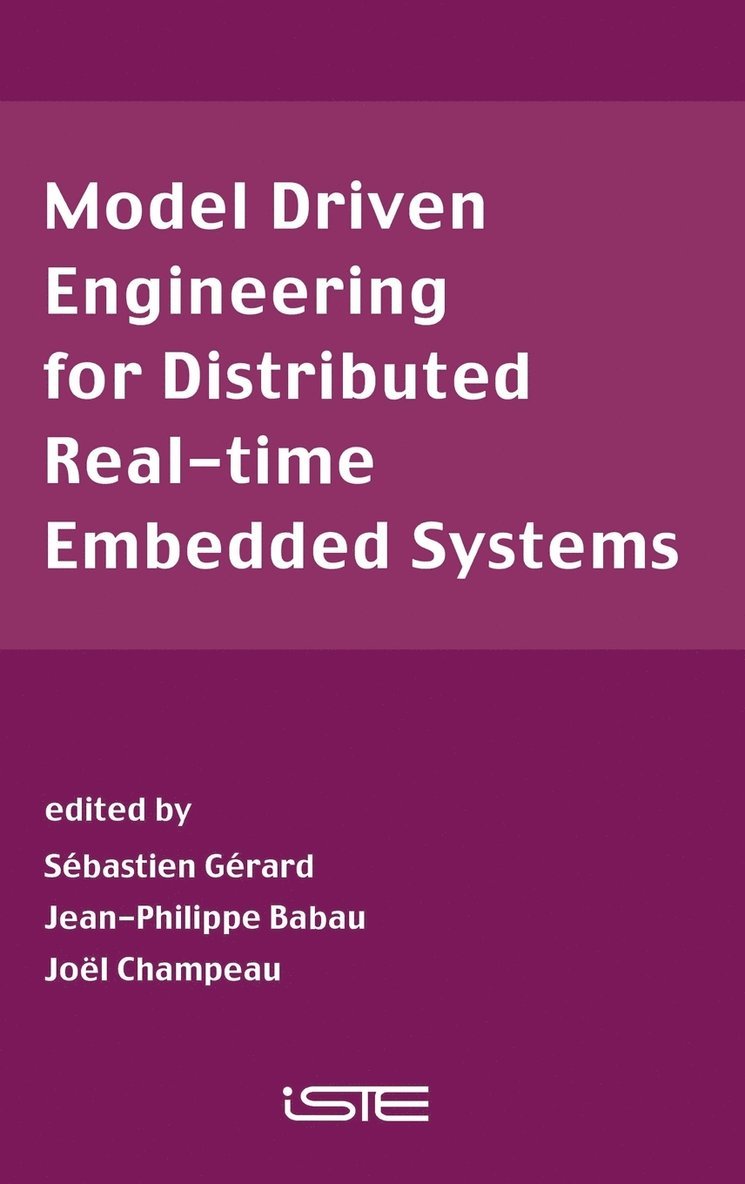
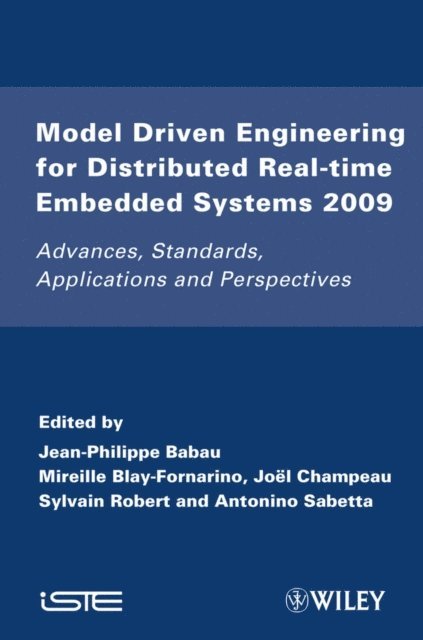
    From MDD Concepts to Experiments and Illustrations

    AvJean-Philippe Babau,Jean-Philippe Babau

    Inbunden, Engelska, 2008

    1 991 kr

    Beställningsvara. Skickas inom 5-8 vardagar. Fri frakt över 249 kr.

    Beskrivning

    In the context of Distributed and Real-time Embedded Systems (DRES), system developers are faced with reducing system development cost and time while developing correct (relating to safe and QoS properties) and increasingly complex systems. To take up this challenge, Model Driven Development (MDD) advocates the intensive use of models and model transformations on several levels of abstraction. This book includes contributions from academic and professional experts on a range of topics related to MDD practices, methods and emerging technologies. After introducing general concepts about modeling and how to implement model transformations, two presentations provide an overview of the MARTE profile. Coverage is then given to the most common aspects of MDD for DRES: structuring architectures using components, designing hardware architecture, evaluation and validation through tests and performance analysis. Finally, guidance is given as to how and why MDD should be used by presenting a tool to support MDD and describing an industrial application of MDD concepts.

    Produktinformation

    • Utgivningsdatum:2008-10-22
    • Mått:160 x 241 x 17 mm
    • Vikt:467 g
    • Format:Inbunden
    • Språk:Engelska
    • Antal sidor:224
    • Förlag:ISTE Ltd and John Wiley & Sons Inc
    • ISBN:9781905209590

    Utforska kategorier

    • Programvaruutveckling inom Data och IT

    Mer om författaren

    Jean-Philippe Babau is an Assistant Professor in the Computer Science department at INSA, Lyon, France. His research interests include the use of formal models for architecture description to build real-time embedded systems. Joël Champeau is a teacher-researcher in the New Technologies Development Laboratory at ENSIETA, Brest, France. He specializes in applying MDE methodology and techniques to a system modeling framework for embedded systems.Sébastien Gérard is researcher at the LIST in the CEA (the French Atomic Energy Commission) in the LSP Group (Software for Process Safety) where he leads the research theme: “Model-based software engineering for real-time embedded systems”.

    Innehållsförteckning

    • Introduction. Chapter 1. On Metamodels and Language Engineering (Pierre-Alain Muller).1.1 Introduction.1.2 Modeling Abstract Syntax.1.3 Modeling Operational Semantics.1.4 Modeling Concrete Syntax.1.5 Related Works.1.6 References.Chapter 2. Using Directives to Implement Model Transformations (Devon Simmonds et al).2.1 Introduction.2.2 Model Transformation Using Embedded Directives.2.3 Transformations Directives.2.4 Transformation Schemas.2.5 Class Model Transformation - Illustration Example.2.6 Discussion and Conclusion.2.7 References.Chapter 3. Rationale of the UML Profile for Marte (Sébastien Gérard and Huascar Espinoza).3.1 Introduction.3.2 Outlines of Marte.3.3 Profile Architecture.3.4 References.Chapter 4. From UML to Performance Analysis Models by Abstraction-raising Transformation (Dorina Petriu and Antonino Sabetta).4.1 Introduction.4.2 Conceptual Approach for Abstracting-raising Transformation.4.3 Two-step Abstracting-raising Transformation.4.4 Two-step Abstration-raising Transformation.4.5 Application of the Proposed Transformation.4.6 Conclusion.4.7 References.Chapter 5. Component-Based Software Engineering for Embedded Systems (Ivica Crnkovic).5.1 Embedded Systems.5.2 Specfic Requirement and Aspects of Embedded Systems.5.3 Component-based Basic Concepts for Embedded Systems.5.4 Specfic Demands on Component-based Software Engineering.5.5 State of the CBSE Practice and Experience for Embedded Systems.5.6 Work on Standardization.5.7 The Needs and Priorities in Research.5.8 References.Chapter 6. Model Driven Engineering for System-on-Chip Design (Pierre Boulet et al).6.1 Introduction.6.2 SoC Design Challenges and Model Driven Engineering.6.3 UML Profiles for SoC Design.6.4 MDE Approach to SoC Design.6.5 Gaspard2 Development Environment.6.6 Conclusion.6.7 References.Chapter 7. Schedulability Analysis and MDD (Samuel Rouxel et al).7.1 Introduction.7.2 Related Work.7.3 Global Approach.7.4 UML Modeling.7.5 Real Time Analysis Tool (RTDT).7.6 UMTS FDD Case Study.7.7 Conclusion.7.8 Acknowledgements.7.9 References.Chapter 8. Model Driven Testing of Time Sensitive Distributed Systems (Borislav Gajanovic, Hans Grönniger and Bernhard Rumpe).8.1 Model Driven Testing.8.2 Asynchronous Communication in Distributed Systems.8.3 The Alternative Bit Protocol.8.4 Strategies for Testing Distributed, Asynchronously Communicating Systems.8.5 Implementing Tests in Haskell.8.6 Discussion of Results.8.7 References.Chapter 9. Model Management for Formal Validation (Joël Champeau et al).9.1 Introduction.9.2 System Modeling Framework.9.3 Building Models for Formal Verification.9.4 Conclusion and Future Work.9.5 References.Chapter 10. The Design of Space Systems (David Chemouil).10.1 Introduction.10.2 Space Systems.10.3 Design.10.4 Modelling.10.5 Conclusion.10.6 References.Chapter 11. TOPCASED: An Open Source Development Environment for Embbeded Systems (Patrick Farail et al).11.1 Introduction.11.2 Requirements and TOPCASED Architecture.11.3 Model Driven Engineering and Meta-modeling.11.4 Generating Model Editors.11.5 Acknowledgment.11.6 References.11.7 Glossary.Chapter 12. Facing Industrial Challenges: A Return on an Experiment on Modeldriven Engineering (Jean-Luc Voirin).12.1 Introduction.12.2 A Quick Overview of Our Understanding of MDE.12.3 Expected Benefits of Model-driven Engineering.12.4 Applying MDE Concepts in an Industrial Context.12.5 Return of Experiment and Findings on MDE Use.12.6 Conclusion: So What About MDE?Index of Authors.