• Fri frakt över 249 kr
  • •
  • Snabba leveranser
  • •
  • Billiga böcker
Kundservice

Du är på sajten för privatpersoner.

Företag, bibliotek eller offentlig verksamhet?

Du handlar på classic.bokus.com, där alla dina funktioner finns intakta.
Till classic.bokus.com
Bokus logotyp. Gå till startsidan.
  • Erbjudanden
  • Student
  • Topplistor
  • Barn & ungdom
  • Bokus Play
  • E-böcker
  • Ljudböcker
  • Pocketböcker
  • Spel och pussel

Pocketfynda! Hundratals böcker för 49 kr/st →

Sidfot

Mina sidor

    Hjälp

    • Kundservice
    • Vanliga frågor och svar
    • Frakt och leverans
    • Retur vid ångerrätt
    • Reklamera vara
    • Betalning
    • Köpvillkor
    • Allmänna villkor
    • Information om webbplatsens tillgänglighet

    Om Bokus

    • Om oss
    • Pressrum
    • För studenter
    • För företag
    • För bibliotek och offentlig verksamhet
    • För leverantörer
    • Hållbarhet

    Populärt

    • Aktuella erbjudanden
    • Presentkort
    • Studentlitteratur
    • Nya böcker
    • Topplistor
    • Signerade böcker
    • Engelska böcker

    Inspiration

    • Boktips
    • BookTok
    • Barnbokskaraktärer
    • Populära författare
    Logotyp för Bokus
    Följ oss på Facebook (extern länk)Följ oss på Instagram (extern länk)Följ oss på YouTube (extern länk)Följ oss på TikTok (extern länk)
    bokus @ CookiesAnpassa cookiesIntegritetspolicyKöpvillkor
    Till Citymail hemsida (extern länk)Till Budbee hemsida (extern länk)Till Postnord hemsida (extern länk)Till Schenker hemsida (extern länk)Till Early Bird hemsida (extern länk)Till Walleys hemsida (extern länk)
    1. Medicin
    2. Klinisk medicin och internmedicin
    3. Sjukdomar och rubbningar
    4. Onkologi

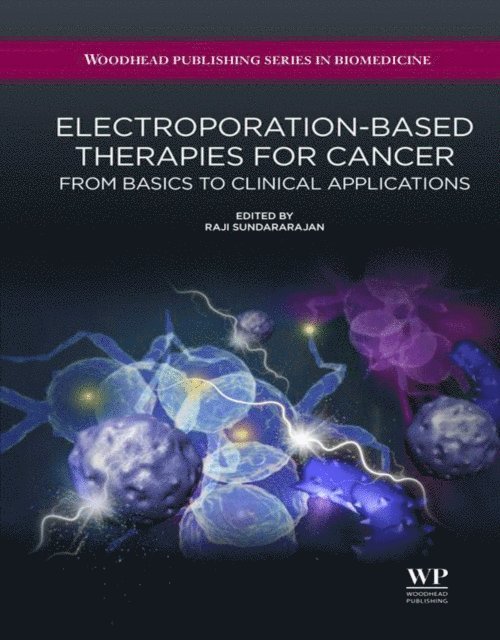
    Electroporation-Based Therapies for Cancer

    From Basics to Clinical Applications

    AvRaji Sundararajan

    Inbunden, Engelska, 2014

    Del i serien Woodhead Publishing Series in Biomedicine

    1 824 kr

    Beställningsvara. Skickas inom 10-15 vardagar. Fri frakt över 249 kr.

    Beskrivning

    Electroporation-Based Therapies for Cancer reviews electroporation-based clinical studies in hospitals for various cancer treatments, including melanomas, head and neck cancers, chest wall breast carcinomas, and colorectal cancers, as well as research studies in the lab using cell lines, primary cells, and animals.

    Cancer kills about one American per minute, amounting to over 500,000 deaths in the United States and millions, worldwide, each year. There is a critical need for safe, effective, and affordable alternative treatment modalities, especially for inoperable, recurring, and chemo-resistant cancers, that do not respond well to current treatment regimen. An electrical-pulse-mediated, enhanced drug delivery technique known as electroporation is one way to effectively treat these patients.

    This technique is especially suitable for low- and middle-income countries, where lack of infrastructure and resources leads to cancer diagnoses at late stages. This quick, safe, effective, economical, out-patient-based technique is a boon to these patients for palliative and other care with enhanced quality of life. This book features discussions by interdisciplinary authors-including practicing oncological surgeons, medical professionals, and academic and other researchers-of the basics and clinical medical applications of electroporation.
    • Provides novel and recent clinical applications of electrochemotherapy for various cancers, including melanomas, sarcomas, superficial extreme melanoma, chest wall breast carcinoma, and colorectal cancers
    • Extensive study of a number of cell lines, including human breast cancer, lung cancer, cervical cancer, leukemia, and mouse breast cancer using both reversible and irreversible electroporation techniques
    • In vitro study of delivery of various commonly prescribed/administered breast cancer chemo and hormone drugs, such as Doxorubicin, Paclitaxel, Bleomycin, and Tamoxifen

    Produktinformation

    • Utgivningsdatum:2014-07-28
    • Mått:156 x 234 x undefined mm
    • Vikt:670 g
    • Format:Inbunden
    • Språk:Engelska
    • Serie:Woodhead Publishing Series in Biomedicine
    • Antal sidor:352
    • Förlag:Elsevier Science
    • ISBN:9781907568152

    Utforska kategorier

    • Onkologi inom Medicin
    • Behandling och behandlingsmetoder inom Medicin

    Mer om författaren

    Dr Raji Sundararajan is an Associate Professor at the Electrical and Computer Engineering Technology Department, Purdue University, since fall 2006. She obtained her initial training on electroporation at Johns Hopkins Medical School and has been doing research on electroporation for the past several years. She has authored/co-authored over 130 publications and has won several research and teaching awards and honors. She was the recipient of the 2010 Indiana 'Women & Hi-Tech' award for 'Distinguished use of technology in healthcare Life Science' and won prestigious, one year (2010-11) fellowship to study regenerative medicine therapy using optoinjection and electroporation techniques at Purdue. She is a reviewer of NIH, NSF, US International Science & Technology Center, and US National Research Council proposals and various journals including International Journal of Cancer, Molecular Biotechnology, Journal of Biomedical Microdevices, Journal of Anticancer drugs, a number of IEEE Transactions and Journal of Electrostatics, etc. She is continually invited for keynote, workshop, panel moderator, invited talks, etc. for many conferences. Dr. Sundararajan, an IEEE Senior Member, is very active in various IEEE societies, including serving as Associate Editor of an IEEE Transactions and chairing two IEEE Standards task forces. A fellow of Institution of Engineers, India, Dr. Sundararajan is also the Conference Chair for IEEE International Conference on Electrical Insulation and Dielectric Phenomena (CEIDP - 2010 and 2011) and the President of Electrostatics Society of America (ESA-2009, 10, and 11) both with sessions on biomedical applications of electrical phenomena.

    Recensioner i media

    "...Key features include: Novel and recent clinical applications of electrochemotherapy for various cancers; An extensive study of a number of cell lines,…using both reversible and irreversible electroporation techniques..." --Anticancer Research

    Innehållsförteckning

    • DedicationEpigraphList of figures and tables FiguresTablesAcknowledgmentsAbout the editorAbout the contributorsIntroduction Motivation:Organization of the chaptersAudience1. Electrochemotherapy – A novel cancer treatment Abstract:1.1 Why electrochemotherapy?1.2 References2. Clinical electrochemotherapy for chest wall recurrence from breast cancer Abstract:2.1 Introduction2.2 Scope of the problem2.3 Treatment options for chest wall recurrence2.4 Clinical experience with electrochemotherapy2.5 Electrochemotherapy: the engineer’s point of view2.6 Conclusions and perspectives2.7 Acknowledgments2.8 References3. Clinical electrochemotherapy for advanced superficial melanoma Abstract:3.1 Introduction3.2 Therapeutic options in advanced melanoma3.3 Clinical experience with electrochemotherapy3.4 Conclusions and perspectives3.5 References4. Low and high voltage electrochemotherapy for breast cancer: an in vitro model study Abstract:4.1 Introduction4.2 Anatomy of the breast and its cancer4.3 Drug delivery issues4.4 Chemotherapy issues4.5 Common adverse effects of anticancer drugs4.6 Anticancer drug resistance4.7 Electroporation and electrochemotherapy4.8 Materials and methods4.9 Results and discussion4.10 Conclusions4.11 Acknowledgments4.12 References5. Why electroporation is a useful technique for cancer treatments Abstract:5.1 Introduction5.2 What is electroporation (EP)?5.3 Irreversible electroporation (IRE)5.4 Electrochemotherapy (ECT)5.5 Example of a hydrophilic agent used with electrochemotherapy5.6 Local delivery by intratumoral injection versus systemic administration in EP5.7 Prerequisites for effective ECT5.8 ECT can overcome multidrug resistance5.9 Intense nanosecond pulsed electric fields (nsPEFs)5.10 Electroporation therapies can produce a reduction in blood flow to tumors5.11 Properties of solid tumors5.12 Why do tumors have increased susceptibility to (EP) permeabilizing pulses, compared to that of normal tissue?5.13 Membrane composition and mineral concentrations of cancer cells affect the electrical properties5.14 Oxygen levels vary in solid tumors5.15 Glycolysis and pH5.16 Conclusions5.17 References6. Electrically-enhanced proliferation control of cancer-stem-cells-like adult human mesenchymal stem cells – a novel modality of treatment Abstract:6.1 Introduction – stem cells6.2 Mesenchymal stem cells6.3 Cancer and cancer stem cells6.4 Electrochemotherapy6.5 In-vitro study of ECT on MSC6.6 Materials and methods6.7 Results and analyses6.8 Discussion and conclusions6.9 Future directions6.10 Acknowledgments6.11 References7. An in vitro study of electroporation of leukemia and cervical cancer cells Abstract:7.1 Introduction7.2 Materials and methods7.3 Results and analysis7.4 Conclusions7.5 Acknowledgments7.6 References8. Low voltage nanosecond electroporation for breast cancer treatment: an in vitro study Abstract:8.1 Introduction8.2 Materials and methods8.3 Results and analysis8.4 Discussion and conclusions8.5 Acknowledgment8.6 References9. Low and high voltage electroporation of in vitro human ovarian adenocarcinoma cells Abstract:9.1 Introduction9.2 Materials and methods9.3 Results and analysis9.4 Discussion and summary9.5 Acknowledgments9.6 References10. Irreversible electroporation: a drug-free cancer treatment Abstract:10.1 Introduction10.2 Materials and methods10.3 Results and analyses10.4 Discussion and conclusions10.5 Acknowledgments10.6 References11. Targeted delivery of siRNA and other difficult to transfect molecules using electroporation: current status and future scope Abstract:11.1 Introduction11.2 siRNA – a potential therapeutic tool for cancer treatment11.3 siRNA-Gene targets in Cancer11.4 Delivery of siRNA11.5 Electroporation-based siRNA delivery11.6 Summary and Future Scope11.7 References12. Electric field distribution study of breast tumors Abstract:12.1 Introduction12.2 Electric field concepts12.3 Electrical properties of cells12.4 Finite element modeling12.5 Electric field intensity used in clinical electrochemotherapy12.6 Electrodes used12.7 Thermal effects of electroporation12.8 Simulation12.9 Breast modeling12.10 Results and discussion12.11 Conclusions12.12 ReferencesIndex