• Fri frakt över 249 kr
  • •
  • Snabba leveranser
  • •
  • Billiga böcker
Kundservice

Du är på sajten för privatpersoner.

Företag, bibliotek eller offentlig verksamhet?

Du handlar på classic.bokus.com, där alla dina funktioner finns intakta.
Till classic.bokus.com
Bokus logotyp. Gå till startsidan.
  • Erbjudanden
  • Nyheter
  • Student
  • Topplistor
  • Barn & ungdom
  • Bokus Play
  • E-böcker
  • Pocketböcker
  • Spel & pussel

10% rabatt på allt med kod: NYSTART10 →

Sidfot

Mina sidor

    Hjälp

    • Kundservice
    • Vanliga frågor och svar
    • Frakt och leverans
    • Retur vid ångerrätt
    • Reklamera vara
    • Betalning
    • Köpvillkor
    • Allmänna villkor
    • Information om webbplatsens tillgänglighet

    Om Bokus

    • Om oss
    • Pressrum
    • För studenter
    • För företag
    • För bibliotek och offentlig verksamhet
    • För leverantörer
    • Hållbarhet

    Populärt

    • Aktuella erbjudanden
    • Presentkort
    • Studentlitteratur
    • Nya böcker
    • Topplistor
    • Signerade böcker
    • Engelska böcker

    Inspiration

    • Boktips
    • BookTok
    • Populära bokserier
    • Barnbokskaraktärer
    • Populära författare
    Logotyp för Bokus
    Följ oss på Facebook (extern länk)Följ oss på Instagram (extern länk)Följ oss på YouTube (extern länk)Följ oss på TikTok (extern länk)
    bokus @ CookiesAnpassa cookiesIntegritetspolicyKöpvillkor
    Till Citymail hemsida (extern länk)Till Budbee hemsida (extern länk)Till Postnord hemsida (extern länk)Till Schenker hemsida (extern länk)Till Early Bird hemsida (extern länk)Till Walleys hemsida (extern länk)
    1. Ekonomi och Ledarskap
    2. Nationalekonomi
    3. Internationell ekonomi

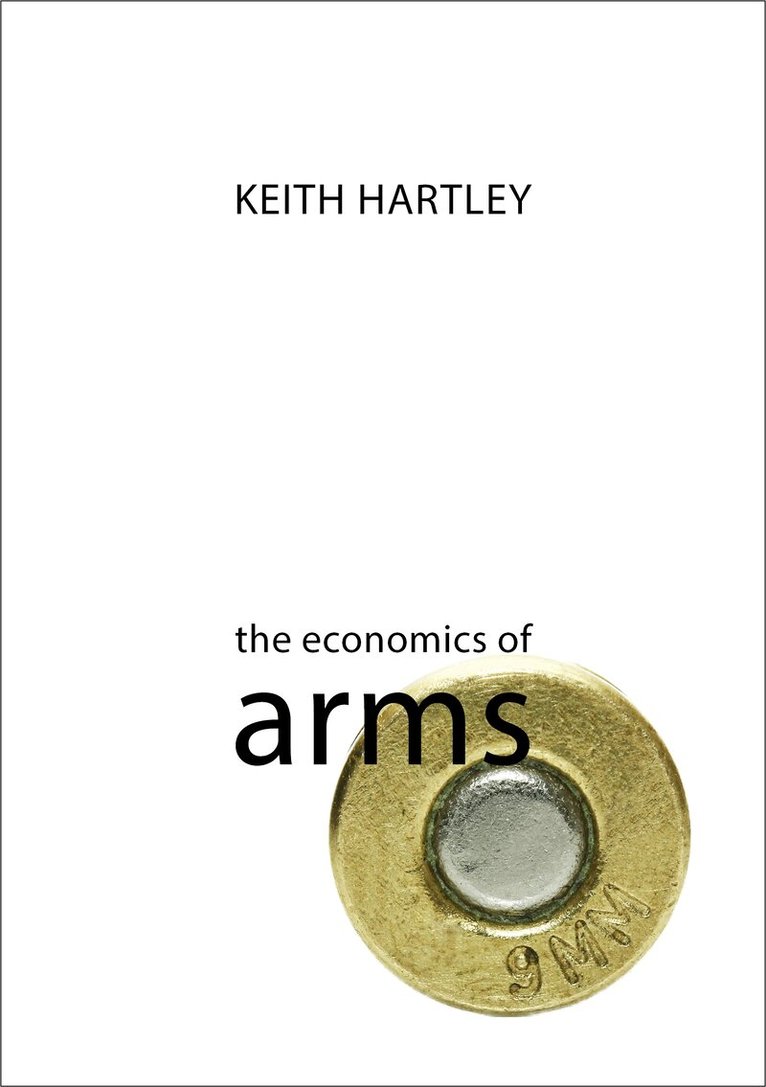
    Economics of Arms

    AvKeith Hartley

    Häftad, Engelska, 2017

    Del 11 i serien Economics of Big Business

    377 kr

    Beställningsvara. Skickas inom 11-20 vardagar. Fri frakt över 249 kr.

    Fler format och utgåvor

    E-bok

    370 kr

    E-bok

    371 kr

    Beskrivning

    It is estimated that today some 2.7% of world GDP ($1.5 trillion) is spent on arms. In 2014 Lockheed Martin, the US defence contractor, had revenues of $45 billion – the equivalent of the GDP of Tunisia. This book explores the business behind these breathtaking figures and explains how the arms industry makes its money.The book begins by defining the industry, explaining why the sector is important, outlining its prime contractors and key supply chains. Its cost categories (from R&D to maintenance), the role of technical innovation, and the sector’s dependence on the monopsony buying power of Government, are all examined. The structure-conduct and performance model is used to show the workings of the arms market and its various entry and exit conditions, and the sector’s performance is analysed through various indicators including exports, development time scales, cost overruns and profitability. The complex choice problems of domestic procurement are considered alongside sales to foreign governments and the opportunities that may present for bribery and corruption.The Military-Industrial-Political-Complex (MIPC) is unpacked and the behaviour of its major agents – national defence agencies, the armed forces, producer groups, political agents (voters, political parties and budget-maximising bureaucracies) – is scrutinised, both in times of conflict (expansion) and peace (contraction). The book concludes by considering future trends, such as whether arms industries are better under state or private ownership, and how they can meet the challenge of new threats in different forms. The discussion throughout is anchored to case studies from all parts of the world, including Brazil, Korea, Japan, Russia as well as UK, US and Europe.As an authoritative non-technical introduction to the economics of arms industries, it is suitable for students of business studies, politics, international relations, political economy, strategic and defence studies as well as for courses on microeconomics and industrial economics. As a masterly summation from one of the world’s leading defence economists, it will also be required reading for staff in defence ministries, procurement agencies, the armed forces and strategic studies think-tanks throughout the world.

    Produktinformation

    • Utgivningsdatum:2017-07-27
    • Mått:148 x 210 x 27 mm
    • Vikt:300 g
    • Format:Häftad
    • Språk:Engelska
    • Serie:Economics of Big Business
    • Antal sidor:216
    • Förlag:Edinburgh University Press
    • ISBN:9781911116240

    Utforska kategorier

    • Internationell ekonomi inom Ekonomi och Ledarskap
    • Tillverkningsindustri inom Ekonomi och Ledarskap
    • Internationella relationer inom Samhälle och politik

    Mer om författaren

    Keith Hartley is Emeritus Professor of Economics at the University of York. He was founding Editor of the journal Defence and Peace Economics and has, over the past 30 years, been a regular consultant on defence matters to the UK Government, United Nations, European Defence Agency, and the US Department of Defense, as well as to various arms companies, including BAE Systems. He is one of the world’s leading defence economists having written over 500 articles, publications and reports, including over a dozen books.

    Recensioner i media

    . . . provides a concise description of the economics of the global weapons industry. Hartley is a pioneer in the subject of defense economics. He demonstrates impressive command of the statistical, institutional, and historical details of this complex industry. . . . Hartley applies industrial organization theory, game theory, public choice analysis, and the economics of technological change to the rich subject matter. The book is suitable for upper-level undergraduates looking for source material to inform a research paper, and as a reference for graduate students and faculty in economics or political science who specialize in defense studies. Essential.

    Innehållsförteckning

    • 1. The Importance of Arms Industries2. The Facts3. The Economics4. The Importance of Government5. Arms Industries: Structure and Conduct6. Arms Industries: Performance7. Buying Arms8. The Military-Industrial-Political Complex9. Disarmament, Conversion and Peace10. The Future of Arms Industries