• Fri frakt över 249 kr
  • •
  • Snabba leveranser
  • •
  • Billiga böcker
Kundservice

Du är på sajten för privatpersoner.

Företag, bibliotek eller offentlig verksamhet?

Du handlar på classic.bokus.com, där alla dina funktioner finns intakta.
Till classic.bokus.com
Bokus logotyp. Gå till startsidan.
  • Erbjudanden
  • Nyheter
  • Student
  • Topplistor
  • Barn & ungdom
  • Bokus Play
  • E-böcker
  • Pocketböcker
  • Spel & pussel

10% rabatt på allt med kod NYSTART10 →

Sidfot

Mina sidor

    Hjälp

    • Kundservice
    • Vanliga frågor och svar
    • Frakt och leverans
    • Retur vid ångerrätt
    • Reklamera vara
    • Betalning
    • Köpvillkor
    • Allmänna villkor
    • Information om webbplatsens tillgänglighet

    Om Bokus

    • Om oss
    • Pressrum
    • För studenter
    • För företag
    • För bibliotek och offentlig verksamhet
    • För leverantörer
    • Hållbarhet

    Populärt

    • Aktuella erbjudanden
    • Presentkort
    • Studentlitteratur
    • Nya böcker
    • Topplistor
    • Signerade böcker
    • Engelska böcker

    Inspiration

    • Boktips
    • BookTok
    • Populära bokserier
    • Barnbokskaraktärer
    • Populära författare
    Logotyp för Bokus
    Följ oss på Facebook (extern länk)Följ oss på Instagram (extern länk)Följ oss på YouTube (extern länk)Följ oss på TikTok (extern länk)
    bokus @ CookiesAnpassa cookiesIntegritetspolicyKöpvillkor
    Till Citymail hemsida (extern länk)Till Budbee hemsida (extern länk)Till Postnord hemsida (extern länk)Till Schenker hemsida (extern länk)Till Early Bird hemsida (extern länk)Till Walleys hemsida (extern länk)
    1. Ekonomi och Ledarskap
    2. Nationalekonomi
    3. Makroekonomi

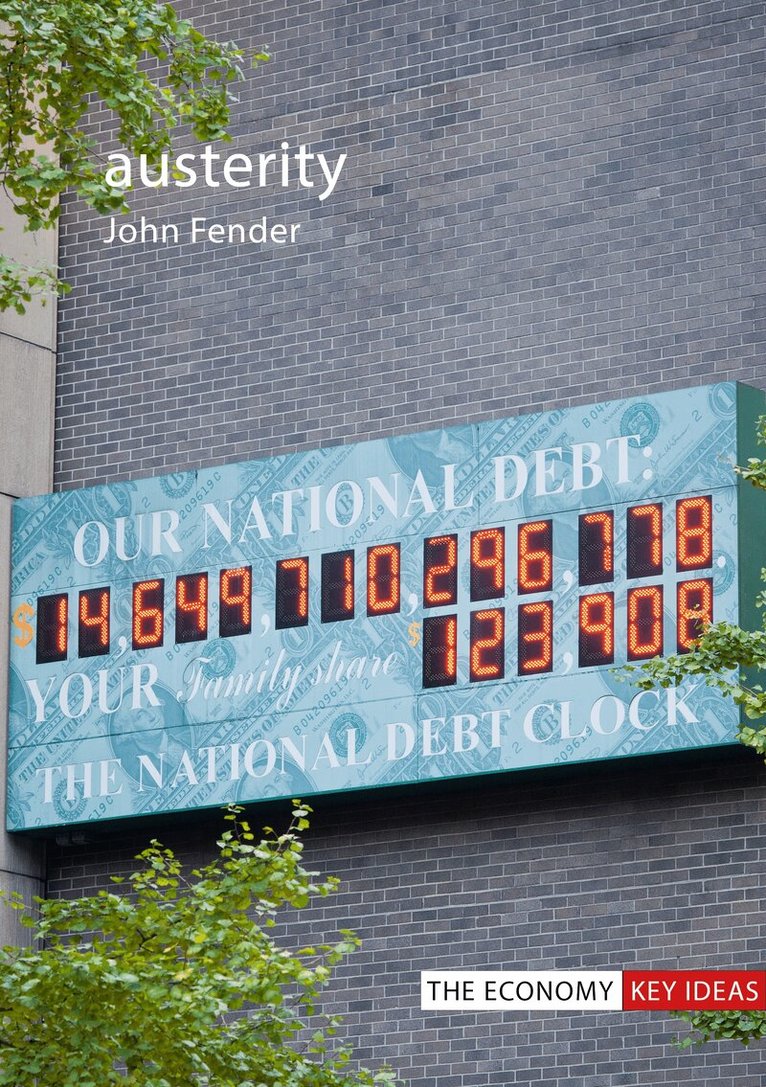
    Austerity

    When is it a mistake and when is it necessary?

    AvJohn Fender

    Häftad, Engelska, 2020

    Del 3 i serien Economy Key Ideas

    388 kr

    Tillfälligt slut

    Fler format och utgåvor

    E-bok

    382 kr

    Inbunden

    1 302 kr

    E-bok

    381 kr

    Beskrivning

    Austerity has dominated economic debate since the financial crisis of 2008. Governments have implemented austerity policies by reducing their spending on goods and services, increasing taxation and cutting welfare budgets.John Fender explains how austerity (or "fiscal consolidation") works in theory and how it has played out in practice especially in the UK and the eurozone. He provides a clear and rigorous guide to the principles and mechanisms of austerity economics and offers a balanced account of the economic thinking behind contentious policy decisions.Boris Johnson has said that the UK government "has absolutely no intention of returning to the 'A-word'", but with the Covid-19 crisis likely to result in much more government debt, it will be difficult to avoid more austerity. Understanding the impact of austerity policies is more important than ever and this book offers a first step on that path. For anyone seeking answers to such questions as: "What can we learn from the UK’s economic history that is relevant to current policy?", "Is austerity ever necessary or desirable?" and "Can the harmful effects of austerity programmes be mitigated?" then this book will be welcome reading.

    Produktinformation

    • Utgivningsdatum:2020-09-10
    • Mått:138 x 216 x 15 mm
    • Vikt:206 g
    • Format:Häftad
    • Språk:Engelska
    • Serie:Economy Key Ideas
    • Antal sidor:144
    • Förlag:Edinburgh University Press
    • ISBN:9781911116936

    Utforska kategorier

    • Makroekonomi inom Ekonomi och Ledarskap

    Mer om författaren

    John Fender is Professor of Macroeconomics and leader of the Macroeconomics and Finance Research Group at the University of Birmingham. His books include Understanding Keynes, Inflation: A Contemporary Perspective and Monetary Policy.

    Recensioner i media

    This book is extremely timely. Moreover, its balanced and clear-headed approach is a valuable antidote to the kind of emotive discussion that has dominated the debate over the past ten years.

    Innehållsförteckning

    • 1. Introduction2. The economics of austerity I3. The economics of austerity II4. The term structure of interest rates5. A simple model6. Austerity in the United Kingdom7. Austerity in the eurozone8. Austerity in the rest of the world9. The optimal time path of government debt (or how should fiscal policy be conducted?)10. Policy in a world where severe deflationary shocks are possible11. Conclusion: when are austerity measures necessary or desirable?