• Fri frakt över 249 kr
  • •
  • Snabba leveranser
  • •
  • Billiga böcker
Kundservice

Du är på sajten för privatpersoner.

Företag, bibliotek eller offentlig verksamhet?

Du handlar på classic.bokus.com, där alla dina funktioner finns intakta.
Till classic.bokus.com
Bokus logotyp. Gå till startsidan.
  • Erbjudanden
  • Nyheter
  • Student
  • Topplistor
  • Barn & ungdom
  • Bokus Play
  • E-böcker
  • Pocketböcker
  • Spel & pussel

Må bättre, för mindre! Upp till 50% rabatt på hälsoböcker

Sidfot

Mina sidor

    Hjälp

    • Kundservice
    • Vanliga frågor och svar
    • Frakt och leverans
    • Retur vid ångerrätt
    • Reklamera vara
    • Betalning
    • Köpvillkor
    • Allmänna villkor
    • Information om webbplatsens tillgänglighet

    Om Bokus

    • Om oss
    • Pressrum
    • För studenter
    • För företag
    • För bibliotek och offentlig verksamhet
    • För leverantörer
    • Hållbarhet

    Populärt

    • Aktuella erbjudanden
    • Presentkort
    • Studentlitteratur
    • Nya böcker
    • Topplistor
    • Signerade böcker
    • Engelska böcker

    Inspiration

    • Boktips
    • BookTok
    • Populära bokserier
    • Barnbokskaraktärer
    • Populära författare
    Logotyp för Bokus
    Följ oss på Facebook (extern länk)Följ oss på Instagram (extern länk)Följ oss på YouTube (extern länk)Följ oss på TikTok (extern länk)
    bokus @ CookiesAnpassa cookiesIntegritetspolicyKöpvillkor
    Till Citymail hemsida (extern länk)Till Budbee hemsida (extern länk)Till Postnord hemsida (extern länk)Till Schenker hemsida (extern länk)Till Early Bird hemsida (extern länk)Till Walleys hemsida (extern länk)
    1. Ekonomi och Ledarskap
    2. Nationalekonomi

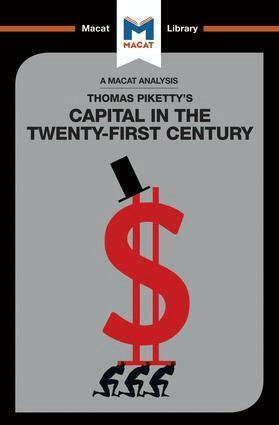
    Analysis of Thomas Piketty's Capital in the Twenty-First Century

    AvNick Broten

    Häftad, Engelska, 2017

    Del i serien Macat Library

    98 kr

    Beställningsvara. Skickas inom 10-15 vardagar. Fri frakt över 249 kr.

    Fler format och utgåvor

    E-bok

    135 kr

    E-bok

    135 kr

    Inbunden

    288 kr

    Beskrivning

    Thomas Piketty is a fine example of an evaluative thinker. In Capital in the Twenty-First Century, he not only provides detailed and sustained explanations of why he sees existing arguments relating to income and wealth distribution as flawed, but also gives us very detailed evaluations of the significance of a vast amount of data explaining why incomes is distributed in the ways it is.As Piketty stresses, “the distribution question… deserves to be studied in a systematic and methodical fashion.” This stress on evaluating the significance of data leads him to focus on the central evaluative questions, and look in turn at the acceptability, relevance, and adequacy of existing justifications for the unequal distribution of wealth. In doing so, Piketty applies his understanding of the data to answering the deeply important question of what political structures and what policies are necessary to move us towards a more equal society.Piketty’s evaluation of the data supports his argument that inequality cannot be depended on to reduce over time: indeed, without government intervention, it is highly likely to increase. In addition, he evaluates international data to argue that poor countries do not necessarily become less poor as a result of foreign investment. This strong emphasis on the interrogation of data, rather than building mathematical models that are divorced from data, is a defining feature of Piketty’s work.

    Produktinformation

    • Utgivningsdatum:2017-07-05
    • Mått:129 x 198 x 9 mm
    • Vikt:134 g
    • Format:Häftad
    • Språk:Engelska
    • Serie:Macat Library
    • Antal sidor:114
    • Förlag:Macat International Limited
    • ISBN:9781912127719

    Utforska kategorier

    • Nationalekonomi inom Ekonomi och Ledarskap
    • Psykologi inom Psykologi och pedagogik
    • Filosofi inom Filosofi och religion

    Mer om författaren

    Nick Broten was educated at the London School of Economics and the California Institute of Technology. He is doing postgraduate work at the Pardee RAND Graduate School and works as an assistant policy analyst at RAND. His current policy interests include designing distribution methods for end-of-life care, closing labour market skill gaps, and understanding biases in risk-taking by venture capitalists.

    Innehållsförteckning

    • Ways In to the Text Who was Thomas Piketty? What does Capital in the Twenty-First Century Say? Why does Capital in the Twenty-First Century Matter? Section 1: Influences Module 1: The Author and the Historical Context Module 2: Academic Context Module 3: The Problem Module 4: The Author's Contribution Section 2: Ideas Module 5: Main Ideas Module 6: Secondary Ideas Module 7: Achievement Module 8: Place in the Author's Work Section 3: Impact Module 9: The First Responses Module 10: The Evolving Debate Module 11: Impact and Influence Today Module 12: Where Next? Glossary of Terms People Mentioned in the Text Works Cited