• Fri frakt över 249 kr
  • •
  • Snabba leveranser
  • •
  • Billiga böcker
Kundservice

Du är på sajten för privatpersoner.

Företag, bibliotek eller offentlig verksamhet?

Du handlar på classic.bokus.com, där alla dina funktioner finns intakta.
Till classic.bokus.com
Bokus logotyp. Gå till startsidan.
  • Erbjudanden
  • Nyheter
  • Student
  • Topplistor
  • Barn & ungdom
  • Bokus Play
  • E-böcker
  • Pocketböcker
  • Spel & pussel

10% rabatt på allt med kod: NYSTART10 →

Sidfot

Mina sidor

    Hjälp

    • Kundservice
    • Vanliga frågor och svar
    • Frakt och leverans
    • Retur vid ångerrätt
    • Reklamera vara
    • Betalning
    • Köpvillkor
    • Allmänna villkor
    • Information om webbplatsens tillgänglighet

    Om Bokus

    • Om oss
    • Pressrum
    • För studenter
    • För företag
    • För bibliotek och offentlig verksamhet
    • För leverantörer
    • Hållbarhet

    Populärt

    • Aktuella erbjudanden
    • Presentkort
    • Studentlitteratur
    • Nya böcker
    • Topplistor
    • Signerade böcker
    • Engelska böcker

    Inspiration

    • Boktips
    • BookTok
    • Populära bokserier
    • Barnbokskaraktärer
    • Populära författare
    Logotyp för Bokus
    Följ oss på Facebook (extern länk)Följ oss på Instagram (extern länk)Följ oss på YouTube (extern länk)Följ oss på TikTok (extern länk)
    bokus @ CookiesAnpassa cookiesIntegritetspolicyKöpvillkor
    Till Citymail hemsida (extern länk)Till Budbee hemsida (extern länk)Till Postnord hemsida (extern länk)Till Schenker hemsida (extern länk)Till Early Bird hemsida (extern länk)Till Walleys hemsida (extern länk)
    1. Historia och arkeologi
    2. Historia
    3. Mellanösterns historia

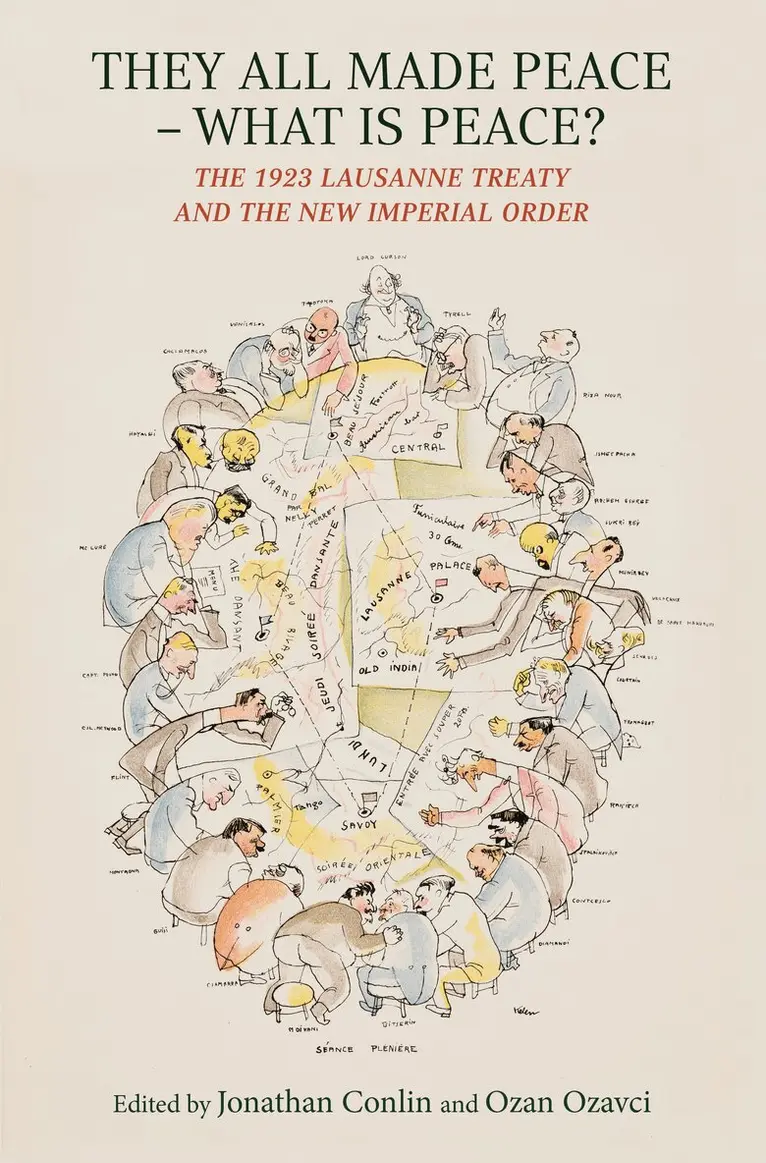
    They All Made Peace – What is Peace?

    The 1923 Lausanne Treaty and the New Imperial Order

    AvJonathan Conlin

    Häftad, Engelska, 2024

    Del i serien Gingko Library

    295 kr

    Beställningsvara. Skickas inom 5-8 vardagar. Fri frakt över 249 kr.

    Beskrivning

    The 1923 Treaty of Lausanne may have been the last of the post-World War One peace settlements, but it was very different from Versailles. Like its German and Austro-Hungarian allies, the defeated Ottoman Empire had initially been presented with a dictated peace in 1920. In just two years, however, the Kemalist insurgency turned defeat into victory, enabling Turkey to claim its place as the first sovereign state in the Middle East. Meanwhile those communities who had lived side-by-side with Turks inside the Ottoman Empire struggled to assert their own sovereignty, jostled between the Soviet Union and the resurgence of empire in the guise of League of Nations mandates. For 1.5m Ottoman Greeks and Balkan Muslims, ‘making peace’ involved forcedpopulation exchanges, a peace-making tool now understood as ethnic cleansing. Chapters consider competing visions for a postOttoman world, situate the population exchanges relative to other peace-making efforts, and discuss economic factors behind the reallocation of Ottoman debt as well as refugee flows and oil politics. Further chapters consider Arab, Armenian, American and Iranian perspectives, as well as the long shadow cast by Lausanne over contemporary politics, both inside Turkey and out.

    Produktinformation

    • Utgivningsdatum:2024-04-10
    • Mått:153 x 232 x 40 mm
    • Vikt:618 g
    • Format:Häftad
    • Språk:Engelska
    • Serie:Gingko Library
    • Antal sidor:478
    • Förlag:GINGKO
    • ISBN:9781914983177

    Utforska kategorier

    • Mellanösterns historia inom Historia och arkeologi

    Mer om författaren

    Jonathan Conlin is a senior lecturer at the University of Southampton and cofounder of the Lausanne Project, a forum for scholarship on interwar relations between the Middle East and the wider world. His books include Mr. Five Per Cent and Tales of Two Cities. Ozan Ozavci is assistant professor of transimperial history at Utrecht University and, with Jonathan Conlin, cofounder of the Lausanne Project. He is the author of Dangerous Gifts and Intellectual Origins of the Republic. Contributors: Aimee Genell is Assistant Professor of Middle Eastern History, University of West Georgia, Erik Goldstein is Professor of International Relations and Professor of History, Boston University; Samuel Hirst is Assistant Professor of International Relations, Bilkent University; Etienne Peyrat is Assistant Professor of History, Sciences Po Lille & University of Lille; Cemil Aydin is Professor of History at University of North Carolina at Chapel Hill; Lerna Ekmekcioglu is McMillan-Stewart Associate Professor of History, MIT; Leila Koochakzadeh is Lecturer at the Institut Nationale des Langues et Civilisations Orientales (INaLCO), Paris; Elizabeth F. Thompson is Professor of History and Mohamed S. Farsi Chair of Islamic Peace at the American University in Washington, DC; Andrew Patrick is Associate Professor of History, Tennessee State University; Sarah Shields is Professor and Director of Graduate Studies, Department of History, University of North Carolina; Mustafa Aksakal is Nesuhi Erteguen Chair of Modern Turkish Studies & Associate Professor of History, Georgetown University; Patrick Schilling is a PhD candidate in history at Georgetown University; Leonard V. Smith is Frederick B. Artz Professor of History, Oberlin College, Oberlin, Ohio (USA); Laura Robson is Oliver-McCourtney Professor of History, Penn State University; Haakon Ikonomou is Associate Professor at the Saxo Institute, University of Copenhagen; Dimitris Kamouzis is Researcher at the Centre for Asia Minor Studies in Athens, Greece; Hans-Lukas Kieser is Associate Professor of History at the Centre for the Study of Violence, University of Newcastle, Australia; Goekhan Cetinsaya retired from the Istanbul Sehir University; Julia Secklehner is a Research Fellow for the CRAACE Project at the Department of Art History, Masaryk University (Brno, Czechia).

    Recensioner i media

    ‘They All Made Peace—What is Peace? is a welcome addition to the literature on the 1923 Lausanne Treaty and the impact of the decisions made there that continue to resonate in present-day international politics. Long overdue, the volume represents a primer on a neglected and under-represented moment of post-imperial Ottoman history.’ Virginia H. Aksan Professor of History Emeritus, McMaster University; 'Of all the international treaties signed after World War I, only Lausanne remains intact: the founding document of the Turkish Republic. Yet the Lausanne peace process has not attracted the interest it deserves. In the absence of well-grounded research, journalists and Islamist demagogues alike have come up with their own myths, myths that continue to circulate today. Here at last, a century on, we have the definitive work: of interest not only to diplomats, political scientists and historians, but the educated public in general.' Ayhan Aktar former Professor of Sociology, Istanbul Bilgi University: ‘An important book offering new perspectives on the Lausanne Treaty of 1923. Gone is the positive interpretation of Lausanne as the most ‘successful’ of the treaties ending hostilities in the Great War; in its place is a multilayered account of exploitation, exclusion, and betrayal of the promise of recovery and development in a region ravaged by war, famine, and genocide.These essays offer a new and important interpretation not only of Middle Eastern history but of international history in the 1920s.’Jay Winter Professor of History Emeritus, Yale University

    Innehållsförteckning

    • Part 1: From One Imperial Order to AnotherMinority Rights and International Law at Lausanne – Aimee GenellBritain’s Plans for a New Eastern Mediterranean Empire, 1916-1923 – Erik GoldsteinOn the Margins of the Lausanne Conference: The Soviet Union and the Exclusions of the post-World War I International Order – Samuel Hirst & Etienne PeyratThe Lausanne Treaty in the Contested Narratives of World Politics– Cemil Aydın Part 2: Absent PresencesDebates over an Armenian National Home at the Lausanne Conference and the Limits of Post-Genocide Co-Existence – Lerna EkmekçiogluIranian Attempts to Participate in the Lausanne Conference – Leila KoochakzadehArab Exclusion at Lausanne: A Critical Historical Juncture – Elizabeth F. Thompson Part 3: Making ConcessionsOil over Armenians: The 1920s ‘Lausanne Shift’ in US Relations with the Middle East– Andrew PatrickThe Mosul Question: Lausanne and After – Sarah ShieldsTurkey and the Division of the Ottoman Debt at Lausanne – Patrick Schilling & Mustafa Aksakal Part 4: Moving the PeopleInternational Law and the Greek-Bulgarian and Greek-Turkish Population Exchanges– Leonard V. SmithA Capitalist Peace? Money, Labor, and Refugee Resettlement – Laura RobsonAt the Crossroads of History:Thanassis Aghnides, Ayrilios Spatharis and the Greek-Turkish Population Exchange – Haakon Ikonomou & Dimitris Kamouzis Part 5: Framing LausanneFraming Pasts and Futures at the Lausanne Near East Peace Conference – Hans-Lukas KieserLausanne in Turkish Official and Popular Historiography: A ‘War of Identities’ in Turkey – Gökhan ÇetinsayaDiplomacy, Entertainment, Souvenir? Guignol à Lausanne (1922) and the Lausanne Conference in Caricature – Julia Secklehner