• Fri frakt över 249 kr
  • •
  • Snabba leveranser
  • •
  • Billiga böcker
Kundservice

Du är på sajten för privatpersoner.

Företag, bibliotek eller offentlig verksamhet?

Du handlar på classic.bokus.com, där alla dina funktioner finns intakta.
Till classic.bokus.com
Bokus logotyp. Gå till startsidan.
  • Erbjudanden
  • Nyheter
  • Student
  • Topplistor
  • Barn & ungdom
  • Bokus Play
  • E-böcker
  • Pocketböcker
  • Spel & pussel

10% rabatt på allt med kod: NYSTART10 →

Sidfot

Mina sidor

    Hjälp

    • Kundservice
    • Vanliga frågor och svar
    • Frakt och leverans
    • Retur vid ångerrätt
    • Reklamera vara
    • Betalning
    • Köpvillkor
    • Allmänna villkor
    • Information om webbplatsens tillgänglighet

    Om Bokus

    • Om oss
    • Pressrum
    • För studenter
    • För företag
    • För bibliotek och offentlig verksamhet
    • För leverantörer
    • Hållbarhet

    Populärt

    • Aktuella erbjudanden
    • Presentkort
    • Studentlitteratur
    • Nya böcker
    • Topplistor
    • Signerade böcker
    • Engelska böcker

    Inspiration

    • Boktips
    • BookTok
    • Populära bokserier
    • Barnbokskaraktärer
    • Populära författare
    Logotyp för Bokus
    Följ oss på Facebook (extern länk)Följ oss på Instagram (extern länk)Följ oss på YouTube (extern länk)Följ oss på TikTok (extern länk)
    bokus @ CookiesAnpassa cookiesIntegritetspolicyKöpvillkor
    Till Citymail hemsida (extern länk)Till Budbee hemsida (extern länk)Till Postnord hemsida (extern länk)Till Schenker hemsida (extern länk)Till Early Bird hemsida (extern länk)Till Walleys hemsida (extern länk)
    1. Filosofi och religion
    2. Filosofi

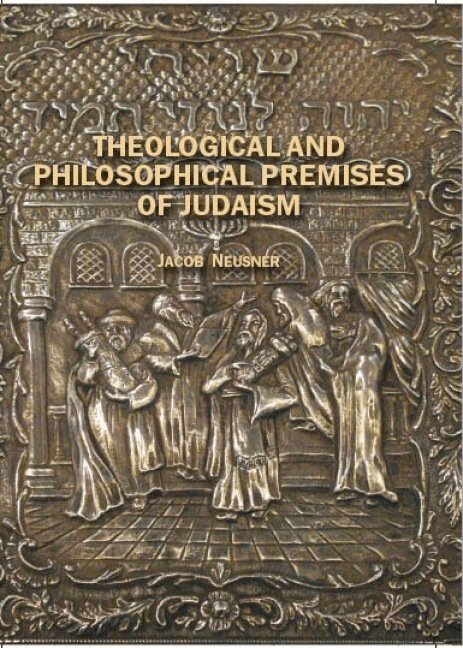
    Theological and Philosophical Premises of Judaism

    AvJacob Neusner

    Häftad, Engelska, 2008

    Del i serien Judaism and Jewish Life

    378 kr

    Beställningsvara. Skickas inom 5-8 vardagar. Fri frakt över 249 kr.

    Fler format och utgåvor

    E-bok

    2 433 kr

    Inbunden

    1 245 kr

    Beskrivning

    Classical Judaism imagined the people Israel's situation in three aspects to be unique among the nations of the earth. The nations lived in unclean lands contaminated by corpses and redolent of death. They themselves are destined to die without hope of renewed life after the grave. They were prisoners of secular time, subject to the movement and laws of history in its inexorable logic. Heaven did not pay attention to what they did and did not care about their conduct, so long as they observed the basic decencies mandated by the commandments that applied to the heirs of Noah, seven fundamental rules in all. That is not how Israel the holy people was conceived. The Israel contemplated by Rabbinic Judaism lives in sacred space and in enchanted time, all the while subject to the constant surveillance of an eye that sees all and an ear that hears all and a sentient being that recalls all. Why the divine obsession with Israel? God yearned for Israel's love and constantly contemplated its conduct. The world imagined by the Rabbis situated Israel in an enchanted kingdom, a never-never-land and conceived of God as omniscient and ubiquitous.Here Neusner shows that in its generative theology Rabbinic Judaism in its formative age invoked the perpetual presence of God overseeing all that Israelites said and did. It conceived of Israel to transcend the movement of history and to live in a perpetual present tense. Israel located itself in a Land like no other. And it organised its social order in a hierarchical structure ascending to the one God situated at the climax and head of all being.

    Produktinformation

    • Utgivningsdatum:2008-05-15
    • Mått:155 x 234 x 14 mm
    • Vikt:365 g
    • Format:Häftad
    • Språk:Engelska
    • Serie:Judaism and Jewish Life
    • Antal sidor:256
    • Förlag:Academic Studies Press
    • ISBN:9781934843543

    Utforska kategorier

    • Filosofi inom Filosofi och religion
    • Judendom inom Filosofi och religion

    Mer om författaren

    Jacob Neiisner is a distinguished research professor of religious studies at the University of South Florida, Tampa, and professor of religion at Bard College.

    Recensioner i media

    "This is a learned and very detailed study…"

    Innehållsförteckning

    • Preface. THREE THEOLOGICAL PREMISES OF JUDAISM. 1. SPEECH: An eye that sees an ear that hears. i. Know before whom you are going to give a full account of yourself. ii. Oaths. iii. Vows and the Nazirite Vow in Particular. 2. TIME: “Considerations of Temporal Priority or Posteriority Do Not Enter into the Torah” . i. Temporal Sequence Does Not Apply to the Torah. ii. The Present-Tense Past: Scripture Re-Presented in the Immediacy of the Moment. iii. How are events treated, if not as unique indicators of the movement of history? Patterning Events. Mishnah-tractate Ta’anit 4:6–7. iv. History in the Torah and in the Mishnah. v. How the Mishnah Configures Israel in the Context of History Defined by God. How the Destruction of the Temple Figures in Mishnah-tractate Rosh Hashanah 4:1–3. vi. Patterning the History of the Sacrificial Cult: Mishnah-Tractate Zebahim 14:4–10. vii. A Messiah in the Mishnah: Mishnah-tractate Sotah Chapter Nine. 3. SPACE: The land of Israel is holier than all lands. i. The Locative Dimension. ii. Taking life to Sustain Israel’s life: Hullin. iii. The Domestic Table Compared with the Temple Altar. iv. The Particular Laws of Mishnah-Tractate Hullin. v. Gradations of Sanctification. vi. Why Hullin in Particular?. vii. Location, Occasion, the Character of the Encounter, in God’s Context, of God and the Israelite. 4. ANALYSIS: Hierarchical classification and the Law’s Philosophical Demonstration of Monotheism. i. Hierarchical classification. ii. Aristotle and the Mishnah’s Deductive Reasoning. iii. Message: The Taxonomic Power of Human Intention. vii. Mixtures in the First Division of the Halakhah: Bikkurim. viii. Conclusion. 6. ANALYSIS: Intentionality. i. Defining Intentionality, Attitude. ii. Intentionality and Freedom of Will. iii. The Manipulation and Application of power. iv. The point of differentiation within the political structures, supernatural and natural alike, lies in the attitude and intention of a human being. v. The Sources of Power: The Will of God and the Will of Man. INTEGRAL JUDAISM. 7. Integrating the System. i. At the Center of the System. ii. Defining Zekhut. iii. Specific Meanings of Zekhut in Particular Contexts. iv. Zekhut in Genesis Rabbah. v. Deeds that Generate Zekhut. vi. Relationships. 8. Living in the kingdom of God. i. The Rationality of the Israelite Social Order. ii. Approved Emotions. iii. Competition for the Status of “Being Israel”. iv. From Philosophy to Religion: The Kingdom of Heaven and the City of God. v. The Question of History Once Again. Index of Ancient Sources. Index of Subjects.