• Fri frakt över 249 kr
  • •
  • Snabba leveranser
  • •
  • Billiga böcker
Kundservice

Du är på sajten för privatpersoner.

Företag, bibliotek eller offentlig verksamhet?

Du handlar på classic.bokus.com, där alla dina funktioner finns intakta.
Till classic.bokus.com
Bokus logotyp. Gå till startsidan.
  • Erbjudanden
  • Nyheter
  • Student
  • Topplistor
  • Barn & ungdom
  • Bokus Play
  • E-böcker
  • Pocketböcker
  • Spel & pussel

Må bättre, för mindre! Upp till 50% rabatt på hälsoböcker

Sidfot

Mina sidor

    Hjälp

    • Kundservice
    • Vanliga frågor och svar
    • Frakt och leverans
    • Retur vid ångerrätt
    • Reklamera vara
    • Betalning
    • Köpvillkor
    • Allmänna villkor
    • Information om webbplatsens tillgänglighet

    Om Bokus

    • Om oss
    • Pressrum
    • För studenter
    • För företag
    • För bibliotek och offentlig verksamhet
    • För leverantörer
    • Hållbarhet

    Populärt

    • Aktuella erbjudanden
    • Presentkort
    • Studentlitteratur
    • Nya böcker
    • Topplistor
    • Signerade böcker
    • Engelska böcker

    Inspiration

    • Boktips
    • BookTok
    • Populära bokserier
    • Barnbokskaraktärer
    • Populära författare
    Logotyp för Bokus
    Följ oss på Facebook (extern länk)Följ oss på Instagram (extern länk)Följ oss på YouTube (extern länk)Följ oss på TikTok (extern länk)
    bokus @ CookiesAnpassa cookiesIntegritetspolicyKöpvillkor
    Till Citymail hemsida (extern länk)Till Budbee hemsida (extern länk)Till Postnord hemsida (extern länk)Till Schenker hemsida (extern länk)Till Early Bird hemsida (extern länk)Till Walleys hemsida (extern länk)
    1. Kultur
    2. Arkitektur

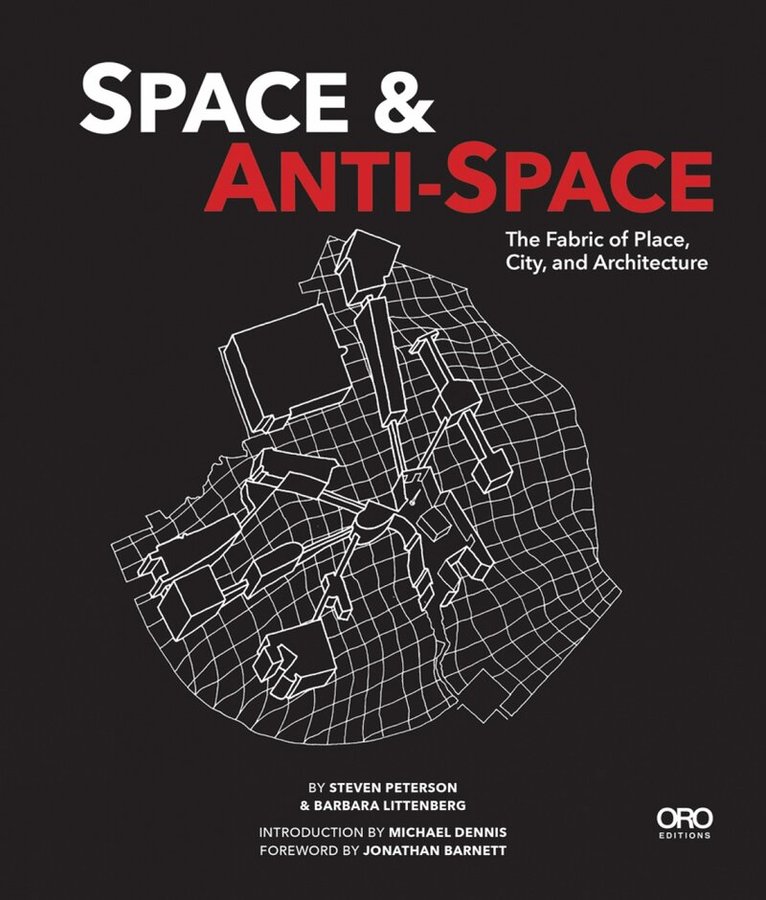
    Space and Anti-Space: The Fabric of Place, City and Architecture

    AvBarbara Littenberg,Steven Peterson

    Häftad, Engelska, 2020

    386 kr

    Beställningsvara. Skickas inom 7-10 vardagar. Fri frakt över 249 kr.

    Beskrivning

    This book challenges the conventional idea of what constitutes the physical form of the contemporary city. Observing the absence of extended urban fabrics - the missing urbanism - in the new global cities developed today, it argues that these cities are merely statistical accumulations of density that lack the positive attributes of a genuine urban condition. Cities as urban places cannot be made by individual buildings alone but rather depend on the intertwined combination of an architecture that is bound to the creation of public spaces and streets, and engaged in the structure of urban blocks to form a complex field pattern of interactive solids and voids. Broad in scope, the book explores the nature of the fundamental relationship between architecture and urbanism as one of spatial formation. As an independently designed entity, the city forms the ordering framework in which architecture is partially subordinated to the mutual sustainability of the overall urban fabric. If a new urban architecture is to be an integral constituent of public place making, it must be composed using a radically different paradigm of positive, figurally constructed 'space' rather than the indefinite background of 'anti-space' as exemplified in the chapter on Mies van der Rohe's architectural quest for the ineffable modern void. These two different spatial models are explored in depth in the eponymous article, 'Space and Anti Space,' first published in the Harvard Architectural Review in 1980, which forms the core of the book and postulates that the underlying attitudes toward spatial formation, at both domestic and urban scales, determine our ability to shape place and human experience. In a series of essays, articles and urban projects extensively illustrated by plans, analytic diagrams, and dramatic images, this book makes a visual and verbal argument for the steps that need to be taken to re-urbanise the city in order to achieve an urbanity consisting of multiple discrete places that depend on the essential concept of contained geometrical space. These spatial ideas are illustrated in this book in three proposals: for Rome, in 'Roma Interrotta,' 1979; Paris, the 'Consultation Internationale pour L'Aménagement du Quartier des Halles,' 1980; and New York in the 'World Trade Center Site Innovative Design Study,' 2002.

    Produktinformation

    • Utgivningsdatum:2020-07-03
    • Mått:203 x 254 x 26 mm
    • Vikt:1 290 g
    • Format:Häftad
    • Språk:Engelska
    • Antal sidor:296
    • Förlag:Oro Editions
    • ISBN:9781941806777

    Utforska kategorier

    • Arkitektur inom Kultur

    Mer om författaren

    Barbara Littenberg and Steven Peterson are New York-based architects, urban designers, and educators, who pursued an unconventional practice that explored the relationship between architecture and cities through an amalgam of competitions, public debates, lectures, seminars, teaching and collaborative charrettes. They have worked on urban problems at sites in Rome, Paris, Montreal, and New York, culminating in their proposal for the "World Trade Center Site Innovative Design Study" competition of 2002. Barbara taught architecture for 25 years. She was Associate Professor at the Yale University Graduate School of Architecture for 10 years, directing the Graduate Urban Housing studio. She was on the faculty of graduate schools of architecture at Princeton, Columbia and Harvard universities, and the Kei Distinguished Professor at the University of Maryland. She also taught in Rome, Italy for Notre Dame University's architectural program. Barbara Littenberg and Steven Peterson are New York-based architects, urban designers, and educators, who pursued an unconventional practice that explored the relationship between architecture and cities through an amalgam of competitions, public debates, lectures, seminars, teaching and collaborative charrettes. They have worked on urban problems at sites in Rome, Paris, Montreal, and New York, culminating in their proposal for the "World Trade Center Site Innovative Design Study" competition of 2002. Steven worked as architect at Milton Keynes New Town in England prior to establishing their New York practice. He taught urban design at Cornell and Columbia Universities, and at the Notre Dame Post Professional Program in Rome, Italy. He directed the Syracuse University School of Architecture graduate program in Florence, Italy and was director of the Institute of Architecture and Urban Studies in New York. He is the author of numerous speculative essays and has lectured widely.