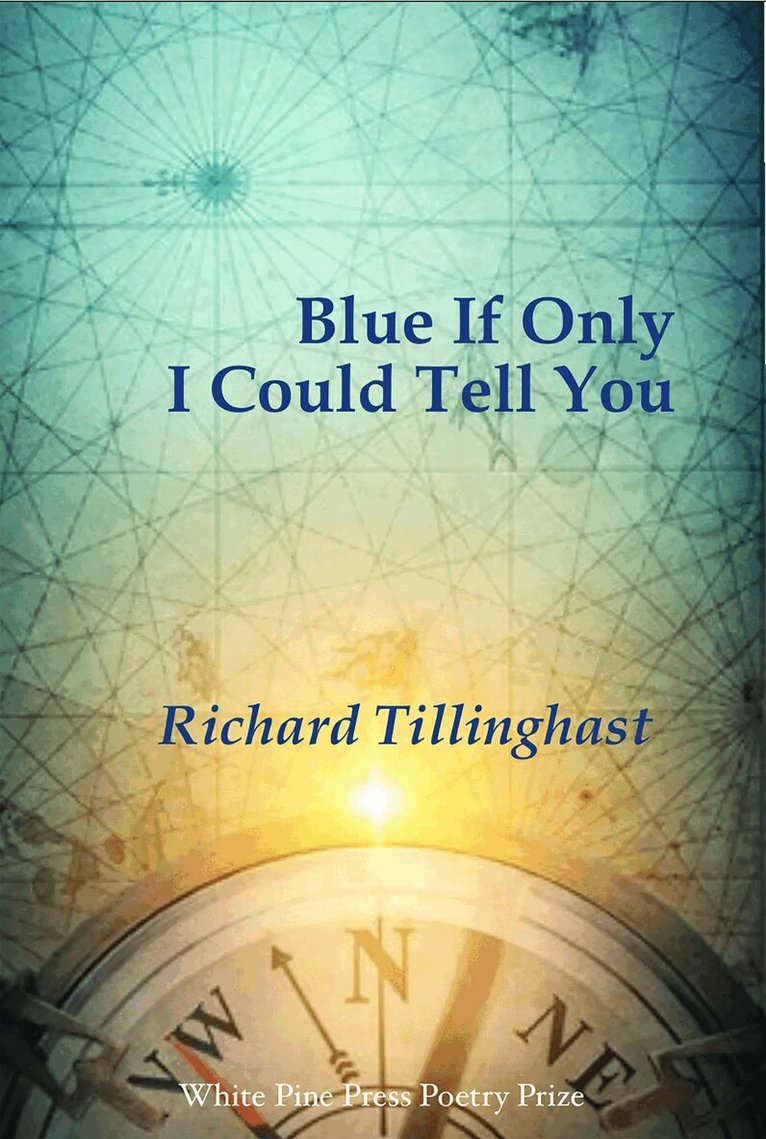
Blue If Only I Could Tell You
192 kr
Beställningsvara. Skickas inom 5-8 vardagar. Fri frakt över 249 kr.
Du är på sajten för privatpersoner.
192 kr
Beställningsvara. Skickas inom 5-8 vardagar. Fri frakt över 249 kr.
Richard Tillinghast was born and raised in Memphis. After college at Sewanee he did graduate work at Harvard, where he studied with Robert Lowell. The author of thirteen books of poetry and five of creative nonfiction.He has taught at Harvard, Berkeley, the College Program at San Quentin Prison, and the University of Michigan in the US as well as at Trinity College Dublin and the Poets’ House in Ireland. He has been awarded the James Dickey Prize for poetry from Five Points and the Cleanth Brooks Award for nonfiction from The Southern Review. Currently a member of the Core Faculty in the Converse College MFA program, he is Emeritus Professor of English at the University of Michigan and a founder and past Director of the Bear River Writers’ Conference in Northern Michigan.
“Blue If Only I Could Tell You is a book of journeys and arrivals, of the many far andconsequential places we might find ourselves: Punjab, Tipperary, the sandybanks of the Platte River in Nebraska. Exquisitely plainspoken, clear-eyed andwise, Tillinghast is keenly aware of the histories and stories that shape ourworlds; these poems roam and wonder and find homes for us everywhere.” —Joe Wilkins, author of When We Were Birds and judgefor the White Pine Press Poetry PrizeBlurbsfrom previous titles:“More outward-looking and international-minded though he isthan most contemporary American poets, Tillinghast nonetheless registers hiscountry’s history on his pulse. . . . His most recent poems, undoubtedly hisfinest to date, fuse a sobering sense of mortality with the exhilaration ofrenewal, indeed rejuvenation, through love.”—Dennis O’Driscoll,from the introduction to Selected Poems, 2009“These powerful, deceptive poems appear to be about place.At first sight, they engage and enchant us with the eloquences and cadences ofobjects and distances: strange headstones, unfamiliar peat smoke and farawaydrift-fishing. But the force of this work is to make us wake from thoseenchantments to see that these are, in fact, not poems of place, but ofdisplacement. It is the pain and waywardness of that displacement which makesthese poems, finally, so compelling.”—Eavan Boland on Six Mile Mountain, 2000
Du är på sajten för privatpersoner.
192 kr
Beställningsvara. Skickas inom 5-8 vardagar. Fri frakt över 249 kr.
Richard Tillinghast was born and raised in Memphis. After college at Sewanee he did graduate work at Harvard, where he studied with Robert Lowell. The author of thirteen books of poetry and five of creative nonfiction.He has taught at Harvard, Berkeley, the College Program at San Quentin Prison, and the University of Michigan in the US as well as at Trinity College Dublin and the Poets’ House in Ireland. He has been awarded the James Dickey Prize for poetry from Five Points and the Cleanth Brooks Award for nonfiction from The Southern Review. Currently a member of the Core Faculty in the Converse College MFA program, he is Emeritus Professor of English at the University of Michigan and a founder and past Director of the Bear River Writers’ Conference in Northern Michigan.
“Blue If Only I Could Tell You is a book of journeys and arrivals, of the many far andconsequential places we might find ourselves: Punjab, Tipperary, the sandybanks of the Platte River in Nebraska. Exquisitely plainspoken, clear-eyed andwise, Tillinghast is keenly aware of the histories and stories that shape ourworlds; these poems roam and wonder and find homes for us everywhere.” —Joe Wilkins, author of When We Were Birds and judgefor the White Pine Press Poetry PrizeBlurbsfrom previous titles:“More outward-looking and international-minded though he isthan most contemporary American poets, Tillinghast nonetheless registers hiscountry’s history on his pulse. . . . His most recent poems, undoubtedly hisfinest to date, fuse a sobering sense of mortality with the exhilaration ofrenewal, indeed rejuvenation, through love.”—Dennis O’Driscoll,from the introduction to Selected Poems, 2009“These powerful, deceptive poems appear to be about place.At first sight, they engage and enchant us with the eloquences and cadences ofobjects and distances: strange headstones, unfamiliar peat smoke and farawaydrift-fishing. But the force of this work is to make us wake from thoseenchantments to see that these are, in fact, not poems of place, but ofdisplacement. It is the pain and waywardness of that displacement which makesthese poems, finally, so compelling.”—Eavan Boland on Six Mile Mountain, 2000