• Fri frakt över 249 kr
  • •
  • Snabba leveranser
  • •
  • Billiga böcker
Kundservice

Du är på sajten för privatpersoner.

Företag, bibliotek eller offentlig verksamhet?

Du handlar på classic.bokus.com, där alla dina funktioner finns intakta.
Till classic.bokus.com
Bokus logotyp. Gå till startsidan.
  • Erbjudanden
  • Nyheter
  • Student
  • Topplistor
  • Barn & ungdom
  • Bokus Play
  • E-böcker
  • Pocketböcker
  • Spel & pussel

10% rabatt på allt med kod: NYSTART10 →

Sidfot

Mina sidor

    Hjälp

    • Kundservice
    • Vanliga frågor och svar
    • Frakt och leverans
    • Retur vid ångerrätt
    • Reklamera vara
    • Betalning
    • Köpvillkor
    • Allmänna villkor
    • Information om webbplatsens tillgänglighet

    Om Bokus

    • Om oss
    • Pressrum
    • För studenter
    • För företag
    • För bibliotek och offentlig verksamhet
    • För leverantörer
    • Hållbarhet

    Populärt

    • Aktuella erbjudanden
    • Presentkort
    • Studentlitteratur
    • Nya böcker
    • Topplistor
    • Signerade böcker
    • Engelska böcker

    Inspiration

    • Boktips
    • BookTok
    • Populära bokserier
    • Barnbokskaraktärer
    • Populära författare
    Logotyp för Bokus
    Följ oss på Facebook (extern länk)Följ oss på Instagram (extern länk)Följ oss på YouTube (extern länk)Följ oss på TikTok (extern länk)
    bokus @ CookiesAnpassa cookiesIntegritetspolicyKöpvillkor
    Till Citymail hemsida (extern länk)Till Budbee hemsida (extern länk)Till Postnord hemsida (extern länk)Till Schenker hemsida (extern länk)Till Early Bird hemsida (extern länk)Till Walleys hemsida (extern länk)
    1. Psykologi och pedagogik
    2. Pedagogik
    3. Högskola och universitet

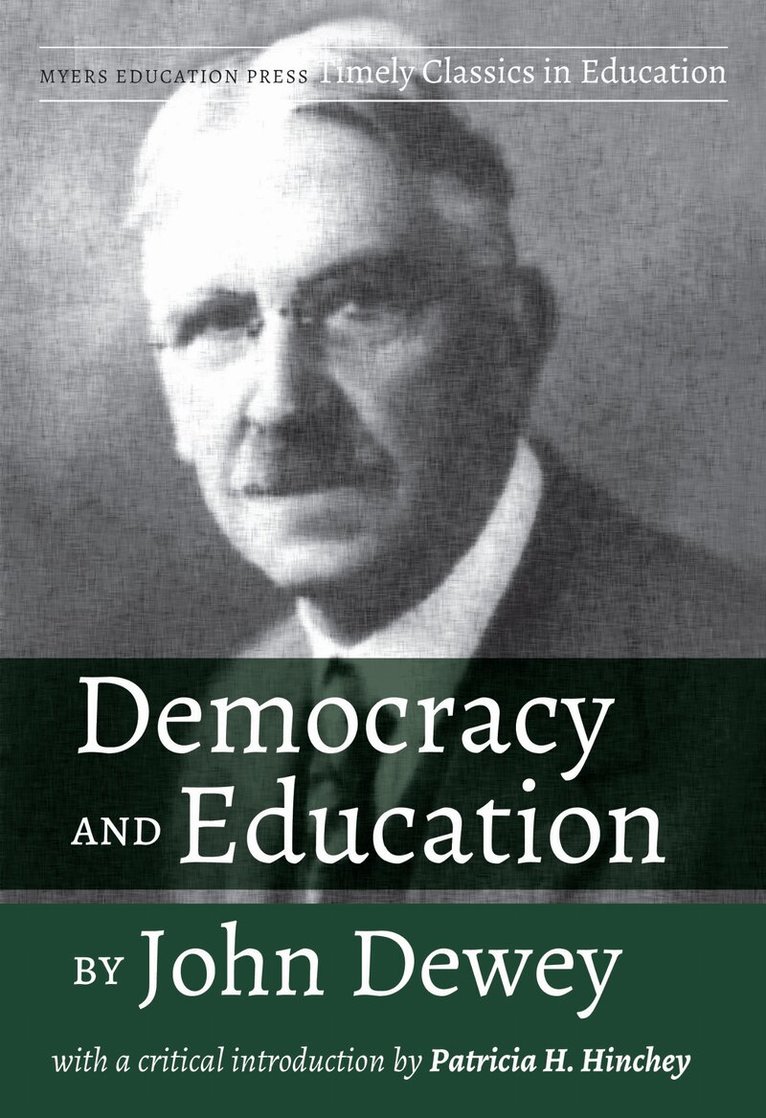
    Democracy and Education by John Dewey

    With a Critical Introduction by Patricia H. Hinchey

    AvPatricia H. Hinchey

    Häftad, Engelska, 2018

    Del i serien Timely Classics in Education 1

    206 kr

    Beställningsvara. Skickas inom 5-8 vardagar. Fri frakt över 249 kr.

    Beskrivning

    Some hundred years after John Dewey worked to illuminate what it means to educate and how public education serves as the bedrock of democracy, his seminal Democracy and Education speaks urgently not only to critical contemporary educational issues but to contemporary political issues as well. As mania for testing forces a steadily narrowing curriculum, Dewey explains why democracy cannot “flourish” if “the chief influences in selecting subject matter of instruction are utilitarian ends narrowly conceived for the masses.” As such utilitarian subject matter is increasingly placed online, isolating individual students and their electronic screens, he insists that education happens not through direct instruction but “indirectly by means of the environment” where members of a community engage in meaningful tasks. As the American population appears increasingly subject to rhetorical manipulation and ideological extremism, Dewey imagines the possibility of education cultivating “habits of mind which secure social changes without introducing disorder.” Insightful and inspiring, Dewey’s classic reintroduces readers to educational and political possibilities hard to remember as political and corporate forces to work reshape American public schools in the service of global profit rather than democratic life.Through Myers Education Press’s Timely Classics in Education, readers are offered the opportunity to return to the original works of giants whose influence on education have persisted through the years. Critical introductions to each work offer information on the context of the original work as well as insights into current relevance. For readers unfamiliar with each text, the introductions provide entrée to the work; for experienced readers, the series offers an opportunity to return to original works untainted by the distortions of decades of interpretation. Unlike poorly produced facsimile editions, Timely Classics are high-quality products. They can be adopted for use in many types of education classes.

    Produktinformation

    • Utgivningsdatum:2018-03-13
    • Mått:139 x 203 x 27 mm
    • Vikt:460 g
    • Format:Häftad
    • Språk:Engelska
    • Serie:Timely Classics in Education 1
    • Antal sidor:400
    • Förlag:Myers Education Press
    • ISBN:9781975500207

    Utforska kategorier

    • Högskola och universitet inom Psykologi och pedagogik

    Mer om författaren

    Patricia H. Hinchey is Professor Emerita of Education at Penn State, where she taught a wide variety of undergraduate and graduate courses and frequently conducted professional development workshops for both K-12 and higher education educators. She is also a Fellow with the National Education Policy Center at the University of Colorado, Boulder. She is author or co-author of six texts, editor or co-editor of several more, and she has also published numerous journal articles.

    Innehållsförteckning

    • Introduction by Patricia H. Hincheyi. Education as a Necessity of Life1. Renewal of Life by Transmission2. Education and Communication3. The Place of Formal EducationSummaryii. Education as a Social Function1. The Nature and Meaning of Environment2. The Social Environment3. The Social Medium as Educative4. The School as a Special Environment Summaryiii. Education as Direction1. The Environment as Directive2. Modes of Social Direction3. Imitation and Social Psychology4. Some Applications to EducationSummaryiv. Education as Growth1. The Conditions of Growth2. Habits as Expressions of Growth3. The Educational Bearings of the Conception of DevelopmentSummaryv. Preparation, Unfolding, and Formal Discipline1. Education as Preparation2. Education as Unfolding3. Education as Training of Faculties Summaryvi. Education as Conservative and Progressive1. Education as Formation2. Education as Recapitulation and Retrospection3. Education as ReconstructionSummaryvii. The Democratic Conception in Education1. The Implications of Human Association2. The Democratic Ideal3. The Platonic Educational Philosophy4. The "Individualistic" Ideal of the Eighteenth Century5. Education as National and as SocialSummaryviii. Aims in Education1. The Nature of an Aim2. The Criteria of Good Aims3. Applications in EducationSummaryix. Natural Development and Social Efficiency as Aims1. Nature as Supplying the Aim2. Social Efficiency as Aim3. Culture as AimSummaryx. Interest and Discipline1. The Meaning of the Terms2. The Importance of the Idea of Interest in Education3. Some Social Aspects of the QuestionSummaryxi. Experience and Thinking1. The Nature of Experience2. Reflection in ExperienceSummaryxii. Thinking in Education1. The Essentials of MethodSummaryxiii. The Nature of Method1. The Unity of Subject Matter and Method2. Method as General and as Individual3. The Traits of Individual MethodSummaryxiv. The Nature of Subject Matter1. Subject Matter of Educator and of Learner2. The Development of Subject Matter in the Learner3. Science or Rationalized Knowledge4. Subject Matter as SocialSummaryxv. Play and Work in the Curriculum1. The Place of Active Occupations in Education2. Available Occupations3. Work and PlaySummaryxvi. The Significance of Geography and History1. Extension of Meaning of Primary Activities2. The Complementary Nature of History andGeography3. History and Present Social LifeSummaryxvii. Science in the Course of Study1. The Logical and the Psychological2. Science and Social Progress3. Naturalism and Humanism in EducationSummaryxviii. Educational Values1. The Nature of Realization or Appreciation2. The Valuation of Studies3. The Segregation and Organization of ValuesSummaryxix. Labor and Leisure1. The Origin of the Opposition2. The Present SituationSummaryxx. Intellectual and Practical Studies1. The Opposition of Experience and True Knowledge2. The Modern Theory of Experience and Knowledge3. Experience as ExperimentationSummaryxxi. Physical and Social Studies: Naturalism and Humanism1. The Historic Background of Humanistic Study2. The Modern Scientific Interest in Nature3. The Present Educational ProblemSummaryxxii. The Individual and the World1. Mind as Purely Individual2. Individual Mind as the Agent of Reorganization3. Educational EquivalentsSummaryxxiii. Vocational Aspects of Education1. The Meaning of Vocation2. The Place of Vocational Aims in Education3. Present Opportunities and DangersSummaryxxiv. Philosophy of Education1. A Critical Review2. The Nature of PhilosophySummaryxxv. Theories of Knowledge1. Continuity versus Dualism2. Schools of MethodSummaryxxvi. Theories of Morals1. The Inner and Outer2. The Opposition of Duty and Interest3. Intelligence and Character4. The Social and the MoralSummaryAbout the TextAbout the Series