• Fri frakt över 249 kr
  • •
  • Snabba leveranser
  • •
  • Billiga böcker
Kundservice

Du är på sajten för privatpersoner.

Företag, bibliotek eller offentlig verksamhet?

Du handlar på classic.bokus.com, där alla dina funktioner finns intakta.
Till classic.bokus.com
Bokus logotyp. Gå till startsidan.
  • Erbjudanden
  • Nyheter
  • Student
  • Topplistor
  • Barn & ungdom
  • Bokus Play
  • E-böcker
  • Pocketböcker
  • Spel & pussel

10% rabatt på allt med kod: NYSTART10 →

Sidfot

Mina sidor

    Hjälp

    • Kundservice
    • Vanliga frågor och svar
    • Frakt och leverans
    • Retur vid ångerrätt
    • Reklamera vara
    • Betalning
    • Köpvillkor
    • Allmänna villkor
    • Information om webbplatsens tillgänglighet

    Om Bokus

    • Om oss
    • Pressrum
    • För studenter
    • För företag
    • För bibliotek och offentlig verksamhet
    • För leverantörer
    • Hållbarhet

    Populärt

    • Aktuella erbjudanden
    • Presentkort
    • Studentlitteratur
    • Nya böcker
    • Topplistor
    • Signerade böcker
    • Engelska böcker

    Inspiration

    • Boktips
    • BookTok
    • Populära bokserier
    • Barnbokskaraktärer
    • Populära författare
    Logotyp för Bokus
    Följ oss på Facebook (extern länk)Följ oss på Instagram (extern länk)Följ oss på YouTube (extern länk)Följ oss på TikTok (extern länk)
    bokus @ CookiesAnpassa cookiesIntegritetspolicyKöpvillkor
    Till Citymail hemsida (extern länk)Till Budbee hemsida (extern länk)Till Postnord hemsida (extern länk)Till Schenker hemsida (extern länk)Till Early Bird hemsida (extern länk)Till Walleys hemsida (extern länk)
    1. Samhälle och politik
    2. Samhälle och kultur
    3. Sociala och etiska frågor

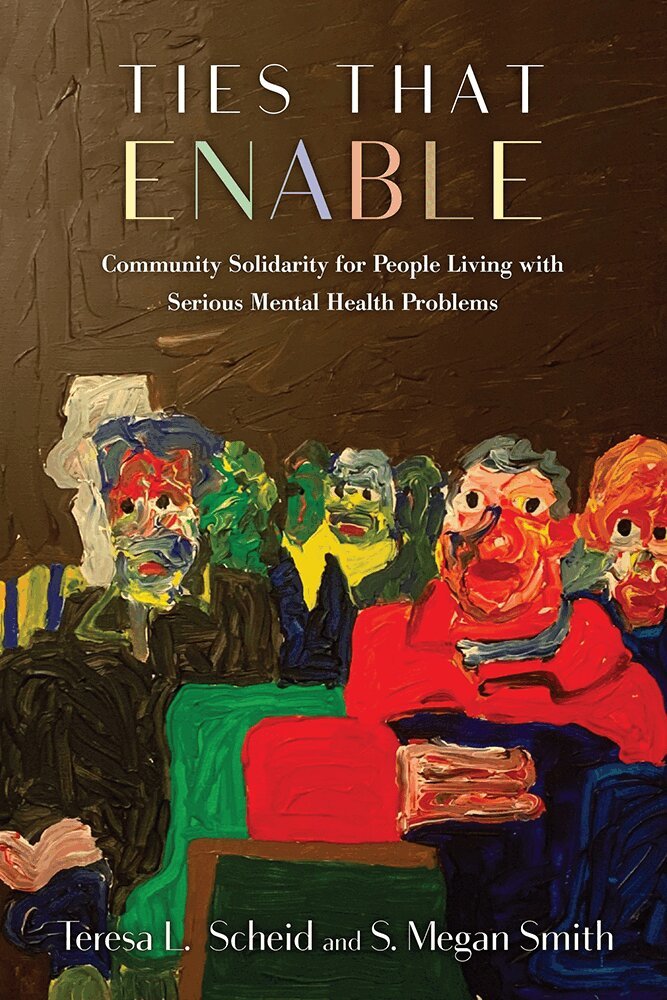
    Ties That Enable

    Community Solidarity for People Living with Serious Mental Health Problems

    AvTeresa L. Scheid,S. Megan Smith

    Inbunden, Engelska, 2021

    1 703 kr

    Beställningsvara. Skickas inom 5-8 vardagar. Fri frakt över 249 kr.

    Fler format och utgåvor

    Häftad

    294 kr

    Beskrivning

    Ties that Enable is written for students, providers, and advocates seeking to understand how best to improve mental health care – be it for themselves, their loved ones, their clients, or for the wider community. The authors integrate their knowledge of mental health care as researchers, teachers, and advocates and rely on the experiences of people living with severe mental health problems to help understand the sources of community solidarity. Communities are the primary source of social solidarity, and given the diversity of communities, solutions to the problems faced by individuals living with severe mental health problems must start with community level initiatives. "Ties that Enable" examines the role of a faith-based community group in providing a sense of place and belonging as well as reinforcing a valued social identity. The authors argue that mental health reform efforts need to move beyond a focus on individual recovery to more complex understandings of the meaning of community care. In addition, mental health care needs to move from a medical model to a social model which sees the roots of mental illness and recovery as lying in society, not the individual. It is our society's inability to provide inclusive supportive environments which restrict the ability of individuals to recover. This book provides insights into how communities and system level reforms can promote justice and the higher ideals we aspire to as a society.

    Produktinformation

    • Utgivningsdatum:2021-08-13
    • Mått:152 x 229 x 13 mm
    • Vikt:4 g
    • Format:Inbunden
    • Språk:Engelska
    • Antal sidor:168
    • Förlag:Rutgers University Press
    • ISBN:9781978818767

    Utforska kategorier

    • Sociala och etiska frågor inom Samhälle och politik
    • Religion: allmänt inom Filosofi och religion
    • Hälso- och sjukvård inom Medicin

    Mer om författaren

    TERESA L. SCHEID is a professor of sociology at the University of North Carolina at Charlotte with joint appointments in Public Policy and Health Services Research. She has published widely on the organization and delivery of mental health services and the work of mental health, including Reducing Race Differences in Direct-to-Consumer Pharmaceutical Advertising: The Case for Regulation. Scheid has also examined the impact of a number of legislative mandates including outpatient commitment and the Americans with Disabilities Act, and is currently analyzing state level legislative reforms to mental health care.MEGAN SMITH earned her PhD in Sociology in 2017 from Emory University and her M.A. in Sociology from UNC-Charlotte. Her dissertation, entitled Enhancing Choice, Capabilities, and Community for Chronically Mentally Ill Persons: The Social Context of a Faith-Based Day Program, is an ethnographic case study employing a grounded theory approach. In addition to her research, she was awarded the Andrew Mellon Teaching Fellowship during her tenure at Emory and taught mental health and research methods courses at Clark Atlanta University. Currently, she is a full time adjunct lecturer at UNC-Charlotte in the Sociology Department where she teaches courses in mental health, medical sociology, and criminology.

    Recensioner i media

    "Scheid and Smith shed light on the ways that, over time, changes in policy and trends in mental health care have actually left people stranded in 'the community.' This is a welcome and unique addition to the work on people with serious mental illness, and I enthusiastically look forward to seeing, using, and citing it."— Kerry Dobransky, author of Managing Madness in the Community: The Challenge of Contemporary Mental Health Care"Ties that Enable provides an excellent qualitative complement to the quantitative research on recovery and mental illness. The authors' detailed accounts of client relationships and experiences are excellent."— Fred E. Markowitz, Department of Sociology, Northern Illinois University

    Innehållsförteckning

    • Preface 1 The Current Impasse over Mental Health Care 2 Looking Back: Reflections on the Reality of Community-Based Mental Health Care 3 Being a "Right Person": Social Acceptance in a Faith-Based Program 4 Doing the "Best" We Can: Developing Social Relationships and Overcoming Isolation 5 Us and Them: Confronting Recovery in the Face of Marginalization 6 Going Backward: Are We Doomed to Repeat the Failures of the Past? 7 Working toward Community Solidarity and Social Justice Epilogue AcknowledgmentsNotes References Index