• Fri frakt över 249 kr
  • •
  • Snabba leveranser
  • •
  • Billiga böcker
Kundservice

Du är på sajten för privatpersoner.

Företag, bibliotek eller offentlig verksamhet?

Du handlar på classic.bokus.com, där alla dina funktioner finns intakta.
Till classic.bokus.com
Bokus logotyp. Gå till startsidan.
  • Erbjudanden
  • Nyheter
  • Student
  • Topplistor
  • Barn & ungdom
  • Bokus Play
  • E-böcker
  • Pocketböcker
  • Spel & pussel

10% rabatt på allt med kod: NYSTART10 →

Sidfot

Mina sidor

    Hjälp

    • Kundservice
    • Vanliga frågor och svar
    • Frakt och leverans
    • Retur vid ångerrätt
    • Reklamera vara
    • Betalning
    • Köpvillkor
    • Allmänna villkor
    • Information om webbplatsens tillgänglighet

    Om Bokus

    • Om oss
    • Pressrum
    • För studenter
    • För företag
    • För bibliotek och offentlig verksamhet
    • För leverantörer
    • Hållbarhet

    Populärt

    • Aktuella erbjudanden
    • Presentkort
    • Studentlitteratur
    • Nya böcker
    • Topplistor
    • Signerade böcker
    • Engelska böcker

    Inspiration

    • Boktips
    • BookTok
    • Populära bokserier
    • Barnbokskaraktärer
    • Populära författare
    Logotyp för Bokus
    Följ oss på Facebook (extern länk)Följ oss på Instagram (extern länk)Följ oss på YouTube (extern länk)Följ oss på TikTok (extern länk)
    bokus @ CookiesAnpassa cookiesIntegritetspolicyKöpvillkor
    Till Citymail hemsida (extern länk)Till Budbee hemsida (extern länk)Till Postnord hemsida (extern länk)Till Schenker hemsida (extern länk)Till Early Bird hemsida (extern länk)Till Walleys hemsida (extern länk)
    1. Naturvetenskap och teknik
    2. Matematik och naturvetenskap
    3. Matematik
    4. Matematikens historia

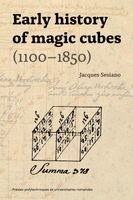
    Early History of Magic Cubes (1100–1850)

    AvJacques Sesiano

    Häftad, Engelska, 2026

    293 kr

    Beställningsvara. Skickas inom 5-8 vardagar. Fri frakt över 249 kr.

    Beskrivning

    An investigation into the predecessors of the magic cube.Magic cubes are generally considered to have been invented in the second half of the nineteenth century, when the conditions for a cube to be called magic were established: it must display the same sum in each horizontal, vertical, and front-to-back row, as well as in the four internal diagonals of the cube.However, during the preceding seven centuries, constructions of magic cubes had already begun, but obeying other definitions. The first study is found in twelfth-century Persia. Then, Pierre de Fermat (1601-1665) dealt with them in the seventeenth century. Unaware of the existence of predecessors and with a different design, the Frenchman Joseph Sauveur (1653-1716) taught a construction method that was adopted in Gottfried Wilhelm Leibniz’s (1646-1716) circle. This method was expanded in the 1830s but fell into oblivion with the modern definition of the magic cube.

    Produktinformation

    • Utgivningsdatum:2026-06-26
    • Mått:160 x 240 x 23 mm
    • Vikt:626 g
    • Format:Häftad
    • Språk:Engelska
    • Antal sidor:340
    • Förlag:Presses Polytechniques et Universitaires Romandes
    • ISBN:9782889156993

    Utforska kategorier

    • Matematikens historia inom Naturvetenskap och teknik

    Mer om författaren

    Jacques Sesiano was a lecturer in the history of mathematics at the Swiss Federal Institute of Technology in Lausanne (EPFL). He also taught professional development courses for mathematics teachers in Switzerland and Germany.

    Innehållsförteckning

    • "PrefaceTable of contentsChapter I. Magic squaresChapter II. Magic cubes in generalChapter III. Khazinii’s treatise on magic cubesChapter IV. Fermat’s magic cubeChapter V. Sauveur’s magic cubesChapter VI. Magic cubes in Leibniz’s circleChapter VII. Violle’s magic cubesBibliographyIndex"