• Fri frakt över 249 kr
  • •
  • Snabba leveranser
  • •
  • Billiga böcker
Kundservice

Du är på sajten för privatpersoner.

Företag, bibliotek eller offentlig verksamhet?

Du handlar på classic.bokus.com, där alla dina funktioner finns intakta.
Till classic.bokus.com
Bokus logotyp. Gå till startsidan.
  • Erbjudanden
  • Nyheter
  • Student
  • Topplistor
  • Barn & ungdom
  • Bokus Play
  • E-böcker
  • Pocketböcker
  • Spel & pussel

Må bättre, för mindre! Upp till 50% rabatt på hälsoböcker

Sidfot

Mina sidor

    Hjälp

    • Kundservice
    • Vanliga frågor och svar
    • Frakt och leverans
    • Retur vid ångerrätt
    • Reklamera vara
    • Betalning
    • Köpvillkor
    • Allmänna villkor
    • Information om webbplatsens tillgänglighet

    Om Bokus

    • Om oss
    • Pressrum
    • För studenter
    • För företag
    • För bibliotek och offentlig verksamhet
    • För leverantörer
    • Hållbarhet

    Populärt

    • Aktuella erbjudanden
    • Presentkort
    • Studentlitteratur
    • Nya böcker
    • Topplistor
    • Signerade böcker
    • Engelska böcker

    Inspiration

    • Boktips
    • BookTok
    • Populära bokserier
    • Barnbokskaraktärer
    • Populära författare
    Logotyp för Bokus
    Följ oss på Facebook (extern länk)Följ oss på Instagram (extern länk)Följ oss på YouTube (extern länk)Följ oss på TikTok (extern länk)
    bokus @ CookiesAnpassa cookiesIntegritetspolicyKöpvillkor
    Till Citymail hemsida (extern länk)Till Budbee hemsida (extern länk)Till Postnord hemsida (extern länk)Till Schenker hemsida (extern länk)Till Early Bird hemsida (extern länk)Till Walleys hemsida (extern länk)
    1. Kultur
    2. Arkitektur

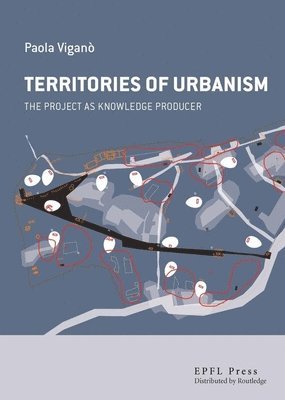
    Territories of Urbanism

    The project as knowledge producer

    AvPaola Viganò

    Inbunden, Engelska, 2016

    722 kr

    Beställningsvara. Skickas inom 5-8 vardagar. Fri frakt över 249 kr.

    Beskrivning

    The central hypothesis behind the book concerns the capacity of urban as well as territorial design, of the "project" in the sense of design activity on multiple scales, to produce knowledge. The volume discusses research conducted with design tools and operations, crossing physical and conceptual territories, related to a set of direct design explorations, and to the concept of "research by design."This idea of the project contains, manipulates and produces concepts and forms of concrete action in space, involving interpretation, abstraction and – at times – generalization. It describes and reveals processes of individualization, recognizes situations and allows possibilities to emerge. The project images the future and takes its impact on thinking about the city as the basis for the production of an original form of knowledge. Reflection on the epistemological statutes of the design project, in the wake of the crisis of expert knowledge and in a period of progressive marginalization and simplification of the practice of the architect and of the urban designer, is now fundamental for the rethinking of design’s social role, and to formulate a fresh, new, critical vision of the world.

    Produktinformation

    • Utgivningsdatum:2016-06-24
    • Mått:160 x 240 x 26 mm
    • Vikt:635 g
    • Format:Inbunden
    • Språk:Engelska
    • Antal sidor:300
    • Förlag:Presses Polytechniques et Universitaires Romandes
    • ISBN:9782940222896

    Utforska kategorier

    • Arkitektur inom Kultur
    • Sociala grupper och identitet inom Samhälle och politik

    Innehållsförteckning

    • Part I. Territories of the Conceptual Chapter 1: Rethinking Urbanism Territory 1: The design of Isotropy Chapter 2: The concepts used by urbanists (section one) Chapter 3: The concepts used by urbanists (section two) Territory 2: Conceptual shifts Part II. Territories of Description Chapter 1: New Territories: A Meta-description Territory 3: The porous city Chapter 2: The project as description: images Chapter 3: Projects that describe Territory 4: Elementary Landscapes Part III: Territories of the future Chapter 1: "The future is back" Territory 5: Scenarios of dispersion Chapter 2: A phenomenology of time Territory 6: Paleochannels of history Chapter 3: Images of the future Territory 7: Scenarios for living together Conclusions: "This is how we want to live"