• Fri frakt över 249 kr
  • •
  • Snabba leveranser
  • •
  • Billiga böcker
Kundservice

Du är på sajten för privatpersoner.

Företag, bibliotek eller offentlig verksamhet?

Du handlar på classic.bokus.com, där alla dina funktioner finns intakta.
Till classic.bokus.com
Bokus logotyp. Gå till startsidan.
  • Erbjudanden
  • Student
  • Topplistor
  • Barn & ungdom
  • Bokus Play
  • E-böcker
  • Ljudböcker
  • Pocketböcker
  • Spel och pussel

Skapa nya rutiner – hälsoböcker upp till 50% →

Sidfot

Mina sidor

    Hjälp

    • Kundservice
    • Vanliga frågor och svar
    • Frakt och leverans
    • Retur vid ångerrätt
    • Reklamera vara
    • Betalning
    • Köpvillkor
    • Allmänna villkor
    • Information om webbplatsens tillgänglighet

    Om Bokus

    • Om oss
    • Pressrum
    • För studenter
    • För företag
    • För bibliotek och offentlig verksamhet
    • För leverantörer
    • Hållbarhet

    Populärt

    • Aktuella erbjudanden
    • Presentkort
    • Studentlitteratur
    • Nya böcker
    • Topplistor
    • Signerade böcker
    • Engelska böcker

    Inspiration

    • Boktips
    • BookTok
    • Barnbokskaraktärer
    • Populära författare
    Logotyp för Bokus
    Följ oss på Facebook (extern länk)Följ oss på Instagram (extern länk)Följ oss på YouTube (extern länk)Följ oss på TikTok (extern länk)
    bokus @ CookiesAnpassa cookiesIntegritetspolicyKöpvillkor
    Till Citymail hemsida (extern länk)Till Budbee hemsida (extern länk)Till Postnord hemsida (extern länk)Till Schenker hemsida (extern länk)Till Early Bird hemsida (extern länk)Till Walleys hemsida (extern länk)
    1. Samhälle och politik
    2. Samhälle och kultur
    3. Sociala och etiska frågor

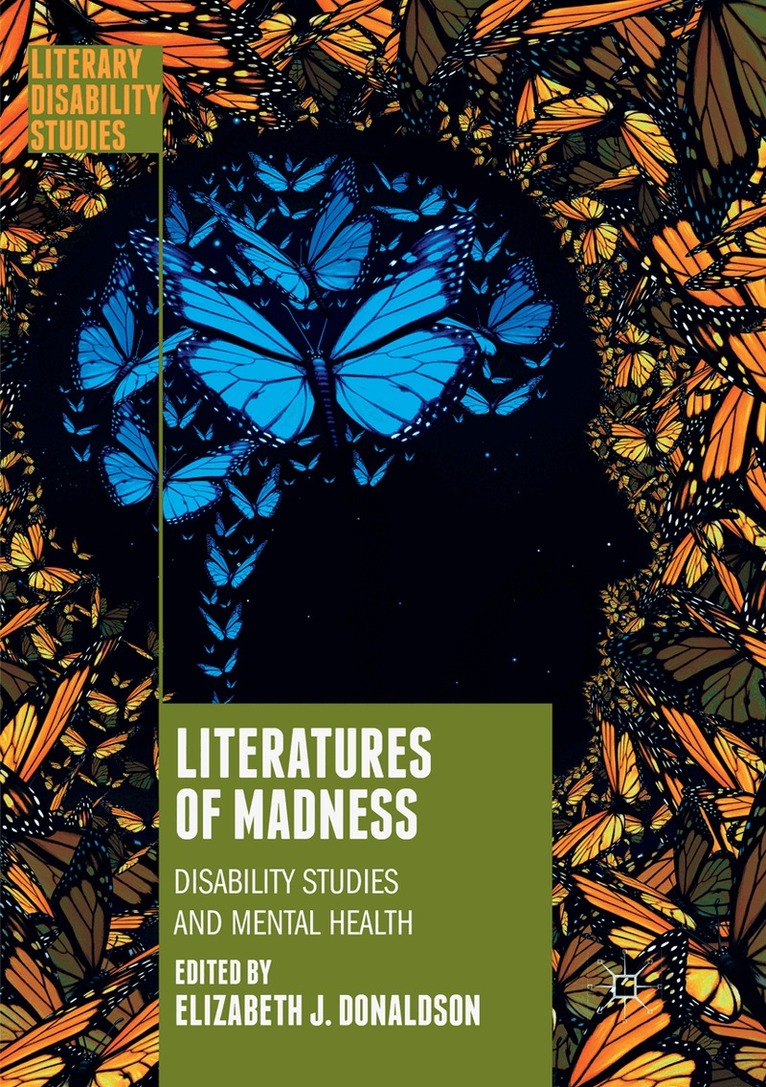
    Literatures of Madness

    Disability Studies and Mental Health

    AvElizabeth J. Donaldson

    Häftad, Engelska, 2019

    Del i serien Literary Disability Studies

    360 kr

    Beställningsvara. Skickas inom 10-15 vardagar. Fri frakt över 249 kr.

    Beskrivning

    Literatures of Madness: Disability Studies and Mental Health brings together scholars working in disability studies, mad studies, feminist theory, Indigenous studies, postcolonial theory, Jewish literature, queer studies, American studies, trauma studies, and comics to create an intersectional community of scholarship in literary disability studies of mental health. The collection contains essays on canonical authors and lesser known and sometimes forgotten writers, including Sylvia Plath, Louisa May Alcott, Hannah Weiner, Mary Jane Ward, Michelle Cliff, Lee Maracle, Joanne Greenberg, Ann Bannon, Jerry Pinto, Persimmon Blackbridge, and others. The volume addresses the under-representation of madness and psychiatric disability in the field of disability studies, which traditionally focuses on physical disability, and explores the controversies and the common ground among disability studies, anti-psychiatric discourses, mad studies, graphic medicine, and health/medical humanities.

    Produktinformation

    • Utgivningsdatum:2019-01-12
    • Mått:148 x 210 x 15 mm
    • Vikt:341 g
    • Format:Häftad
    • Språk:Engelska
    • Serie:Literary Disability Studies
    • Antal sidor:242
    • Förlag:Springer Nature Switzerland AG
    • ISBN:9783030064853

    Utforska kategorier

    • Sociala och etiska frågor inom Samhälle och politik
    • Litteraturvetenskap inom Skönlitteratur
    • Litteraturteori inom Skönlitteratur

    Mer om författaren

    Elizabeth J. Donaldson is Associate Professor of English at the New York Institute of Technology, where she directs the Medical Humanities program. She is co-editor of The Madwoman and the Blindman: Jane Eyre, Discourse, Disability (2012).

    Recensioner i media

    “Literatures of Madness stands as an insightful complement to pivotal mad studies volumes like Brenda A. LeFrançois, Robert Menzies, and Geoffrey Reaume's Mad Matters (2013) and Helen Spandler, Jill Anderson, and Bob Sapey'sMadness, Distress and the Politics of Disablement (2015). The collection is a productive addition to our work as mad readers and teachers, and it can only encourage us to continue learning and addressing the rhetorical and material diversity of our madnesses.” (Hayley C. Stefan,Disability Studies Quarterly, dsq-sds.org, Vol. 41 (1), 2021)“The collection of differing viewpoints is also one of the strengths of the edited collection format, and this group of essays presents a collection of impressive range and interest. … the essays of this collection powerfully demonstrate the importance of literary and fictional models for envisioning alternatives to structures of exclusion and misunderstanding.” (Susan Anderson, H-Disability, networks.h-net.org, April, 2019)“This groundbreaking book takes as its premise a series of commitments to bridging myriad gaps, anew. In its formulations, which critique overtly but likewise adopt necessarily the specificities of academic publication requirements, a plethora of people's divergent disability (‘crip’) identities and variegated mental health/illness (‘mad’) identities no longer need to be split (no pun, here) along an already false binary line.” (Diane R. Wiener, metapsychology online reviews, metapsychology.mentalhelp.net, Vol. 23 (4), January, 2019)​

    Innehållsförteckning

    • 1. Introduction: Breathing in Airless Spaces, Elizabeth J. Donaldson.- 2. Coming Out Mad, Coming Out Disabled, Elizabeth Brewer.- 3. Going Barefoot: Mad Affiliation, Identity Politics, and Eros, PhebeAnn M. Wolframe.- 4. “Hundreds of People Like Me”: A Search for a Mad Community in The Bell Jar, Rose Miyatsu.- 5. Writing Madness in Indigenous Literature: A Hesitation, Erin Soros.- 6. “Is the young lady mad?”: Psychiatric Disability in Louisa May Alcott’s Fiction, Karen Valerius.- 7.The Snake Pit: Mary Jane Ward’s Asylum Fiction and Mental Health Advocacy, Elizabeth J. Donaldson.- 8. Alcoholic, Mad, Disabled: Constructing Lesbian Identity in Ann Bannon’s “Beebo Brinker Chronicles”, Tatiana Prorokova.- 9. Seeing Words, Hearing Voices: Hannah Weiner, Dora García, and the Poetic Performance of Radical Dis/Humanism, Andrew McEwan.- 10. “My Difference Is Not My [Mental] Sickness”: Ethnicity and Erasure in Joanne Greenberg’s Jewish American Life Writing, Gail Berkeley Sherman.- 11. Resistance, Suffering, and Psychiatric Disability in Jerry Pinto’s Em and the Big Hoom and Amandeep Sandhu’s Sepia Leaves, Srikanth Mallavarapu.- 12. Mental Disability and Social Value in Michelle Cliff’s Abeng, Drew Holladay.- 13. It Doesn’t Add Up: Mental Illness in Paul Hornschemeier’s Mother Come Home, Jessica Gross.