• Fri frakt över 249 kr
  • •
  • Snabba leveranser
  • •
  • Billiga böcker
Kundservice

Du är på sajten för privatpersoner.

Företag, bibliotek eller offentlig verksamhet?

Du handlar på classic.bokus.com, där alla dina funktioner finns intakta.
Till classic.bokus.com
Bokus logotyp. Gå till startsidan.
  • Erbjudanden
  • Student
  • Topplistor
  • Barn & ungdom
  • Bokus Play
  • E-böcker
  • Ljudböcker
  • Pocketböcker
  • Spel och pussel

Pocketfynda! Hundratals böcker för 49 kr/st →

Sidfot

Mina sidor

    Hjälp

    • Kundservice
    • Vanliga frågor och svar
    • Frakt och leverans
    • Retur vid ångerrätt
    • Reklamera vara
    • Betalning
    • Köpvillkor
    • Allmänna villkor
    • Information om webbplatsens tillgänglighet

    Om Bokus

    • Om oss
    • Pressrum
    • För studenter
    • För företag
    • För bibliotek och offentlig verksamhet
    • För leverantörer
    • Hållbarhet

    Populärt

    • Aktuella erbjudanden
    • Presentkort
    • Studentlitteratur
    • Nya böcker
    • Topplistor
    • Signerade böcker
    • Engelska böcker

    Inspiration

    • Boktips
    • BookTok
    • Barnbokskaraktärer
    • Populära författare
    Logotyp för Bokus
    Följ oss på Facebook (extern länk)Följ oss på Instagram (extern länk)Följ oss på YouTube (extern länk)Följ oss på TikTok (extern länk)
    bokus @ CookiesAnpassa cookiesIntegritetspolicyKöpvillkor
    Till Citymail hemsida (extern länk)Till Budbee hemsida (extern länk)Till Postnord hemsida (extern länk)Till Schenker hemsida (extern länk)Till Early Bird hemsida (extern länk)Till Walleys hemsida (extern länk)
    1. Naturvetenskap och teknik
    2. Teknik och industri
    3. Energiteknik

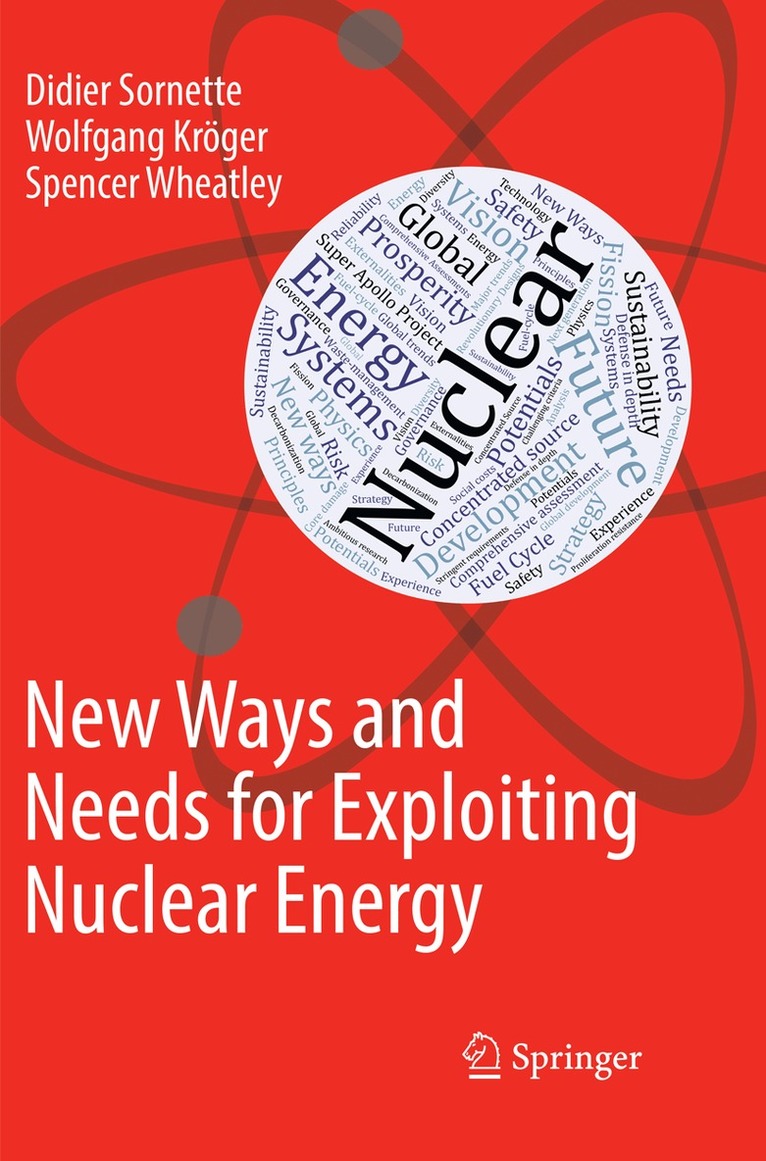
    New Ways and Needs for Exploiting Nuclear Energy

    AvDidier Sornette,Wolfgang Kröger

    Häftad, Engelska, 2019

    617 kr

    Beställningsvara. Skickas inom 10-15 vardagar. Fri frakt över 249 kr.

    Fler format och utgåvor

    Inbunden

    864 kr

    Beskrivning

    The history of mankind is a story of ascent to unprecedented levels of comfort, productivity and consumption, enabled by the increased mastery of the basic reserves and flows of energy. This miraculous trajectory is confronted by the consensus that anthropogenic emissions are harmful and must decrease, requiring de-carbonization of the energy system.   The mature field of indicator-based sustainability assessment provides a rigorous systematic framework to balance the pros and cons of the various existing energy technologies using lifecycle assessments and weighting criteria covering the environment, economy, and society, as the three pillars of sustainability. In such a framework, nuclear power is ranked favorably, but since emphasis is often placed on radioactive wastes and risk aversion, renewables are usually ranked top. However, quantifying the severity of the consequences of nuclear accidents on a rough integral cost basis and balancing severity with low core-damage accident probabilities indicates that the average external cost of such accidents is similar to that of modern renewables, and far less than carbon-based energy.This book formulates the overall goal and associated unprecedented demanding criteria of taming nuclear risks by excluding mechanisms that lead to serious accidents and avoiding extremely long stewardship times as far as possible, by design. It reviews the key design features of nuclear power generation, paving the way for the exploration of radically new combinations of technologies to come up with “revolutionary” or even “exotic” system designs.  The book also provides scores for the selected designs and discusses the high potential for far-reaching improvements, with small modular lines of the best versions as being most attractive.Given the ambition and challenges, the authors call for an urgent increase in funding of at least two orders of magnitude for a broad international civilian “super-Apollo” program on nuclear energy systems. Experience indicates that such investments in fundamental technologies enable otherwise unattainable revolutionary innovations with massive beneficial spillovers to the private sector and the public for the next generations.

    Produktinformation

    • Utgivningsdatum:2019-01-25
    • Mått:155 x 235 x 18 mm
    • Vikt:450 g
    • Format:Häftad
    • Språk:Engelska
    • Antal sidor:276
    • Förlag:Springer Nature Switzerland AG
    • ISBN:9783030073848

    Utforska kategorier

    • Energiteknik inom Naturvetenskap och teknik
    • Miljövetenskap och miljöpolitik inom Naturvetenskap och teknik
    • Byggnadsteknik inom Naturvetenskap och teknik

    Mer om författaren

    Didier Sornette obtained his PhD from the University of Nice in Physical Sciences (1985) and went on to become a post-doctoral student at the famous College de France, in the Condensed Matter Laboratory of Prof. P.G. de Gennes (Nobel prize in Physics 1991). He has been a visiting professor in Australia, France, the US and China, before taking on the chair of Entrepreneurial Risks at ETH-Zurich in 2006, where he is also Professor of Physics and of Geophysics. He is the Director of the Financial Crisis Observatory (since 2008) and Founding member of the Risk Center at ETH Zurich (2011).

    Innehållsförteckning

    • Strategic Aspects of Energy.- Basics of Civilian Nuclear Fission.- Governance: Organizations and Management Issues.- Risk in Nuclear Power Operation.- Severe Accidents: Singularity of Nuclear Disasters?.- Candidate Features and Technology Options.- Potentials and Vision for the Future of Nuclear Energy.