Häftad, Engelska, 2019
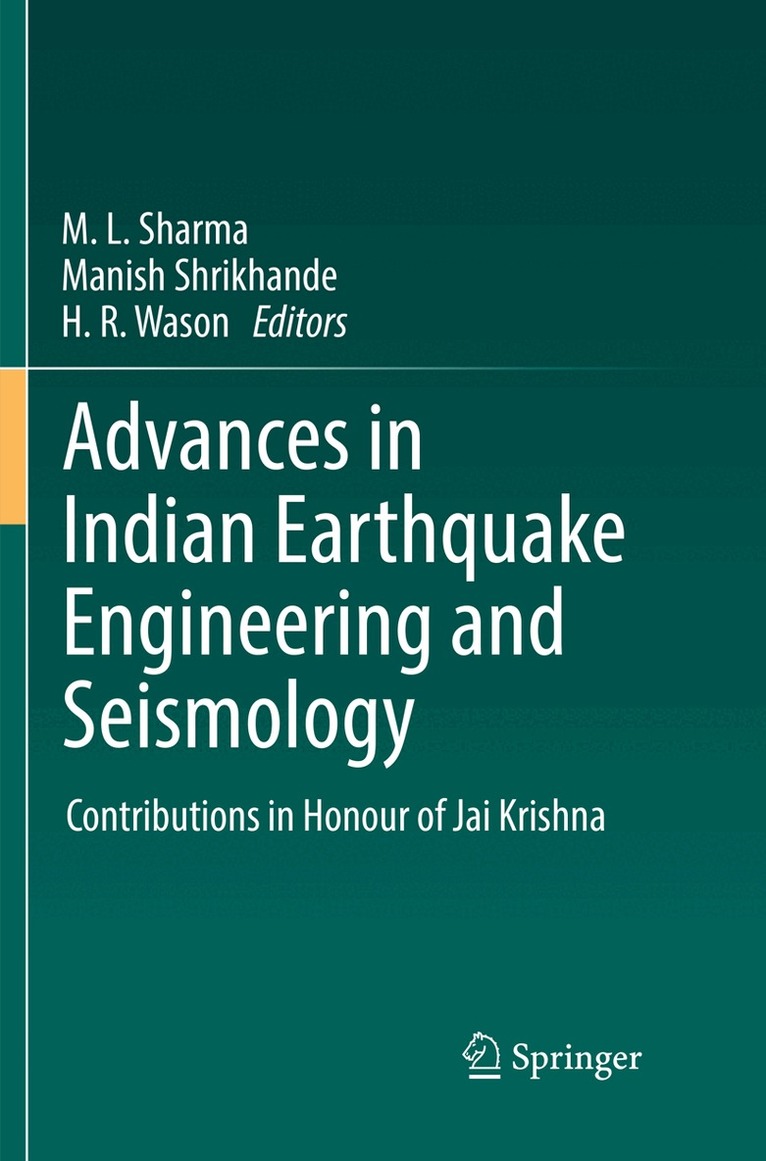
Advances in Indian Earthquake Engineering and Seismology
Av M. L. Sharma, Manish Shrikhande, H. R. Wason
1422 kr
Beställningsvara. Skickas inom 10-15 vardagar. Fri frakt över 249 kr.
Beskrivning
This edited volume is an up-to-date guide for students, policy makers and engineers on earthquake engineering, including methods and technologies for seismic hazard detection and mitigation. The book was written in honour of the late Professor Jai Krishna, who was a pioneer in teaching and research in the field of earthquake engineering in India during his decades-long work at the University of Roorkee (now the Indian Institute of Technology Roorkee). The book comprehensively covers the historical development of earthquake engineering in India, and uses this background knowledge to address the need for current advances in earthquake engineering, especially in developing countries. After discussing the history and growth of earthquake engineering in India from the past 50 years, the book addresses the present status of earthquake engineering in regards to the seismic resistant designs of bridges, buildings, railways, and other infrastructures. Specific topics include response spectrum superposition methods, design philosophy, system identification approaches, retaining walls, and shallow foundations. Readers will learn about developments in earthquake engineering over the past 50 years, and how new methods and technologies can be applied towards seismic risk and hazard identification and mitigation.
Produktinformation
- Utgivningsdatum: 2019-02-08
- Mått: 155 x 235 x undefined mm
- Format: Häftad
- Språk: Engelska
- Antal sidor: 431
- Förlag: Springer Nature Switzerland AG
- ISBN: 9783030083106
Utforska kategorier
Betyg & recensioner
0 recensioner
Inga recensioner tillgängliga.